Shallow Tray Setup
Use a wide, shallow tray or pot so the creeping stems can spread horizontally, then top-dress with a thin layer of fine grit or sand to stabilize new growth without burying the stems.

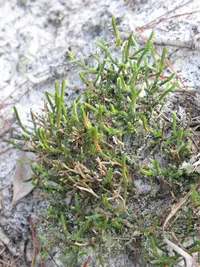
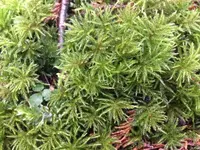
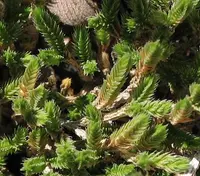
Sand spikemoss (Selaginella arenicola) is a small, primitive, fern-like plant that forms low, mossy mats rather than upright stems. Its fine, scale-like leaves create a soft, textured carpet that often looks similar to true moss, but it is actually a spore-producing vascular plant. In nature it occurs in sandy, well-drained sites, especially in parts of the southeastern United States. It tends to be moderately demanding in cultivation because it prefers consistently moist conditions, good humidity, and protection from harsh, direct sun. Gardeners who learn how to care for sand spikemoss usually focus on keeping its roots cool, moist, and in loose, gritty soil.

Care Difficulty
Moderate Care

Light Preference
Partial Sun

Water Requirements
Regular Water

Temperature Preference
Warm Climate

Hardiness Zone
7–10

Soil Texture
Sandy, Loamy, Rocky

Soil pH
Acidic (5.5–6.5)

Soil Drainage
Moist but well-drained

Fertilization
Minimal (feed rarely)
Scan your plant to receive care tips personalized for your specific plant
Available on iOS and Android
This species thrives in bright, indirect light with protection from harsh midday sun.
This plant prefers consistently moist but not waterlogged soil around its shallow roots.
This species grows best in mild, stable temperatures without frost or prolonged extreme heat.
This species prefers consistently moist air and reacts quickly to low humidity.
Selaginella arenicola prefers loose, moisture-retentive but well-aerated soil.
This species can grow successfully in containers when moisture and drainage are carefully balanced.
This native species usually manages with minimal feeding, especially in sandy, low-nutrient soils.
Selaginella arenicola needs only light pruning to keep mats tidy and healthy.
This species is usually grown in the ground, so focus on gentle transplanting rather than frequent repotting.
Selaginella arenicola is commonly propagated by division and stem layering rather than seed.
This species is fairly cold hardy in much of its native range and usually needs only light winter attention.

Plant Health Check
Not sure what's wrong with your plant? Check your plant's health inside the app.
This species is naturally restricted to deep, dry, sandy soils in the southeastern United States, where it often grows in open longleaf pine ecosystems and coastal plain sandhills that many other spikemosses cannot tolerate.
Unlike the more famous resurrection plants, this species can partially dry and then recover when moisture returns, allowing it to survive periodic drought in exposed sandy habitats.
Isolated, disjunct populations occur far from the core southeastern range, including parts of Texas and Oklahoma, which shows how this plant tracks scattered patches of suitable sandy substrate across large geographic distances.

This species is often one of the few vascular-like ground plants persisting in intensely burned sandhill sites, indicating a strong adaptation to frequent fire regimes where repeated surface fires eliminate many potential competitors.
This species stays very low and compact, usually under 5–8 cm tall, but it can spread wider over time. It forms a dense, moss-like mat rather than upright stems, making it useful as a ground-hugging accent.
Keep your plants happy and healthy with plant identification, disease detection, and easy care guidance.