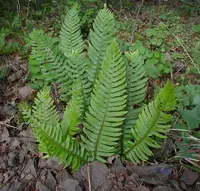
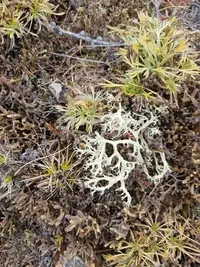
kōwaowao Care (Zealandia pustulata)

Also known as: pāraharaha
kōwaowao

About kōwaowao

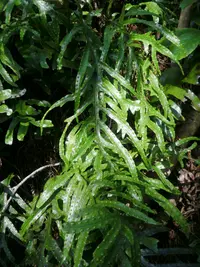
Kōwaowao (Zealandia pustulata), also called hound’s tongue fern, is an evergreen fern with creeping rhizomes and small, rounded fronds. It often forms soft, trailing mats that drape from rocks, logs, or hanging containers.

This species is native to Aotearoa New Zealand, where it naturally grows in humid forests, on tree trunks, and in shaded rocky areas. It prefers cool, shaded conditions, constant light moisture, and humus-rich, free-draining substrate.

Its compact size, slow to moderate growth, and tolerance of lower light make it manageable indoors, but it dislikes drying out or harsh sun. Once its moisture and shade needs are understood, it is relatively straightforward to care for kōwaowao.

Main Plant Requirements

Care Difficulty

Moderate Care

Light Preference

Partial Shade

Water Requirements

Keep Soil Moist

Temperature Preference

Warm Climate

Hardiness Zone

10–12

Soil Texture

Loamy, Peaty, Organic-rich

Soil pH

Strongly acidic (4.5–5.5), Acidic (5.5–6.5)

Soil Drainage

Moist but well-drained

Fertilization

Minimal (feed rarely)

Get Personalized Care Plan

Scan your plant to receive care tips personalized for your specific plant

Available on iOS and Android

How to Care for the kōwaowao

This forest fern prefers soft, filtered light that mimics a shaded bush understory.

  • Provide bright shade or dappled light with 1–3 hours of gentle morning sun; avoid direct midday and afternoon sun to prevent frond scorch.
  • Plant kōwaowao where it receives bright, indirect light under trees, shade cloth, or on the east or north side of structures.
  • In summer, increase shade protection; in winter, allow slightly more open light but still avoid strong, low-angle direct sun.

This species needs consistently moist but not waterlogged conditions to thrive.

  • Check soil or substrate often and water when the top 2–3 cm feel just starting to dry, aiming to keep the root zone evenly damp.
  • Use loose, humus-rich, free-draining soil so water runs through quickly while still holding moisture, which supports Zealandia pustulata in forming healthy rhizomes.
  • In cool seasons, reduce watering slightly and watch for yellowing, mushy fronds as a sign of overwatering, or crisp, curling fronds as a sign of underwatering.

This fern prefers cool to mild temperatures with protection from frost and extreme heat.

  • Aim for 55–75°F (13–24°C) for best growth, similar to a sheltered, coastal or forest environment.
  • Protect from frost; brief dips to about 32°F (0°C) may damage fronds, and extended exposure below 28°F (-2°C) can harm rhizomes.
  • In hot weather above 80–85°F (27–29°C), increase shade, humidity, and soil moisture, and avoid hot, reflected surfaces that can overheat the plant.

This fern prefers consistently moist air and reacts quickly to dry indoor conditions.

  • Aim for 60–80% humidity; it tolerates brief dips but struggles in prolonged air below 40%.
  • Crisping tips, curling fronds, and slow unfurling of new growth indicate humidity stress.
  • Increase humidity with a nearby humidifier, grouping plants, or a wide pebble tray, but avoid misting that keeps fronds wet for long periods.

This epiphytic fern needs airy, moisture-retentive but fast-draining substrate rather than dense potting soil.

  • Use a loose mix such as 40% fine bark, 30% peat or coco coir, 20% perlite, and 10% leaf mold or compost.
  • Structure should be spongy and fibrous, holding moisture while allowing air pockets around the rhizomes and finer roots.
  • Keep pH slightly acidic to neutral (pH 5.5–7.0), avoiding limed or strongly alkaline mixes that can limit nutrient uptake.
  • Avoid heavy garden soil, compacted mixes, or pots that stay waterlogged, which promote rhizome rot in Zealandia pustulata.

This fern adapts well to container culture, especially in shallow, wide pots or hanging containers.

  • Choose a shallow but broad container so the creeping rhizomes can spread horizontally without being forced into deep, compact layers.
  • Use a stable, heavier pot or secure hanger because the spreading foliage can make the container unevenly weighted over time.
  • Select slightly porous materials like unglazed clay only if you can compensate with more frequent watering, as they accelerate moisture loss from the airy mix.

This native fern, also known as kōwaowao, grows well with only light feeding in containers or very poor substrates.

  • Use a balanced, dilute liquid fertilizer (for example 10-10-10 at 1/4–1/2 strength) for potted plants only.
  • Feed every 4–6 weeks during active growth in spring and summer if foliage looks pale or growth slows.
  • Stop feeding in fall and winter to match its reduced growth and avoid salt buildup in the medium.
  • Compost or a slow-release organic product can be mixed very sparingly into loose, moisture-retentive fern mix.

Zealandia pustulata needs minimal pruning, mainly to keep fronds tidy and healthy.

  • Carry out light grooming at any time, with slightly more cleanup at the end of winter or early spring.
  • Remove dead, yellowing, or damaged fronds at the base to reduce disease risk and improve appearance.
  • Thin out badly crowded or crossing fronds to increase airflow and light to the center of the plant.
  • Use clean, sharp scissors or pruners and avoid cutting into the rhizomes to maintain plant vigor.

This fern dislikes heavy disturbance, so repotting or transplanting should be infrequent and gentle.

  • Look for roots circling the pot, slow growth, or the plant lifting out of the mix as signs it needs more space.
  • Plan any move for spring, when new growth begins, to shorten recovery time and reduce stress.
  • Repot every 2–3 years at most, shifting to a slightly larger, shallow container with a loose, fibrous fern mix.
  • Handle rhizomes carefully, keep the root ball as intact as possible, water thoroughly, then maintain steady humidity afterward.

Propagation of Zealandia pustulata is usually done by division of rhizomes rather than by spores for home growers.

  • Divide established clumps in spring when new fronds emerge and conditions are mild.
  • Lift the plant gently, then separate sections with several healthy fronds and firm rhizome segments each.
  • Replant divisions into a moist, airy fern mix, keeping rhizomes just at or slightly above the surface.
  • Maintain high humidity, bright indirect light, and consistently moist (not waterlogged) medium until new growth appears.

This fern is only moderately cold tolerant and benefits from some winter protection in cooler regions.

  • Avoid exposure to hard frost; foliage may be damaged below about 28–30°F.
  • In the ground, use a light mulch around the root zone to buffer temperature swings while keeping crowns uncovered.
  • For containers, move plants into a sheltered porch, cool greenhouse, or bright indoor spot before freezing nights.

Care Tips

Mounting on slabs

Attach the rhizomes to a rough, moisture-retentive slab (such as cork or fern fiber board) with soft ties and sphagnum around the roots to mimic its natural epiphytic habit and improve drainage and airflow.

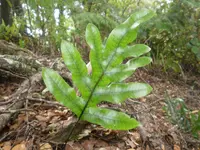
Layered planting pockets

When planting in a wall pocket or crevice, pack a thin layer of long-fiber sphagnum over the drainage layer before adding mix to keep the shallow roots evenly moist without waterlogging.

Rhizome edge grooming

Inspect the exposed rhizome edges every few weeks and trim away dead or mushy sections with sterilized scissors to reduce rot spread and keep new fronds emerging cleanly from healthy tissue.

Targeted misting routine

Mist only the fronds and exposed rhizomes lightly in the morning, avoiding saturating the potting mix surface, to raise local humidity for kōwaowao indoor care while still preventing chronic media wetness.

Seasonal position tweaks

In winter, move mounted or potted plants slightly closer to an east or south-facing window and away from cold glass or drafts, then shift them back to a more shaded, cooler spot once spring light and temperatures increase.

Common Pests and Diseases

Scale insects

This pest feeds on fronds and stems, causing yellowing, speckling, and a sticky honeydew that can lead to sooty mold on Zealandia pustulata. Infestations are often tucked along the rachis and underside of the frond segments, making them easy to miss at first.

Solution

Remove heavily infested fronds and wipe remaining scale off with a cotton pad dipped in isopropyl alcohol, taking care to reach the undersides of fronds. Improve air movement around the plant and repeat alcohol or insecticidal soap treatments every 7–10 days until no new insects appear.

Fern aphids

These insects cluster on tender new fronds and sori, sucking sap and causing distortion, curling, and pale patches. Honeydew left on the fronds can attract sooty mold and reduce photosynthesis.

Solution

Rinse the plant thoroughly with a firm but gentle stream of lukewarm water to dislodge aphids, then treat remaining colonies with insecticidal soap, ensuring full coverage of new growth and undersides. Repeat at 5–7 day intervals and avoid high-nitrogen fertilization, which encourages soft, aphid-prone growth.

Rhizoctonia blight

This disease causes brown, sunken lesions at the base of fronds and along creeping rhizomes, leading to dieback and thinning clumps, especially in warm, overly wet conditions. Symptoms include a gradual collapse of fronds starting at the soil or substrate surface.

Solution

Cut out and discard affected fronds and rhizome sections, then allow the substrate to dry slightly between waterings while maintaining humidity in the air rather than in the soil. Improve drainage and airflow, avoid overhead watering, and in severe cases drench with a fern-safe fungicide labeled for Rhizoctonia following the product directions.

Botrytis gray mold

This disease thrives in cool, stagnant, and humid air, creating soft brown patches on fronds that develop a fuzzy gray mold. Symptoms include rapid blighting of delicate fronds, especially where water droplets sit for long periods.

Solution

Remove and discard all visibly affected fronds and any fallen plant debris around the base, then increase air circulation and avoid misting directly onto the fronds. Space plants so fronds can dry quickly and, if needed, apply a targeted fungicide suitable for ferns at the first signs of new spotting to support Zealandia pustulata care instructions.

Interesting Facts

Epiphytic and terrestrial

Zealandia pustulata naturally grows both as an epiphyte on tree trunks and branches and as a terrestrial fern on the forest floor, especially on rocks and banks. This dual habit helps it exploit different light and moisture niches in New Zealand and southeastern Australian forests.

Distinctive bumpy fronds

The fronds have small blister-like swellings between the veins, which give the species its common name hound's tongue fern. These raised areas are linked to the internal structure of the frond and help distinguish it from similar small strap-leaf ferns.

Spores on frond undersides

Its reproductive spores are produced in rounded sori on the underside of the fronds, arranged in rows between the midrib and the edges. This pattern is characteristic for the genus and is a reliable feature used by botanists to identify the species.

Botan icon

Did you know?

In its native New Zealand, Zealandia pustulata often colonizes tree fern trunks and shaded rock faces in damp gullies, forming dense mats that play a role in stabilizing mossy surfaces and providing microhabitats for small invertebrates and mosses.

FAQs about kōwaowao

This fern generally performs better outdoors in cool, moist, shaded conditions that mimic damp forest or rock habitats. It can adapt indoors with stable humidity and airflow, but long‑term success is usually higher in sheltered outdoor sites.

Grow Healthy Plants with Botan Care

Keep your plants happy and healthy with plant identification, disease detection, and easy care guidance.

Botan plant care app — identify plants on mobile

Explore More Plants