Austral Bracken Care (Pteridium esculentum)

Also known as: Bracken, Bracken Fern, Common Fern, Rarahu
Austral Bracken

About Austral Bracken

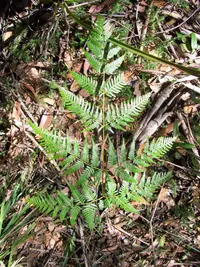
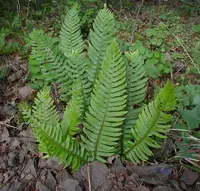
Austral bracken (Pteridium esculentum) is a vigorous, rhizome-forming fern native to Australia, New Zealand, and some Pacific islands. It typically forms large, spreading colonies with upright, triangular fronds that create a soft, ferny canopy.

This species thrives in open woodlands, disturbed ground, and roadsides, showing strong tolerance to wind, poor soils, and light frosts. Its tough underground rhizomes store energy, making it resilient and sometimes difficult to control in suitable climates.

For gardeners who want to care for Austral Bracken, its adaptability can be an advantage, but the plant needs space and some containment. It generally prefers bright, filtered light, consistent soil moisture, and well-drained, slightly acidic ground.

Main Plant Requirements

Care Difficulty

Moderate Care

Light Preference

Partial Shade

Water Requirements

Moderate Water

Temperature Preference

Warm Climate

Hardiness Zone

8–11

Soil Texture

Sandy, Loamy, Organic-rich

Soil pH

Acidic (5.5–6.5), Slightly acidic (6.5–7.0)

Soil Drainage

Moist but well-drained

Fertilization

Minimal (feed rarely)

Get Personalized Care Plan

Scan your plant to receive care tips personalized for your specific plant

Available on iOS and Android

How to Care for the Austral Bracken

This fern prefers bright, filtered light that mimics open woodland or forest-edge conditions.

  • Provide 3–6 hours of bright, indirect light daily, with dappled or morning sun and protection from harsh midday and afternoon rays.
  • Austral Bracken tolerates light shade, but fronds become sparse and elongated if grown in deep shade for long periods.
  • In hot summers, increase shade cover to prevent leaf scorch, while in cooler seasons slightly more direct morning sun supports firm, compact growth.

This species prefers consistently moist, well-drained soil and reacts quickly to both drought and waterlogging.

  • Aim for soil that stays evenly moist; allow only the top 2–3 cm to start drying before watering again, especially in active growth.
  • During hot, dry weather, check soil every 1–2 days; drooping or crisping frond tips suggest underwatering, while yellowing and limp fronds indicate excess moisture.
  • Ensure soil drains freely, with no standing water; on heavy soils, raised beds or added organic matter reduce root rot risk for Pteridium esculentum.

This fern thrives in mild, frost-free to light-frost climates with moderate seasonal variation.

  • Optimal growth occurs around 60–75°F (16–24°C), where fronds expand steadily and remain a healthy green.
  • Plants tolerate brief drops to about 25–28°F (-4 to -2°C), but repeated hard frosts can damage fronds, which may die back and reshoot in warmer weather.
  • In hotter regions, growth slows above 86°F (30°C); provide shade, mulch, and soil moisture to buffer roots from temperature extremes.

This fern prefers moderately moist air but usually adapts to typical household humidity.

  • Aim for 50–70% humidity, especially in heated homes where air dries out in winter.
  • Austral Bracken shows humidity stress through crisping frond tips and slow unfurling of new fronds.
  • Increase humidity by grouping plants, placing the pot on a pebble tray with water, or using a small room humidifier nearby.

This species prefers loose, moist, well-drained, organic-rich soil that mimics a forest floor.

  • Use a mix of 50–60% composted bark or leaf mold, 20–30% peat-free compost, and 20–30% coarse sand or perlite for structure and drainage.
  • Aim for slightly acidic soil, around pH 5.5–6.5, which supports healthy root and rhizome development in Pteridium esculentum.
  • Ensure excess water drains quickly; waterlogged or compacted soil causes rhizome rot and weak, yellowing fronds.
  • Improve aeration by avoiding very fine potting mixes and by incorporating coarse particles that keep small air gaps around the roots.

This fern can be grown in containers if given space for its spreading rhizomes and stable, moist conditions.

  • Choose a wide, shallow pot so rhizomes can spread horizontally rather than forcing deep vertical growth.
  • Select a heavy or clay container to resist tipping as fronds arch outward and catch wind on balconies or patios.
  • Raise the pot slightly on feet or bricks to let drainage holes clear freely and prevent the base sitting in runoff water.

This fern is adapted to low-nutrient soils, so Austral Bracken care instructions focus on minimal fertilizing rather than heavy feeding.

  • Use a light dressing of compost or leaf mold in spring to mimic natural forest litter.
  • Where extra feeding is needed, apply a diluted balanced NPK (around 10-10-10) at 1/2–1/4 strength.
  • Feed only during the active growing season, every 4–6 weeks at most.
  • Avoid fertilizing in winter or dormancy to prevent weak, overly soft fronds.

Pteridium esculentum needs only light pruning to keep plantings tidy and within bounds.

  • Cut dead, damaged, or diseased fronds at the base whenever noticed, using clean hand pruners.
  • In late winter or early spring, remove old, browned fronds to make space for new growth.
  • Thin overly crowded fronds to improve air movement and reduce fungal problems.
  • Avoid cutting into underground rhizomes, as this can stress the plant and reduce vigor.

This bracken is usually grown in the ground, so care centers on dividing and transplanting clumps rather than frequent repotting.

  • Plan division and transplanting for early spring or early fall, when temperatures are mild.
  • Lift crowded clumps or container plants if growth slows, fronds shrink, or roots circle the pot.
  • Divide rhizomes into sections with several healthy buds and fronds, using a clean, sharp knife or spade.
  • Replant at the same depth, water thoroughly, and keep soil evenly moist to limit transplant shock.

Pteridium esculentum is most practically propagated by division of its rhizomes, while spore propagation is slower and more advanced.

  • Divide established clumps in early spring or early fall, when the plant is not in peak growth.
  • Select vigorous rhizome sections with multiple buds and attached fronds, then replant into moist, well-drained soil.
  • Keep divisions shaded with consistent moisture until new fronds emerge and establish.
  • Spore propagation requires sterile, consistently moist conditions and is mainly used by experienced fern growers.

This fern is generally cold hardy in mild to cool climates and usually needs little specific winter care.

  • In colder regions, apply a 5–8 cm layer of leaf mulch over the root zone to insulate rhizomes.
  • Allow frosted fronds to die back naturally, then remove them in late winter or early spring.
  • Container-grown plants in marginal climates can be overwintered in a cool, frost-free, bright location.

Care Tips

Contain Rhizome Spread

Install a 20–30 cm deep root barrier or grow in a large, bottomless container sunk into the ground to keep the spreading rhizomes from invading nearby beds while still allowing the fern to form a dense colony.

Encourage Fresh Fronds

Cut back old, damaged, or frost-burned fronds close to the base at the end of winter to stimulate a flush of clean new growth in spring and reduce fungal spore load near emerging shoots.

Mulch For Cool Roots

Apply a 5–8 cm layer of leaf litter, fine bark, or bracken straw around the crown, keeping it a few cm away from the stems, to stabilize soil moisture and keep the shallow rhizomes cool in hot weather.

Shield From Wind

Use windbreak mesh or plant on the sheltered side of shrubs or a low fence to protect the tall, light fronds from tearing or snapping in strong wind, which helps maintain a full, even canopy when growing Austral Bracken.

Monitor Naturalized Patches

Mark the intended boundary of the planting and routinely remove or slice off emerging fronds that appear beyond it during the growing season to prevent the fern from becoming invasive in mixed borders or near native vegetation.

Common Pests and Diseases

Bracken fern aphids

This pest feeds on young fronds and rachises, causing distortion, yellowing, and sticky honeydew on the foliage. Symptoms include curled tips and sooty mold growth on the sugary deposits.

Solution

Rinse colonies off with a firm stream of water, focusing on the undersides of fronds and tender growth. For persistent outbreaks, apply a ready-to-use insecticidal soap or horticultural oil, repeating every 7–10 days until new growth appears clean, and avoid high nitrogen fertilization that encourages soft, aphid-prone tissue.

Bracken sawfly larvae

These insects skeletonize fronds, leaving only the main veins and giving the plant a scorched or lace-like appearance. Damage is often patchy but can be severe on young stands or potted plants.

Solution

Hand-pick larvae where practical and destroy heavily infested fronds to reduce numbers. Where damage is ongoing, use a targeted bioinsecticide containing Bacillus thuringiensis (Bt) labeled for sawfly control, and maintain diverse vegetation around plantings to support natural predators such as birds and predatory wasps.

Bracken leaf spot

This disease causes small brown or black spots that can merge into irregular lesions, leading to premature browning of fronds. Symptoms include thinning foliage and reduced vigor in dense, shaded stands.

Solution

Remove and discard affected fronds at the first sign of spotting to lower the spore load, and avoid overhead watering that keeps foliage wet. Improve air movement by thinning crowded clumps, keep the soil surface free of old frond debris, and in severe, recurring cases use a fern-safe fungicide according to label directions.

Fungal crown blight

This disease starts at the crown and lower frond bases, causing soft, brown tissue and collapse of emerging fronds. Symptoms include poor crozier (unfurling frond) development and dead patches in what was a continuous stand.

Solution

Cut out and discard all affected crowns and adjacent dead material, disinfecting tools between plants. Improve drainage and reduce dense mulch around crowns, then monitor new flushes of fronds; in badly affected plantings, a preventive soil-surface fungicide labeled for ferns can be used to protect new growth while conditions are wet.

Interesting Facts

Southern hemisphere native

This fern is naturally widespread across Australia, New Zealand, and parts of the southwest Pacific, where it dominates many open forests, heaths, and disturbed sites after fire or land clearing.

Aggressive rhizome network

It spreads extensively via tough underground rhizomes that can resprout after cutting or burning, allowing it to form dense, long-lived colonies that outcompete many other understory plants.

Edible yet regulated

The starchy rhizomes and young fronds were traditionally processed and eaten by Indigenous peoples in Australia and New Zealand, but modern use is limited because the plant contains known carcinogenic compounds and is regulated in some regions.

Botan icon

Did you know?

This species can function as a long-term fire survivor and colonizer, with its deep rhizomes often remaining alive after intense bushfires, allowing it to rapidly cover burnt ground and strongly influence how plant communities recover.

FAQs about Austral Bracken

This species spreads strongly via underground rhizomes and spores, often forming large colonies. In gardens it can become difficult to control without physical barriers, regular cutting of new fronds, or careful removal of rhizomes over time.

Grow Healthy Plants with Botan Care

Keep your plants happy and healthy with plant identification, disease detection, and easy care guidance.

Botan plant care app — identify plants on mobile

Explore More Plants