Toothed-leaved Clubmoss Care (Selaginella denticulata)

Also known as: Mediterranean clubmoss, Denticulate Spikemoss
Toothed-leaved Clubmoss

About Toothed-leaved Clubmoss

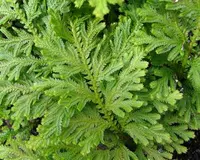
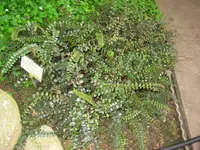
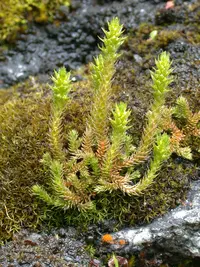
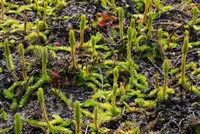
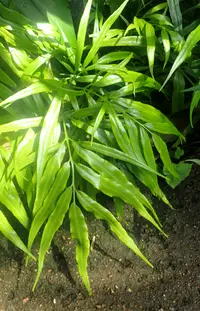
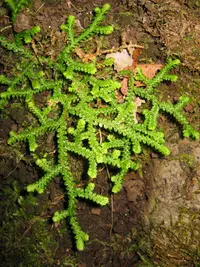
Toothed-leaved clubmoss (Selaginella denticulata) is a small, primitive spore-producing plant related to ferns, not a true moss. It forms low, spreading mats of finely divided, toothed foliage that often looks mossy and delicate. It naturally occurs in shaded, humid habitats, often on rocky slopes or forest floors in Mediterranean and mild-temperate regions. Its shallow roots and fine stems dry out quickly, so it needs consistently moist conditions and good humidity. Due to its sensitivity to drying and preference for stable, cool to mild conditions, it can be moderately challenging indoors. Those who learn how to care for Toothed-leaved Clubmoss often grow it in terrariums, shaded planters, or other protected, evenly moist setups.

Main Plant Requirements

Care Difficulty

Hard Care

Light Preference

Partial Shade

Water Requirements

Keep Soil Moist

Temperature Preference

Tropical / Frost Sensitive

Hardiness Zone

9–11

Soil Texture

Loamy, Peaty, Organic-rich

Soil pH

Strongly acidic (4.5–5.5), Acidic (5.5–6.5)

Soil Drainage

Moist but well-drained

Fertilization

Light (every 4–6 weeks)

Get Personalized Care Plan

Scan your plant to receive care tips personalized for your specific plant

Available on iOS and Android

How to Care for the Toothed-leaved Clubmoss

This shade-loving fern ally prefers soft, filtered light that mimics a forest floor.

  • Provide bright, indirect light or dappled shade, such as under taller plants or trees; 1–2 hours of gentle morning sun is acceptable, but avoid direct midday or afternoon sun.
  • In outdoor sites, choose north- or east-facing exposures where foliage is protected from harsh light that can scorch and bleach Toothed-leaved Clubmoss fronds.
  • In summer, increase shade or add light fabric cover during intense sun; in winter, allow slightly brighter indirect light while still avoiding direct rays through glass.

Moist, never dry soil is essential for healthy Selaginella denticulata growth.

  • Maintain consistently damp soil; allow only the top 0.5–1 cm to begin to feel less moist before watering again, rather than letting it fully dry out.
  • Use loose, humus-rich soil that drains well yet retains moisture, and avoid standing water, which leads to stem rot and a sour smell in the potting mix or bed.
  • Watch for curling, crisp fronds as a sign of underwatering, and for yellowing, mushy stems or algae on the soil surface as signs of overwatering.

This species thrives in mild, stable temperatures that resemble a cool, humid woodland.

  • Aim for 60–75°F (16–24°C) for steady growth; short dips to 50°F (10°C) are usually tolerated but may slow new foliage.
  • Protect from frost; damage often occurs near 32°F (0°C), so provide mulch or shelter if outdoor temperatures approach freezing.
  • In hot periods above 80°F (27°C), increase humidity, shade, and soil moisture, and avoid placing the plant next to reflective surfaces or hot walls.

This species needs constantly high humidity to keep foliage dense and hydrated.

  • Aim for 70–90% humidity, as Toothed-leaved Clubmoss quickly declines in drier air.
  • Crisping tips, curling fronds, and slowed growth indicate humidity is too low.
  • Use a closed terrarium, cabinet, or humidifier rather than misting, which dries quickly and can encourage spotting.

This species prefers a loose, moist, organic-rich mix that mimics a forest floor.

  • Use a fine-textured blend of 40% peat or coco coir, 40% compost, and 20% perlite for Selaginella denticulata.
  • Ensure the mix holds moisture but drains freely; water should never pool on the surface for more than a few minutes.
  • Target slightly acidic conditions around pH 5.5–6.5 to support nutrient uptake and root health.
  • Avoid heavy garden soil or mixes dominated by sand or bark, which either compact or dry too quickly for this species.

This plant is well suited to container culture, especially shallow, moisture-retentive setups.

  • Choose a wide, shallow pot so the creeping stems can spread while the shallow roots stay evenly moist.
  • Select plastic or glazed ceramic over terracotta to reduce evaporation and maintain consistent moisture in the root zone.
  • Use a drainage layer only if it does not reduce soil depth, since this species prefers a continuous, evenly moist profile.

Selaginella denticulata benefits from light, careful feeding rather than heavy fertilization.

  • Use a balanced liquid fertilizer (around 10-10-10 or 20-20-20) diluted to 1/4–1/2 strength for Toothed-leaved Clubmoss in containers.
  • Apply every 4–6 weeks during the active growing season, once plants show fresh, soft shoot growth.
  • Skip or greatly reduce feeding in winter or any dormant period, especially in low light conditions.
  • Flush the pot with plain water occasionally to avoid salt buildup that can burn delicate roots and foliage.

Selaginella denticulata only needs light pruning to maintain dense, healthy mats of growth.

  • Best time for pruning is during active growth in spring or early summer, avoiding periods of stress or heat waves.
  • Pinch or trim back weak, leggy, or browned tips to encourage compact, branching growth.
  • Remove dead, damaged, or overcrowded stems with small, sharp scissors or snips, cutting just above healthy tissue.
  • Disinfect tools before use and avoid removing more than about 1/3 of the foliage at one time to limit shock.

This species prefers stable, moist conditions, so repotting or transplanting should be infrequent and gentle.

  • Repot container plants only when roots circle the pot, growth slows without other cause, or the mix breaks down and stays soggy.
  • Plan moves for spring, when Selaginella denticulata resumes active growth and can re-establish faster.
  • Expect to repot every 2–3 years, shifting to a slightly larger container with a loose, moisture-retentive, humus-rich mix.
  • Minimize root disturbance, keep the original soil mass intact, water thoroughly, then maintain high humidity and even moisture for several weeks.

Propagation of Selaginella denticulata is commonly done by division and short stem cuttings under high humidity.

  • Best season is spring to early summer, when new shoots are firm but still flexible and roots are actively growing.
  • Lift or unpot a dense clump, then gently divide into small sections, each with roots and several healthy stems.
  • For stem cuttings, place 3–5 cm tip pieces flat on moist, fine-textured mix so nodes contact the surface and can root.
  • Maintain constant moisture, bright shade, and very high humidity, using a covered tray or propagator, until new growth confirms establishment.

This plant is not strongly frost hardy and benefits from sheltered, mild winter conditions, especially in containers.

  • In regions with frost, grow in pots and move indoors to a cool, bright, frost-free room before temperatures fall near 40°F.
  • Keep soil lightly moist but not waterlogged in winter, as cold, saturated mix increases root rot risk.
  • For outdoor clumps in mild climates, site in a protected, shaded location and mulch lightly to buffer root-zone temperature fluctuations.

Care Tips

Shallow, Wide Pots

Use a wide, shallow container rather than a deep one to match the plant’s creeping habit and reduce the risk of waterlogged lower layers that can rot fine roots and stems.

Edge Containment Strips

Place a narrow ring of inert material such as clean stones or plastic edging around the planting area to gently contain creeping stems and maintain a dense, tidy mat instead of an irregular spread.

Layering For Renewal

Pin a few healthy stem tips onto fresh moist substrate with small U-shaped wire pins so they root in place, then gradually remove older, thinning sections to keep the colony young and compact.

Cool-Season Rest

In cooler months reduce handling and avoid repotting or division, allowing the plant to maintain a stable microclimate while it naturally slows growth.

Microclimate Grouping

Group pots close together on a single tray with moistened pebbles to create a local zone of higher humidity and more stable conditions, which is especially helpful when caring for Toothed-leaved Clubmoss in centrally heated homes.

Common Pests and Diseases

Fungal leaf blight

This disease causes water-soaked, translucent patches on the delicate fronds that turn tan or brown and may lead to frond collapse in persistently wet, stagnant conditions.

Solution

Remove and discard affected fronds, then improve air movement around the plant and avoid water sitting on the foliage. Allow the soil surface to dry slightly between waterings while still keeping the root zone evenly moist, and use a copper- or sulfur-based fungicide only if new spots continue to appear.

Rhizoctonia stem rot

This disease starts at the soil line, where creeping stems may turn brown, mushy, and collapse, often spreading rapidly through the mat-forming growth.

Solution

Trim out and discard all soft, discolored stems and any adjacent dead foliage, then repot into fresh, well-draining but moisture-retentive mix and a clean pot. Reduce crowding, irrigate with room-temperature water from below or at the soil level, and keep humidity high through trays or room humidifiers rather than frequent overhead misting to support healthy regrowth and proper Selaginella denticulata care.

Spider mites

These pests thrive in warm, dry indoor air and cause fine speckling, dulling, and eventual bronzing of the tiny leaves, sometimes with delicate webbing between stems.

Solution

Rinse the plant thoroughly with lukewarm water, focusing on the undersides of fronds, then increase humidity to 60–80% and avoid letting the plant dry out. If activity persists, apply insecticidal soap or a light horticultural oil spray every 5–7 days until no mites are seen.

Fungus gnat larvae

These insects live in consistently wet potting mixes and their larvae can chew on fine roots and stem bases, leading to slow decline, poor growth, and increased susceptibility to rot.

Solution

Allow the top 1–2 cm of the substrate to dry slightly between waterings while keeping deeper layers evenly moist, and remove any decaying plant debris from the soil surface. Use yellow sticky traps for adults and, if needed, apply a biological control such as Bacillus thuringiensis israelensis (Bti) or beneficial nematodes to reduce larvae in the potting mix.

Interesting Facts

Mediterranean rock specialist

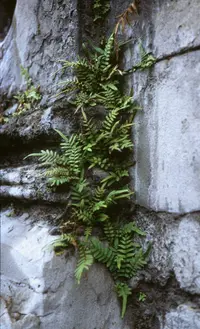
This species naturally grows on shaded, moist limestone rocks and walls in Mediterranean regions, where its creeping stems anchor into tiny crevices and thin soil films.

Toothed leaf margins

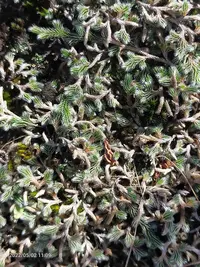
Its small scale-like leaves have minute tooth-like projections along the edges, which give the plant its name and create a fine, textured surface under magnification.

Shallow, mat-forming habit

The plant forms low, spreading mats only a few centimeters tall, allowing it to cover rock faces and walls while retaining moisture around its delicate stems and roots.

Botan icon

Did you know?

Unlike many mosses it resembles, this species is a vascular plant with specialized water-conducting tissues, reflecting its evolutionary position as a living relative of some of the earliest land plants with true veins.

FAQs about Toothed-leaved Clubmoss

This species does not climb. It forms low, creeping mats with trailing stems that root along the nodes. Over time it spreads horizontally, creating a dense carpet rather than gaining noticeable height or vertical structure.

Grow Healthy Plants with Botan Care

Keep your plants happy and healthy with plant identification, disease detection, and easy care guidance.

Botan plant care app — identify plants on mobile

Explore More Plants