Alluaudia montagnacii Care

Alluaudia montagnacii

About Alluaudia montagnacii

Alluaudia montagnacii is a succulent shrub to small tree from the dry spiny forests of southwestern Madagascar. It belongs to the Didiereaceae family, a group of arid-climate specialists.

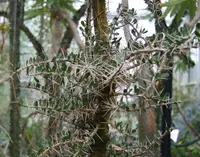
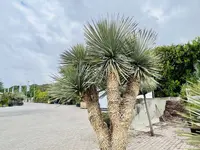
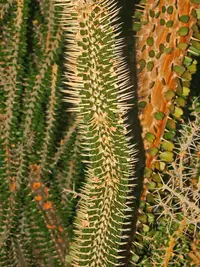
The plant forms upright, segmented gray-green stems lined with sharp spines and small oval leaves that cluster close to the stem. Over time, it develops a striking, architectural silhouette.

This species is adapted to intense sun, heat, and long dry periods, which makes indoor culture challenging without strong light and careful watering. Those who learn how to care for Alluaudia montagnacii often value it as a long-lived, sculptural specimen.

It prefers bright, direct light, very fast-draining mineral soil, and infrequent but thorough watering, especially during its active warm-season growth.

Main Plant Requirements

Care Difficulty

Moderate Care

Light Preference

Full Sun

Water Requirements

Low Water

Temperature Preference

Tropical / Frost Sensitive

Hardiness Zone

10–12

Soil Texture

Sandy, Loamy, Rocky

Soil pH

Slightly acidic (6.5–7.0), Neutral (7.0)

Soil Drainage

Well-drained

Fertilization

Minimal (feed rarely)

Get Personalized Care Plan

Scan your plant to receive care tips personalized for your specific plant

Available on iOS and Android

How to Care for the Alluaudia montagnacii

This drought-adapted succulent shrub needs strong light to build sturdy, leafy stems.

  • Provide 6–10 hours of full sun daily; outdoor plants thrive in open, unobstructed exposure in warm, dry climates.
  • Tolerates light afternoon shade, especially in very hot regions, but long-term shade leads to weak, stretched growth and sparse leaves in Alluaudia montagnacii.
  • Acclimate gradually to intense sun in late spring to prevent stem scorch, and avoid sudden moves from low light to harsh midday sun.

This species prefers infrequent, deep watering and fast-drying, gritty soil.

  • Water only when the top 3–5 cm of soil are completely dry; in hot active growth this may mean roughly every 7–14 days in very free-draining ground.
  • Reduce watering sharply in cool seasons; in winter, keep almost dry, giving a light soak only if stems start to wrinkle slightly.
  • Use sharply draining, sandy or rocky soil and avoid standing water; yellowing, soft stems or a sour soil smell indicate overwatering and root rot risk for Alluaudia montagnacii.

This Madagascan succulent prefers warm, arid conditions with no frost exposure.

  • Aim for 70–90°F (21–32°C) during active growth, as warm days and cooler but not cold nights support strong stem and leaf development.
  • Protect from temperatures below 40°F (4°C); brief dips to 35°F (2°C) may be tolerated but repeated or hard frost will scar or kill young tissue.
  • In hot spells above 95°F (35°C), the plant copes well if soil is very free-draining and roots are not waterlogged, but strong airflow is important to prevent heat stress.

This drought-adapted succulent tolerates typical indoor humidity and does not need special humidity management.

This species needs a very fast-draining, mineral-rich substrate to prevent root rot.

  • Use a gritty, sandy mix such as 50–70% inorganic material (pumice, coarse sand, small gravel) with the rest a cactus potting base.
  • Aim for slightly acidic to neutral pH, around 6.0–7.0, which suits most commercial cactus/succulent mixes.
  • Increase aeration by using large-grain particles (3–6 mm) and avoid fine peat that compacts and stays wet around the roots.
  • Avoid dense, water-retentive garden soil or high-compost mixes, which trap moisture and quickly damage this arid-adapted root system.

This species is well-suited to container growing due to its slow, upright, succulent habit.

  • Choose a heavy clay or ceramic pot to counterbalance the tall, top-heavy stems and reduce tipping risk outdoors.
  • Select a container that is deeper than it is wide so the narrow root system can anchor the vertical canes securely.
  • Ensure drainage holes are fully open and elevate the pot slightly so excess water leaves the container rapidly after watering.

This drought-adapted succulent needs only light feeding to maintain healthy growth.

  • Apply a diluted balanced liquid fertilizer (around 10-10-10 at 1/4 strength) once a month in late spring and summer for Alluaudia montagnacii.
  • Choose a product formulated for cacti and succulents, or use a slow-release granular fertilizer sparingly on the soil surface.
  • Avoid feeding in fall and winter when growth slows, to prevent weak, elongated stems.
  • Always water lightly after fertilizing to distribute nutrients and limit root burn.

Pruning is mainly used to control height and remove damaged growth on this spiny succulent shrub.

  • Carry out structural pruning in late spring, after the risk of cold snaps has passed.
  • Use clean, sharp bypass pruners and heavy gloves to handle spiny branches safely.
  • Remove dead, damaged, or crossing stems to maintain an open, vertical form and reduce disease risk.
  • Shorten overly tall or leggy shoots to encourage branching and a denser silhouette for Alluaudia montagnacii.

Container-grown plants benefit from infrequent repotting focused on root health and drainage.

  • Check for roots circling the pot, emerging from drainage holes, or unexplained slow growth as signals to repot.
  • Plan to repot every 3–4 years in late spring, when active growth supports recovery from disturbance.
  • Move into a pot only 2–5 cm wider, using a fast-draining cactus mix to limit root rot.
  • Loosen circling roots gently, keep the root ball mostly intact, and water lightly afterward to reduce stress.

This species is usually propagated from stem cuttings under warm, bright conditions.

  • Take semi-woody stem cuttings in late spring or early summer from healthy, non-flowering shoots of Alluaudia montagnacii.
  • Allow cut ends to callus for several days, then place in a gritty, barely moist cactus mix.
  • Maintain temperatures around 70–80°F with bright indirect light and good airflow to limit rot.
  • Once new growth appears and roots are firm, gradually increase light and reduce humidity.

This plant is frost-sensitive and needs protection in regions with cold winters.

  • Keep temperatures above 40°F; prolonged exposure near freezing can scar or kill tissue.
  • Move container plants indoors or into a bright greenhouse before the first frost.
  • Provide maximum light indoors and keep soil on the dry side to prevent root rot in Alluaudia montagnacii.
  • Avoid cold drafts on indoor specimens and do not expose them to unheated windowsills during hard freezes.

Care Tips

Early staking support

Install a sturdy, sun-resistant stake when the plant is still young and loosely tie the main stem in 2–3 places with soft ties to prevent wind damage and leaning as the tall, heavy columns develop.

Controlled branching cuts

To encourage a fuller column, tip-prune only the very top 1–2 cm of the main stem in late spring, which can stimulate side-branching without overly slowing vertical growth.

Winter light rotation

During low-light winter months, rotate the container 90° every 2–3 weeks so the columnar stems do not bend permanently toward one side, which keeps the plant upright and structurally balanced.

Safe handling routine

Use thick gloves and long sleeves when repotting or pruning, and keep a pair of dedicated long-handled tongs or chopsticks to reposition stems without breaking the brittle, spiny branches.

Root zone monitoring

Periodically slide the root ball partly out of the pot at the start of the warm season to check for dense circling roots and, if present, root-prune lightly and shift to a slightly larger, heavy container to maintain stability and healthy growth when growing Alluaudia montagnacii.

Common Pests and Diseases

Mealybugs

This pest feeds on stems and leaf bases, often hiding along the spiny joints where it is protected and hard to see. Symptoms include white cottony clusters, sticky honeydew, and slow, weak growth.

Solution

Isolate the plant, then dab visible mealybugs with cotton swabs dipped in 70% isopropyl alcohol and repeat weekly until no new clusters appear. For heavier infestations, use a systemic insecticide labeled for succulents or apply a horticultural oil spray, making sure to reach between spines and along the entire stem, and improve light and airflow to reduce reinfestation when caring for Alluaudia montagnacii.

Spider mites

These insects thrive on Alluaudia in hot, dry indoor air, especially in bright window positions. Symptoms include fine webbing between spines, dusty-looking stems, and gradual yellowing or bronzing of the small leaves before they drop.

Solution

Rinse stems thoroughly under a strong, lukewarm water stream, focusing on joints and undersides of leaves, then allow the plant to dry in bright, indirect light. Follow up with 2–3 applications of insecticidal soap or a labeled miticide at 5–7 day intervals and slightly increase ambient humidity and airflow to make conditions less favorable for mites.

Scale insects

This pest appears as small, hard, brown or gray bumps closely attached to stems and along the ridges between spines. Symptoms include honeydew, sooty mold growth on nearby surfaces, and gradual decline in vigor.

Solution

Gently scrape or pry off individual scales with a fingernail or soft tool and wipe stems with a cloth lightly moistened with 70% isopropyl alcohol. For persistent cases, apply a systemic insecticide or horticultural oil according to label directions, repeat after 10–14 days, and keep the plant in strong light to support recovery.

Fungal stem canker

This disease affects wounded or overwatered stems, especially in cool or poorly ventilated conditions. Symptoms include sunken, dark, or corky patches on the stem that may expand and cause sections above the lesion to shrivel or die back.

Solution

Cut out affected stem sections back into healthy, firm tissue using a sterile, sharp tool and discard all infected material. Allow the cut surface to dry and callus in a warm, bright, airy spot, correct any overwatering, and avoid wounding stems; in humid climates a preventative fungicidal spray labeled for succulent stem diseases can be applied after pruning.

Leaf drop from water stress

This physiological problem occurs when the plant experiences irregular watering, especially repeated cycles of prolonged drought followed by heavy soaking in low light. Symptoms include sudden yellowing and shedding of the tiny leaves while stems remain firm and green or gray-green.

Solution

Adjust the watering routine to allow the soil to dry almost completely between light, even waterings during active growth, and reduce watering sharply in cool or low-light periods. Use a fast-draining cactus mix in a pot with large drainage holes, avoid waterlogging the root zone, and maintain high light levels so the plant can rebuild a stable canopy.

Interesting Facts

Madagascar spiny thicket specialist

This species is native to the dry spiny forests of southwestern Madagascar, where it forms part of dense, thorny thickets adapted to intense sun and very low rainfall.

Deciduous in extreme drought

Unlike many succulent shrubs, it can drop most or all of its small, paired leaves during severe drought, relying on its water-storing stems to survive until rains return.

Spines from reduced leaves

Its prominent spines are modified leaves, while the true photosynthetic leaves are small and short-lived, an adaptation that reduces water loss in its arid habitat.

Botan icon

Did you know?

In its native range, this species can grow into tall, candelabra-like stands that serve as an important structural element of the spiny forest, providing perches for birds and acting as a living barrier that influences how both wildlife and people move through the landscape.

FAQs about Alluaudia montagnacii

Growth is usually slow to moderate. Young plants may add 5–15 cm per year, sometimes more in warm, bright, dry climates. Container-grown specimens grow more slowly and stay smaller than those planted in the ground.

Grow Healthy Plants with Botan Care

Keep your plants happy and healthy with plant identification, disease detection, and easy care guidance.

Botan plant care app — identify plants on mobile

Explore More Plants