Segmented potting
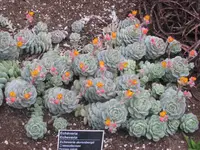
Plant several offsets in a wide, shallow pot with partitions or stones between clumps so each rosette has its own space and airflow, which reduces rot and makes it easier to remove individual plants later for propagation.

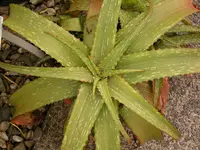
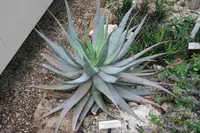
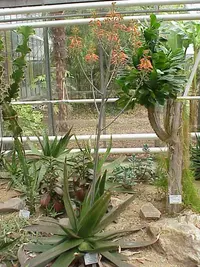
Soup aloe, Aloe grandidentata, is a compact, clumping succulent from arid regions of southern Africa. It forms low rosettes of thick, triangular leaves with coarse teeth along the edges. Mature plants may produce simple flower stalks with tubular orange to red blooms that attract pollinators outdoors. Its slow, tidy growth habit makes it suitable for containers, rock gardens, and indoor windowsills with strong light. This species prefers bright, dry conditions, fast-draining sandy or gritty soil, and careful watering that allows the roots to dry between waterings. These traits generally make it easier to care for Soup Aloe than many leafy houseplants, provided it is not overwatered or kept in deep shade.

Care Difficulty
Easy Care

Light Preference
Full Sun

Water Requirements
Low Water

Temperature Preference
Warm Climate

Hardiness Zone
9–11

Soil Texture
Sandy, Loamy, Rocky

Soil pH
Slightly acidic (6.5–7.0), Neutral (7.0)

Soil Drainage
Well-drained

Fertilization
Minimal (feed rarely)
Scan your plant to receive care tips personalized for your specific plant
Available on iOS and Android
This compact aloe prefers bright, direct light but benefits from some protection during the harshest hours.
This drought-adapted succulent prefers deep, infrequent watering in fast-draining soil.
This species prefers warm, dry conditions and is sensitive to prolonged cold and frost.
This species prefers dry indoor air and rarely needs humidity adjustment.
Aloe grandidentata needs a very fast-draining, mineral-rich substrate to prevent root rot.
This species is well suited to container growing when drainage and stability are controlled.
Aloe grandidentata benefits from light, controlled feeding during active growth in spring and summer.
Pruning Aloe grandidentata focuses on hygiene and maintaining a compact rosette form.
Repotting or transplanting Aloe grandidentata is needed only when the root system outgrows its container or site.
Propagation of Aloe grandidentata is commonly done from offsets, with seeds used mainly by more advanced growers.
Winter care for Aloe grandidentata centers on avoiding freezing temperatures and excessive soil moisture.

Plant Health Check
Not sure what's wrong with your plant? Check your plant's health inside the app.
This species forms small, compact rosettes that naturally occur in the arid Namaqualand and western parts of South Africa, often tucked between rocks or in shallow, gritty soils where larger aloes cannot compete.
Leaves carry prominent, forward-pointing teeth along the margins and often form a subtle herringbone pattern on the surface, which helps distinguish it from visually similar small aloes in the same region.
It typically flowers during the cooler months in its native range, producing orange to reddish tubular blooms that provide an important nectar source for sunbirds and insects when other resources are limited.
Yellowing usually comes from excess moisture, compacted soil, or prolonged low light. Check drainage holes, let the mix dry more between waterings, and remove any standing water. Older outer leaves yellowing slowly is normal aging.
Keep your plants happy and healthy with plant identification, disease detection, and easy care guidance.