Cape aloe Care (Aloe ferox)

Also known as: Bitter Aloe, Red Aloe, Tap Aloe, Ferocious Aloe, Cultivated Aloe, Uganda Aloes, Karoo Aloe
Cape aloe

About Cape aloe

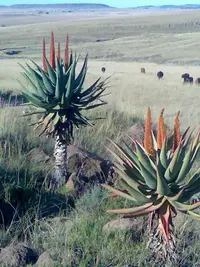
Cape aloe, Aloe ferox, is a large, single-stemmed succulent from arid regions of South Africa. It forms a tall rosette of thick, fleshy leaves with spines along the edges. In maturity, it produces tall spikes of tubular orange or red flowers above the foliage. This species is adapted to strong sun, dry conditions, and poor, rocky soils. Its drought tolerance and slow, upright growth habit make it suitable for spacious indoor containers or outdoor xeric gardens in mild climates. Understanding how to care for Cape aloe is mainly about providing bright light, good drainage, and avoiding overwatering.

Main Plant Requirements

Care Difficulty

Easy Care

Light Preference

Full Sun

Water Requirements

Low Water

Temperature Preference

Warm Climate

Hardiness Zone

9–11

Soil Texture

Sandy, Loamy, Rocky

Soil pH

Slightly acidic (6.5–7.0), Neutral (7.0)

Soil Drainage

Well-drained

Fertilization

Minimal (feed rarely)

Get Personalized Care Plan

Scan your plant to receive care tips personalized for your specific plant

Available on iOS and Android

How to Care for the Cape aloe

This sun-loving succulent thrives in bright, direct light similar to its native South African habitats.

  • Provide 6–8 hours of direct sun daily; full sun is ideal outdoors, with strongest midday sun introduced gradually to prevent leaf scorch.
  • In very hot climates, give Cape aloe light afternoon shade or filtered light to reduce sunburn risk while maintaining compact growth.
  • In winter or overcast seasons, move plants to the brightest available spot; pale, stretched leaves indicate not enough light, while brown, crispy patches suggest excess sun.

This drought-adapted species prefers deep, infrequent watering and fast-drying soil.

  • Water only when the top 3–5 cm of soil are completely dry; use a finger test rather than a fixed schedule, especially in variable weather.
  • During active growth in spring and summer, soak the root zone thoroughly, then let excess drain; reduce watering sharply in fall and winter.
  • Watch leaves for signals: soft, mushy, yellowing or blackening bases suggest overwatering, while thin, curling, or wrinkling leaves indicate it is staying dry too long in well-drained soil.

This succulent tolerates heat well but is sensitive to hard frost and prolonged cold, so temperature control is important.

  • Aim for 65–85°F (18–29°C) for strongest growth; warm, dry conditions with good air movement help reduce rot risk.
  • Protect Aloe ferox from frost; brief dips to 28–32°F (-2–0°C) may be survived if dry, but tissue damage and scarring are likely.
  • In very hot weather above 95°F (35°C), give some afternoon shade and avoid overhead watering in peak heat to limit leaf scorch and fungal problems.

This species prefers dry indoor air with low to moderate humidity around 30–40%.

  • Cape aloe tolerates very dry rooms well and usually does not need extra humidity devices.
  • Persistent leaf softness, pale growth, or fungal spotting can indicate excess humidity rather than dryness.
  • If air is extremely dry and hot, place the pot away from direct heat vents and group with other succulents to slightly buffer moisture loss.

Aloe ferox needs a sharply drained, mineral-rich mix that dries quickly between waterings.

  • Use a gritty blend such as 50–70% inorganic material (pumice, coarse sand, or small gravel) with 30–50% cactus mix or lean loam.
  • Ensure rapid drainage; water should run through in seconds and the mix should dry in 3–7 days in typical indoor conditions.
  • Aim for slightly acidic to neutral pH around 6.0–7.0, avoiding heavy peat-based mixes that stay wet for long periods.
  • Improve aeration by adding extra pumice or perlite and avoid any soil that compacts, stays soggy, or smells sour.

This species is suitable for container growing when the pot is chosen to manage its size and weight.

  • Select a wide, heavy container to counterbalance the tall, top-heavy rosette and prevent tipping in wind or on balconies.
  • Choose unglazed clay if moisture needs to dissipate faster in cooler, low-light settings where drying times are slower.
  • Use a pot only slightly wider than the root ball so the soil mass dries evenly rather than holding excess moisture at the edges.

Aloe ferox benefits from light feeding but is sensitive to excess nutrients in containers.

  • During spring–summer, apply a balanced liquid NPK fertilizer at 1/4–1/2 strength every 4–6 weeks after watering.
  • In ground, mature Cape aloe in lean, well-drained soil often needs little more than a thin spring layer of compost.
  • Choose a cactus or succulent fertilizer or a slow-release low-nitrogen product to limit soft, weak growth.
  • Stop feeding in fall–winter to avoid forcing growth during low light and cooler temperatures.

Pruning Aloe ferox is mainly done to maintain health, safety, and a tidy rosette.

  • Best time is late winter to early spring, before strong new growth starts.
  • Use clean, sharp pruning shears or a knife to remove dried lower leaves, damaged tips, and diseased tissue at the base.
  • Thin crowded or crossing leaves only where necessary to improve air flow and keep the rosette balanced.
  • Cut spent flower stalks low once they dry, which tidies the plant without affecting future flowering.

Container-grown Aloe ferox needs infrequent repotting but benefits from more space as it matures.

  • Check for roots circling the pot, pushing through drainage holes, or noticeably slowed growth as signals to repot.
  • Plan repotting or outdoor transplanting in spring, allowing the plant a full warm season to re-establish.
  • Repot every 3–5 years into a container 2–5 cm wider, using coarse, fast-draining cactus mix.
  • Handle the root ball gently, keep roots shaded, and avoid watering for 2–3 days after repotting to let any breaks callus.

Aloe ferox is most often propagated from offsets and seeds under warm, dry conditions.

  • Detach offsets in late spring–summer once they have several leaves and their own roots.
  • Let cut or broken surfaces dry and callus for 3–7 days before planting in sterile, gritty mix.
  • Provide bright, indirect light, 70–80°F warmth, and very light watering until new growth confirms establishment.
  • For seeds, sow on the surface of well-draining mix, barely cover, and keep slightly moist until germination.

Aloe ferox is moderately frost sensitive and requires simple winter care in most temperate climates.

  • In USDA zones below 9, grow in containers and move indoors before temperatures drop near 32°F.
  • Outdoors in mild climates, site plants in very free-draining soil and on a slight slope to prevent winter wet.
  • Mulch lightly with coarse gravel around the root zone, keeping mulch away from the stem to reduce rot risk.
  • Indoors, give maximum light, cooler but frost-free conditions, and water sparingly so soil dries almost fully.

Care Tips

Heavy pot choice

Use a wide, heavy terracotta or concrete pot to stabilize the tall, top‑heavy rosette and reduce the risk of the plant tipping over as the stem elongates.

Progressive stem raising

As the stem slowly lifts the rosette higher, top up the pot with fresh gritty mix around the base every 1–2 years, then repot deeper only when necessary to keep roots covered and the plant anchored.

Sun acclimation routine

When moving a plant from indoors or shade into stronger sun, increase light exposure in 30–60 minute increments every few days to prevent leaf scorch on the thick, waxy foliage.

Winter dryness strategy

In cool indoor winters, place the pot on a slight incline or use pot feet so any residual water drains quickly, which helps prevent root and stem rot during the semi‑dormant period.

Pest scouting pattern

Inspect the leaf bases and tooth-lined margins monthly for mealybugs or scale, wiping with a cotton pad dipped in 70% isopropyl alcohol at the first sign of pests as part of a regular routine for caring for Cape aloe.

Common Pests and Diseases

Aloe mite

This pest causes abnormal, warty or cauliflower-like swellings on leaves and inflorescences, often reddish or brown and distorted. Symptoms include rough galls that replace normal smooth leaf tissue, especially around leaf edges and flower stalks.

Solution

Remove and destroy all affected leaves or entire rosettes well below any visible swelling, then dispose of them in the trash, not compost. Isolate the plant, disinfect cutting tools with alcohol after use, and in outdoor plantings consider a targeted miticide labeled for eriophyid mites if new galls keep appearing.

Aloe rust

This disease produces small yellow spots on leaves that turn dark brown to black with a distinct border, often visible on both leaf surfaces. Symptoms include round to oval lesions that may merge under humid conditions, reducing the plant’s vigor.

Solution

Cut off and discard affected leaves to reduce spore load, keep leaves dry when watering, and improve spacing and airflow around plants. In wet or coastal climates, use a copper-based fungicide at label rates when new spots first appear and avoid overhead irrigation to support long-term Aloe ferox care instructions.

Aloe scale

This pest appears as small, hard, brown or gray bumps clustered along leaf bases, undersides, and in leaf axils, often with sticky honeydew present. This pest weakens plants, causing yellowing and reduced growth if colonies are heavy.

Solution

Manually scrape or gently rub off scales with a soft brush or cloth dipped in diluted alcohol, then rinse the plant with water. For persistent infestations, apply a horticultural oil or insecticidal soap thoroughly to leaf bases and undersides, repeating every 7–10 days until new growth is clean.

Aloe aphid

These insects are small, soft-bodied, and usually dark green to black, clustering on flower stalks, buds, and young leaves where they suck sap. Symptoms include deformed new growth, sticky honeydew, and sometimes sooty black mold on leaf surfaces.

Solution

Spray affected areas with a firm stream of water to dislodge aphids, then follow with insecticidal soap or neem oil, ensuring full coverage of flower stalks and leaf bases. In outdoor situations, encouraging natural predators like lady beetles and avoiding high-nitrogen fertilizer helps prevent resurgence.

Leaf spot blight

This disease causes irregular brown or gray sunken spots on leaves, sometimes with a darker edge and a pale halo, starting on older leaves or shaded tissue. Symptoms include lesions that may coalesce and lead to premature leaf death, especially in humid or poorly ventilated conditions.

Solution

Remove and discard leaves with extensive spotting, avoid wetting the foliage when watering, and ensure strong airflow and full sun exposure appropriate for the species. In persistent wet climates, protect plants with a broad-spectrum fungicide labeled for succulent leaf spots, and reduce crowding in container groupings or landscape plantings.

Interesting Facts

Cape thicket sentinel

This species often forms dominant stands in South African thicket and karoo shrublands, where its tall trunks and dense rosettes act as structural pillars that shape local plant communities and provide shelter for small animals and birds.

Winter-flowering strategy

It typically flowers in the Southern Hemisphere winter, producing tall orange to red flower spikes rich in nectar that support sunbirds and many insect pollinators when few other large succulents are in bloom.

Distinctive leaf armor

Mature plants develop thick, upward-curving leaves with prominent reddish-brown teeth along the margins and on the lower surface, a combination that reduces herbivory and helps shade parts of the leaf surface in intense sun.

Botan icon

Did you know?

The species hybridizes naturally with several other aloes in the wild, and these stable hybrid swarms can make field identification challenging, providing botanists with clear examples of how closely related aloe species may exchange genes where their ranges overlap.

FAQs about Cape aloe

Brown tips or edges usually come from underwatering, low humidity, intense reflected heat, or fertilizer salts accumulating in the soil. Check root health, flush the pot occasionally, and adjust watering rather than misting the foliage.

Grow Healthy Plants with Botan Care

Keep your plants happy and healthy with plant identification, disease detection, and easy care guidance.

Botan plant care app — identify plants on mobile

Explore More Plants