Spore-friendly handling
Harvest only a portion of mature caps and gently tap them over the collection area so some spores fall back to the forest floor, which helps maintain future fruiting of the mycelium network.

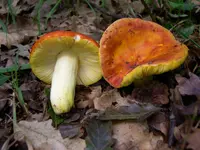
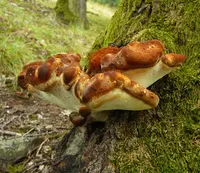
Gilded brittlegill (Russula aurea) is a forest mushroom, not a houseplant, known for its striking golden to red cap and fragile, crumbly flesh. It forms mycorrhizal partnerships with trees, especially broadleaf species, helping exchange nutrients between soil and roots.
This fungus typically appears on the ground in summer and early autumn in temperate woodlands across Europe and parts of Asia. It is generally regarded as edible, but identifying it correctly is essential before any use.
For those who want to care for gilded brittlegill in a managed woodland or garden setting, healthy tree partners, undisturbed leaf litter, and consistently moist, well-drained soil are key ecological needs.

Care Difficulty
Moderate Care

Light Preference
Partial Shade

Water Requirements
Keep Soil Moist

Temperature Preference
Cool Climate

Hardiness Zone
Unknown

Soil Texture
Loamy, Organic-rich

Soil pH
Acidic (5.5–6.5)

Soil Drainage
Moist but well-drained

Fertilization
Minimal (feed rarely)
Scan your plant to receive care tips personalized for your specific plant
Available on iOS and Android
This forest mushroom prefers dappled woodland light rather than open, direct sun.
Russula aurea depends on consistently moist, not waterlogged, forest soil.
This species fruits in mild conditions and declines in persistent heat or hard frost.
Humidity is not a meaningful care factor for Russula aurea, which is a wild mycorrhizal mushroom rather than a houseplant.
Russula aurea naturally grows in forest soil, forming symbiotic relationships with tree roots rather than in managed pots or beds.
This species is not suitable for container growing, as it depends on complex underground associations with living tree roots that containers cannot replicate.
Russula aurea is a wild mycorrhizal fungus that generally does not need direct fertilization when growing in suitable soil with its tree partners.
Russula aurea mushrooms are not pruned; they are short-lived fruiting bodies of a subterranean fungal network.
This ectomycorrhizal fungus is not suited to normal repotting and is rarely cultivated in containers.
Propagation of Russula aurea is specialized and not typically attempted by home growers.
This forest fungus is naturally cold hardy in its native range and needs no specific winter care from gardeners.

Plant Health Check
Not sure what's wrong with your plant? Check your plant's health inside the app.
Mature fruiting bodies often show a rich golden-yellow to orange cap with paler margins, a color combination that helps distinguish it from many red- or brown-capped Russula species in mixed woodlands.
This species forms ectomycorrhizal associations with broadleaf trees such as beech and oak, exchanging mineral nutrients from the soil for sugars produced by the tree through photosynthesis.
Within its European range, it is not among the most common Russula species but can appear regularly in suitable, undisturbed deciduous forests with calcareous or neutral soils.

The gills and spore print of this species are typically pale to creamy white rather than yellow, which mycologists use as a key diagnostic feature to separate it from visually similar yellow- or orange-capped Russula species.
This mushroom is considered edible and mild-tasting, but only when correctly identified. Several similar Russula species can cause digestive upset. For safety, foraging requires expert confirmation; avoid eating any specimen that is old, damaged, or uncertain.
Keep your plants happy and healthy with plant identification, disease detection, and easy care guidance.