Pretoria aloe Care (Aloe pretoriensis)

Pretoria aloe

About Pretoria aloe

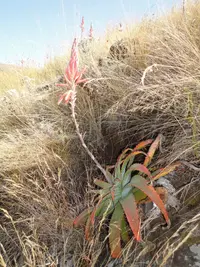
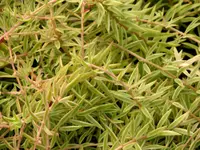
Pretoria aloe (Aloe pretoriensis) is a medium to large succulent from the grasslands and rocky slopes of South Africa. It forms upright rosettes with long, narrow, gray-green leaves edged with small teeth. In season, it produces tall flower spikes topped with tubular orange to red blooms that attract pollinators. This species is adapted to strong sun, dry air, and well-drained, mineral-rich soils, which makes it relatively undemanding in suitable conditions. Understanding how to care for Pretoria aloe mainly involves avoiding overwatering and providing enough light and airflow.

Main Plant Requirements

Care Difficulty

Moderate Care

Light Preference

Full Sun

Water Requirements

Low Water

Temperature Preference

Warm Climate

Hardiness Zone

9–11

Soil Texture

Sandy, Loamy, Rocky

Soil pH

Slightly acidic (6.5–7.0), Neutral (7.0)

Soil Drainage

Well-drained

Fertilization

Minimal (feed rarely)

Get Personalized Care Plan

Scan your plant to receive care tips personalized for your specific plant

Available on iOS and Android

How to Care for the Pretoria aloe

This sun-tolerant aloe thrives in bright, open positions with some protection from extreme afternoon heat.

  • Provide 6–8 hours of direct sun, ideally strong morning sun with lighter afternoon exposure to reduce leaf scorch risk.
  • Tolerates light or dappled shade for part of the day, but Pretoria aloe becomes lanky and pale if grown in less than about 4 hours of sun.
  • In hotter summers, offer slight afternoon shade or filtered light, while in winter ensure the site is as bright and open as possible.

This drought-adapted succulent prefers deep but infrequent watering and very fast-draining soil.

  • Water only when the top 3–5 cm of soil are completely dry; in warm growing seasons this may mean thorough soaking every 1–3 weeks in the ground.
  • Reduce watering sharply in cooler months, giving just enough to prevent shriveling leaves, especially if growth slows or nights are cold.
  • Use very gritty, sharply drained soil and watch for signs of overwatering such as soft, yellowing leaves or a sour smell around the roots.

This species prefers warm, dry conditions and handles moderate heat far better than prolonged cold.

  • Aim for active growth around 65–85°F (18–29°C), with good airflow and low to moderate humidity to limit fungal issues.
  • Protect Aloe pretoriensis from temperatures below 30°F (-1°C); brief light frost may be tolerated, but repeated freezes can damage or kill plants.
  • In very hot spells above 95°F (35°C), provide extra shade and avoid heavy watering in the hottest part of the day to reduce heat stress.

This species prefers dry air and typical household humidity, so humidity usually requires no special management.

This species needs a sharply draining, mineral-based substrate to avoid root problems.

  • Use a sandy or gritty mix with coarse particles that let water pass quickly, such as 50–70% pumice, perlite, or coarse sand blended with cactus potting mix.
  • Ensure the mix is loose and airy, not compacted, so oxygen can reach the roots and excess water cannot pool around them.
  • Aim for slightly acidic to neutral pH around 6.0–7.0, avoiding heavy clay, peat-heavy, or water-retentive mixes that stay wet for many hours.
  • For Aloe pretoriensis in wetter climates, increase the proportion of mineral grit further and raise the root zone slightly above surrounding soil to improve drainage.

This species is suitable for container growing when the pot prevents water from lingering around the roots.

  • Choose a heavy, wide-based pot to counteract the plant’s tall, top-heavy rosette and reduce tipping in wind or on balconies.
  • Select unglazed terracotta over plastic if outdoor rainfall is frequent, as it allows faster evaporation from the root zone.
  • Leave a dry top layer of 2–3 cm of mineral grit or small stones to keep the crown drier after watering and rainfall.

This species is adapted to poor soils, so Pretoria aloe benefits from only modest, controlled feeding.

  • Use a low-dose, balanced liquid fertilizer (around 10-10-10) diluted to 25–50% strength during active growth in spring–summer.
  • Feed every 4–6 weeks if growth is moderate; skip feedings if foliage already looks vigorous.
  • Avoid compost-rich mixes that stay wet; choose a gritty, free-draining substrate instead.
  • Stop fertilizing in fall–winter to reduce soft, frost-prone growth and root stress.

Pruning Aloe pretoriensis is minimal and focuses on hygiene rather than shaping.

  • Best time is late winter to early spring, before strong new growth starts.
  • Remove dead, dried, or damaged leaves at the base with clean, sharp pruning shears or a knife.
  • Thin out badly crowded or crossing leaves only if necessary to improve airflow around the rosette.
  • Avoid cutting into healthy green tissue of the main rosette, as this can slow growth and invite rot.

Container-grown plants and young clumps benefit from careful, infrequent repotting or transplanting.

  • Look for roots circling the pot, bulging containers, or unexplained slow growth as signs it needs more space.
  • Plan repotting or transplanting in late spring, allowing warm, bright conditions for recovery.
  • Most plants need a larger, well-drained pot or ground position only every 3–4 years.
  • Reduce root stress by watering lightly a day before, handling roots gently, and keeping the plant shaded and dry for 3–5 days after moving.

Aloe pretoriensis is commonly propagated from offsets and seeds under warm, bright conditions.

  • Separate offsets in late spring–summer once they have several leaves and a firm root base.
  • Allow cut or broken surfaces to dry and callus for 2–3 days before potting in a gritty succulent mix.
  • Keep newly potted offsets slightly moist, never wet, and provide bright, indirect light for rooting.
  • For seeds, sow on the surface of well-drained mix at 70–80°F, maintaining light moisture until germination.

This aloe is relatively cold tolerant but still benefits from some winter precautions in cold climates.

  • Mature plants can withstand light frost but are safer above 25–28°F, especially in wet winters.
  • In the ground, apply a 5–8 cm layer of mineral mulch around the root zone to improve drainage and temperature stability.
  • Move container plants under cover or indoors to a bright, cool, frost-free spot during freezing weather.
  • Keep soil almost dry in winter, since cold, wet conditions greatly increase the risk of root and crown rot for Aloe pretoriensis care instructions.

Care Tips

Encourage compact rosettes

Rotate containers a quarter turn every 2–3 weeks during active growth so all sides receive similar light, which keeps rosettes symmetrical and prevents weak, one-sided leaning.

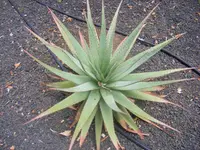
Prevent stem rot

As older lower leaves dry and shrink back from the stem, gently remove only fully dead tissue so moisture does not collect against the trunk, which reduces the risk of fungal stem rot in mature plants.

Protect from hail

In hail-prone areas, keep a lightweight mesh, shade cloth, or nursery tray ready to place over outdoor plants during storms to prevent permanent scarring of the fleshy leaves.

Winter rain control

In regions with cold, wet winters, move container plants under a deep overhang or into an unheated porch so the soil stays mostly dry while still receiving bright light, which is critical for safely growing Pretoria aloe outdoors.

Safe repot timing

Repot only in late spring to early summer, and keep the soil just barely moist for 7–10 days afterward so damaged roots can callus and re-establish without sitting in saturated mix.

Common Pests and Diseases

Aloe mite

This pest causes abnormal, bumpy galls or rosette-like swellings on leaves and inflorescences, often starting in tight leaf bases of the rosette. Symptoms include distorted growth with rough, corky, or sometimes reddish tissue.

Solution

Remove and destroy all affected leaves or rosettes well below the damaged tissue and disinfect cutting tools with 70% alcohol between cuts. Improve spacing and air movement, keep plants stress-free, and, if infestation continues, apply a targeted miticide labeled for eriophyid mites following local regulations and avoiding spray into the rosette center where water or chemicals may pool.

Aloe rust

This disease produces small yellow spots on leaves that turn into sunken orange to dark-brown pustules, often on older foliage. Symptoms include cosmetic scarring and, under prolonged wet conditions, gradual weakening of the plant.

Solution

Cut off and discard infected leaves and avoid overhead watering so foliage dries quickly. Provide strong light, good air circulation, and if rust persists in humid conditions, use a sulfur or copper-based fungicide labeled for succulents, applying lightly and allowing leaves to dry fully between treatments.

Aloe scale

These insects appear as small, dome-shaped or oval, brown to gray bumps on leaves and stems that do not move when touched. This pest feeds on sap, causing yellowing patches, reduced vigor, and sticky honeydew that can attract sooty mold.

Solution

Physically remove scale from thick Aloe pretoriensis leaves using a cotton swab dipped in 70% isopropyl alcohol or a soft brush, then rinse the plant with lukewarm water. For heavier infestations, repeat manual removal and apply a light horticultural oil spray, taking care not to drench the rosette center and always allowing the plant to dry in bright, indirect light afterward.

Aloe leaf spot

This disease causes irregular, water-soaked spots that turn brown or black with possible pale halos, usually starting on older or lower leaves. Symptoms include scattered lesions that may merge, giving leaves a pitted or scorched appearance while the inner rosette often remains healthy at first.

Solution

Remove affected leaves early, keep the crown dry, and water at the soil level rather than onto foliage. Increase sun exposure gradually, maintain good airflow, and if spots spread in warm, moist weather, apply a light, broad-spectrum fungicide suitable for succulents, ensuring the soil is not kept constantly wet.

Mealybugs

These insects form white, cottony clusters in leaf axils, roots, or along the rosette base, often hidden between stiff Aloe pretoriensis leaves. This pest sucks sap, leading to slow growth, leaf yellowing, and sticky honeydew that can favor mold growth.

Solution

Isolate the plant, then dab visible mealybugs with 70% isopropyl alcohol using cotton swabs and rinse gently to remove residues. For persistent populations, repeat alcohol treatments weekly, inspect roots when repotting for root mealybugs, discard heavily infested soil, and use a systemic insecticide labeled for succulents only if non-chemical methods fail.

Interesting Facts

High-altitude specialist

This species is naturally found on rocky grassland slopes and ridges at relatively high elevations in South Africa, often above 1,200 m, where it tolerates considerable temperature fluctuations and occasional light frost.

Distinctive leaf imprinting

Its gray-green leaves often show pale circular or oval imprints where inner leaves previously pressed against outer ones, a common identification feature for the species in the field.

Winter-flowering strategy

In its native range it typically flowers in the cooler months, producing tall stems with tubular orange to red flowers that provide nectar for sunbirds and insects when few other nectar sources are available.

Botan icon

Did you know?

Aloe pretoriensis shows notable morphological variability across its range, with some populations forming dense stemless rosettes and others developing short, visible stems, which has led to historical taxonomic confusion with several closely related aloe species.

FAQs about Pretoria aloe

Lack of flowering usually comes from insufficient light, a plant that is still immature, or stress from cold, overwatering, or recent repotting. Stable conditions, full sun, and patience often restore blooming over the next seasons.

Grow Healthy Plants with Botan Care

Keep your plants happy and healthy with plant identification, disease detection, and easy care guidance.

Botan plant care app — identify plants on mobile

Explore More Plants