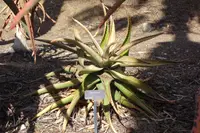
Fynbos aloe Care (Aloe succotrina)

Also known as: Mountain Aloe, Table Mountain Aloe, Scree Aloe
Fynbos aloe

About Fynbos aloe

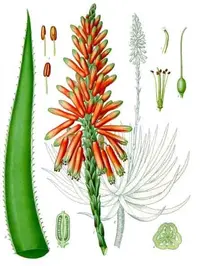
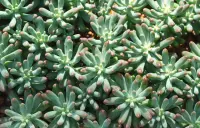
Fynbos aloe (Aloe succotrina) is a small to medium, clustering succulent from the fynbos regions of South Africa’s Western Cape. It forms upright rosettes with narrow, toothed leaves and showy red to orange flower spikes in winter. In habitat it grows on rocky slopes with good air movement and sharp drainage. This gives clues on how to care for Fynbos aloe in cultivation. The species prefers bright light, lean gritty soil, and careful watering, which makes it reasonably easy for growers who can avoid cold, shade, and waterlogged conditions.

Main Plant Requirements

Care Difficulty

Moderate Care

Light Preference

Full Sun

Water Requirements

Low Water

Temperature Preference

Warm Climate

Hardiness Zone

9–11

Soil Texture

Sandy, Loamy, Rocky

Soil pH

Acidic (5.5–6.5), Slightly acidic (6.5–7.0)

Soil Drainage

Well-drained

Fertilization

Minimal (feed rarely)

Get Personalized Care Plan

Scan your plant to receive care tips personalized for your specific plant

Available on iOS and Android

How to Care for the Fynbos aloe

This South African aloe thrives in bright, open conditions with several hours of direct sun daily.

  • Provide 4–6 hours of direct morning sun with light afternoon shade, especially in hotter inland areas, to reduce leaf scorch risk.
  • Tolerates bright, dappled light or light partial shade, but too little sun causes elongated, weak growth and dull, greenish leaves in Fynbos aloe.
  • In coastal or mild climates, full sun all day is suitable; transition plants gradually to stronger sun in late winter–spring to prevent sunburn.

This drought-adapted aloe prefers infrequent, deep watering and fast-draining soil.

  • Water only when the top 3–5 cm of soil are completely dry; leaves should remain firm, not soft or wrinkled.
  • Use very free-draining, gritty soil on a slope or raised bed so water runs off quickly, reducing root rot risk in Aloe succotrina.
  • In cool seasons, reduce watering sharply and skip irrigating after heavy rain; pale, swollen leaves or blackened roots indicate overwatering stress.

This species favors mild, dry conditions and reacts poorly to hard frost or prolonged cold.

  • Aim for 60–80°F (16–27°C) for active growth, with good air movement and low to moderate humidity.
  • Protect plants when temperatures approach 30–32°F (-1–0°C); brief light frost may be survived, but repeated freezing damages leaf tissue and crowns.
  • Tolerates short heat waves up to about 95–100°F (35–38°C) if soil is well-drained and roots are not waterlogged; provide afternoon shade during extreme heat.

This species prefers dry air and rarely suffers from low household humidity.

This aloe needs a sharply drained, mineral-rich substrate to prevent root rot.

  • Use a gritty mix such as 50% cactus potting mix with 50% coarse sand or pumice for Aloe succotrina.
  • Aim for slightly acidic to neutral pH around 6.0–7.0, avoiding strongly acidic or alkaline substrates.
  • Incorporate 10–20% inorganic gravel at the bottom of the pot to enhance drainage and reduce waterlogging.
  • Avoid compact, peat-heavy, or clay-based mixes that stay wet for more than 1–2 days after watering.

This species is well suited to container culture when drainage and stability are managed carefully.

  • Choose a wide, low clay or ceramic pot to keep the plant stable against its spreading rosette and occasional wind exposure outdoors.
  • Select containers with multiple side and base drainage holes so water cannot pool beneath the dense root zone.
  • Use a heavy pot material or add topdressing gravel to prevent tipping as the rosette enlarges and becomes top-heavy.

This species from nutrient-poor habitats needs only light feeding in cultivation.

  • Use a low-dose balanced succulent fertilizer (around 1:1:1 NPK) or very dilute liquid feed, not rich compost.
  • Apply at 1⁄4–1⁄2 strength every 6–8 weeks in spring–summer while actively growing.
  • Stop feeding in fall–winter when growth slows, as Fynbos aloe dislikes excess nutrients in cool conditions.
  • Water before applying fertilizer to avoid root burn and always discard surplus runoff from saucers.

Aloe succotrina benefits from light maintenance pruning to keep rosettes healthy and tidy.

  • Best time for pruning is late winter to early spring, once any risk of hard frost has passed.
  • Remove dead, yellowing, or damaged leaves at the base with clean, sharp scissors or pruners.
  • Cut spent flower stalks back to the rosette to direct energy into root and leaf growth instead of seed.
  • Thin crowded offsets if rosettes shade each other, which improves airflow and maintains the plant’s shape.

Container-grown plants appreciate occasional transplanting to maintain good drainage and root health.

  • Look for roots circling the pot, pushing through drainage holes, or noticeably slower growth as signs to move Aloe succotrina.
  • Repot every 3–4 years in late spring, using a gritty, fast-draining cactus or succulent mix and a pot with wide drainage holes.
  • Gently tease apart circling roots and remove old, soggy soil, trimming rotten roots with sterile scissors.
  • After transplanting, keep the plant slightly dry and shaded for 5–7 days to limit root stress before resuming normal light and watering.

This aloe is commonly propagated from offsets and sometimes from seed in suitable conditions.

  • Detach offsets in late spring–summer once they have several leaves and a small independent root system.
  • Let cut or broken surfaces dry and callus for 2–3 days before planting in a sterile, gritty succulent mix.
  • Keep temperatures around 68–77°F with bright, indirect light and very light watering until roots establish.
  • For seed, sow fresh seed on well-draining mix, keep barely moist, and maintain warmth and good airflow for germination.

This species is sensitive to hard frost and needs protection in colder climates.

  • In-ground plants tolerate only brief light frosts; use a 5–8 cm layer of coarse mulch around the root zone in marginal areas.
  • Where temperatures drop below 28°F, grow in containers and move indoors or into a cool, bright greenhouse for winter.
  • Indoors, give maximum light, reduce watering significantly, and avoid cold drafts or very damp, stagnant air.
  • In mild coastal climates, shelter outdoor plants from cold winds and heavy winter rain with overhead cover if soil drains poorly.

Care Tips

Rocky topdressing

Add a 1–2 cm layer of coarse quartz grit or small stones around the base to mimic its native rocky habitat, keep leaf bases dry, and reduce rot risk when caring for Fynbos aloe.

Slope the planting

When planting outdoors or in a large container, set the root ball on a slight mound or slope so water drains quickly away from the crown and lower leaves after rain or irrigation.

Winter rain protection

In regions with cold, wet winters, move container plants under a roof overhang or into a cold frame during prolonged rain to prevent cold, waterlogged roots that can trigger fungal problems.

Airflow spacing

Space plants so mature rosettes do not touch and position pots where there is steady air movement, which helps leaves dry faster and significantly lowers the chance of fungal spotting.

Controlled offset removal

Use a clean, sharp knife to remove offsets only once they have several roots of their own, then allow the cuts to dry for 2–3 days before replanting to reduce infection and improve establishment.

Common Pests and Diseases

Aloe mite

This pest causes abnormal, swollen, or frilly growths called galls on leaves and at the growing tips. Symptoms include distorted rosettes and rough, corky tissue that slowly spreads across the plant.

Solution

Remove and discard all affected leaves or rosettes well below the gall, using sterilized tools, and destroy heavily deformed plants that cannot be cleaned. Isolate the plant, improve air movement, avoid overhead watering, and apply a targeted miticide labeled for aloe mite if the infestation continues to spread.

Aphids

These insects often cluster on soft new growth and flower stalks, sucking sap and leaving sticky honeydew that can attract sooty mold. Symptoms include curling or misshapen leaves and slowed growth, especially on young Fynbos aloe plants.

Solution

Rinse colonies off with a firm stream of water and gently wipe remaining insects from leaves and flower stems. For ongoing problems, use insecticidal soap or neem oil on all plant surfaces, repeat weekly until no new aphids appear, and keep plants spaced to reduce crowding and stress while growing Fynbos aloe.

Aloe rust

This disease produces small yellow spots that turn dark brown to black on the upper and lower leaf surfaces. Symptoms include discrete, circular lesions that may merge, giving the foliage a speckled or scorched appearance.

Solution

Cut off and discard affected leaves, keeping tools clean between cuts, and avoid wetting the foliage when watering. Improve air circulation, protect the plant from prolonged rain exposure, and if rust continues to appear, apply a sulfur or copper-based fungicide labeled for ornamental succulents according to the instructions.

Leaf spot

This disease causes irregular brown, gray, or translucent spots on leaves, often starting where water sits or where tissue has been slightly damaged. Symptoms include cosmetic scarring and, in severe cases, gradual weakening of the outer leaves.

Solution

Remove spotted outer leaves if damage is extensive, and let the plant dry thoroughly between waterings. Water at the base, keep leaves dry, increase air flow, and, if spotting progresses, use a broad-spectrum fungicide appropriate for succulents while also reducing humidity around the plant.

Mealybugs

These insects appear as white, cottony clusters in leaf axils and at the base of rosettes, feeding on sap and weakening the plant. Symptoms include sticky residue, slow growth, and occasional leaf yellowing or collapse of older leaves.

Solution

Dab visible insects with cotton swabs dipped in isopropyl alcohol, then rinse the plant gently to remove residues. Inspect regularly, isolate infested plants, and use repeated treatments of insecticidal soap or neem oil directed into leaf crevices until no new mealybugs are visible.

Interesting Facts

Cape sandstone specialist

This species is naturally restricted to sandstone slopes and cliffs in the southwestern Cape region of South Africa, often forming dense clumps on exposed rocky outcrops close to the sea.

Winter-flowering nectar source

It flowers mainly in late winter to early spring in its native habitat, producing tall spikes of red tubular flowers that supply nectar to local sunbirds when few other aloes in the area are in bloom.

Fire-prone habitat survivor

In its fynbos habitat, which burns regularly, plants often grow in crevices and rock ledges where the fleshy rosettes are partly shielded from intense flames, allowing clumps to re-establish after fire.

Botan icon

Did you know?

Aloe succotrina was one of the earliest Cape aloes to be described by European botanists in the 18th century, and historical confusion over its identity contributed to the complex early taxonomy of South African aloes.

FAQs about Fynbos aloe

Lack of flowering often results from insufficient light, young age, or inconsistent winter rest. This species flowers best after several years, with strong seasonal light contrast and cool, dryish winters that signal it to set buds.

Grow Healthy Plants with Botan Care

Keep your plants happy and healthy with plant identification, disease detection, and easy care guidance.

Botan plant care app — identify plants on mobile

Explore More Plants