Alphitonia neocaledonica Care

Alphitonia neocaledonica

About Alphitonia neocaledonica

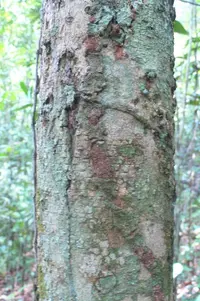
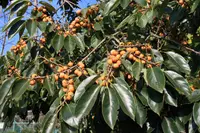
Alphitonia neocaledonica is an evergreen tree or large shrub, valued mainly in warm climates and specialist collections. It typically forms an upright crown with dense, leathery foliage that can create light shade. New leaves may show a subtle contrast between paler undersides and darker green upper surfaces, giving the plant a refined, architectural look. This species is native to New Caledonia, where it grows in coastal or lowland forest habitats. It prefers sunny, open positions, well-drained soil, and moderate moisture. In cultivation, it suits experienced gardeners or collectors, since sourcing material and understanding how to care for Alphitonia neocaledonica can be challenging outside its natural range.

Main Plant Requirements

Care Difficulty

Moderate Care

Light Preference

Full Sun

Water Requirements

Moderate Water

Temperature Preference

Tropical / Frost Sensitive

Hardiness Zone

11–12

Soil Texture

Sandy, Loamy, Organic-rich

Soil pH

Acidic (5.5–6.5), Slightly acidic (6.5–7.0)

Soil Drainage

Well-drained

Fertilization

Minimal (feed rarely)

Get Personalized Care Plan

Scan your plant to receive care tips personalized for your specific plant

Available on iOS and Android

How to Care for the Alphitonia neocaledonica

This coastal shrub prefers bright outdoor conditions with some protection from harsh midday sun.

  • Provide 4–6 hours of direct morning sun, then light shade or filtered light through the afternoon to reduce leaf scorch risk.
  • Tolerates light to partial shade, but dense shade causes sparse growth, longer internodes, and reduced foliage density in Alphitonia neocaledonica.
  • In hot summers, protect from intense sun on exposed west-facing sites; in cooler seasons, allow more direct light to maintain compact growth.

This species prefers evenly moist but not saturated soil once established in the landscape.

  • Before watering, let the top 3–5 cm of soil dry; the soil below should feel slightly moist but never soggy.
  • Use free-draining soil on a slight slope or raised bed so excess water runs off, reducing root rot and waterlogging risk.
  • In cooler months, water less often and watch for yellowing, soft leaves as a sign of overwatering, or crisp edges and drooping tips as early underwatering signs.

This shrub thrives in mild, frost-free climates with warm summers and cool, not cold, winters.

  • Aim for 65–80°F (18–27°C) during active growth to support steady foliage and shoot development.
  • Protect from temperatures below 40°F (4°C); brief dips to 35°F (2°C) may be tolerated, but repeated light frosts can damage young shoots and leaves.
  • In hot regions, plants handle short periods of 90–95°F (32–35°C) if soil moisture is stable and roots are mulched to limit heat stress.

This species tolerates a wide humidity range and rarely needs special humidity management.

  • Performs well at 30–60% humidity in most homes and outdoor settings.
  • Tolerates dry air, but prolonged very low humidity may cause slight leaf edge browning.
  • If air is extremely dry, grouping plants or placing a tray of water and stones nearby is sufficient.

Alphitonia neocaledonica prefers freely draining, moderately fertile soil that does not stay waterlogged.

  • Use a loose, sandy or loamy mix with 30–40% coarse material such as sharp sand, fine gravel, or perlite for strong drainage.
  • In containers, combine standard potting mix with bark chips and perlite to improve aeration and prevent compaction around the roots.
  • Aim for slightly acidic to neutral pH, roughly 6.0–7.0, avoiding strongly acidic or alkaline conditions that can limit nutrient availability.
  • Do not plant in heavy, sticky clay or spots that collect standing water, as this encourages root decline and poor growth.

This species can be grown in large containers where climates or space are limiting.

  • Select a deep, heavy container to balance the woody, potentially top-heavy canopy and reduce tipping in strong winds.
  • Choose a pot material such as thick terracotta or concrete when extra stability and slightly faster moisture loss are desired outdoors.
  • Ensure the container base allows rapid outflow of rain by using multiple drainage holes and raising the pot slightly off solid surfaces.

This species grows in low-nutrient soils and generally needs only light feeding in cultivation.

  • Apply a balanced slow-release fertilizer (around 10-10-10) once in spring for potted or intensively grown Alphitonia neocaledonica.
  • Use compost or well-rotted organic mulch over the root zone to supply gentle, steady nutrients.
  • During the growing season, avoid additional high-strength feeds; excess nitrogen weakens woody growth.
  • Stop feeding in late summer so new shoots harden before cooler weather.

Pruning helps maintain structure and safety without compromising this tree’s natural form.

  • Carry out main pruning in late winter or early spring, before active growth begins.
  • Remove dead, diseased, crossing, or storm-damaged branches with clean, sharp bypass pruners or a saw.
  • Thin congested interior shoots to improve light penetration and airflow through Alphitonia neocaledonica canopies.
  • Limit cuts to smaller branches, preserving the central framework to avoid stressing mature trees.

This species is usually grown in the ground, so planting and later transplanting are more relevant than routine repotting.

  • Transplant container-grown young plants in spring when roots lightly fill the pot but are not tightly circling.
  • Choose a site with free-draining soil and dig a hole only slightly wider than the root ball to reduce settling.
  • Keep the root ball intact, handle gently, and backfill with native soil rather than rich mixes to limit shock.
  • Water deeply after planting and maintain even moisture for several weeks while Alphitonia neocaledonica establishes.

Propagation is possible from both seeds and semi-hardwood cuttings but requires controlled conditions.

  • Collect ripe seed, clean it, and sow in a free-draining mix kept warm (70–80°F) and just moist.
  • Take semi-hardwood cuttings in late spring or early summer, 10–15 cm long, with several nodes.
  • Dip cut bases in rooting hormone, then place in a humid, bright, indirect light environment until rooted.
  • Use bottom heat and a ventilated humidity dome or propagator to maintain stable moisture without waterlogging.

This is a warm-climate tree that dislikes hard frost and benefits from basic winter protection in cooler regions.

  • In ground, apply a 5–8 cm organic mulch around the root zone, keeping it slightly away from the trunk.
  • Shelter young Alphitonia neocaledonica from cold winds with fencing or temporary screens.
  • Move container plants into a bright, frost-free space when temperatures near 32°F.
  • Water sparingly in winter, allowing the top layer of soil to dry slightly between waterings.

Care Tips

Establish wind tolerance

In the first 1–2 years, use low, flexible staking rather than rigid ties so the young tree can move in the wind and develop a stronger trunk and root system.

Salt‑spray management

In coastal sites, hose foliage with fresh water every few weeks during dry, windy periods to reduce salt buildup that can scorch leaves and slow growth.

Formative canopy pruning

In late winter, remove only crossing, rubbing, or steeply upright secondary branches to promote a stable, open framework that resists storm damage as the tree matures.

Mulch for root zone

Maintain a 5–8 cm deep ring of coarse organic mulch, kept a few cm away from the trunk, to protect the relatively shallow roots from heat and moisture fluctuations.

Monitor for scale insects

Inspect stems and leaf undersides at least twice a year for scale insects and treat early with horticultural oil, which is often sufficient for caring for Alphitonia neocaledonica in home landscapes.

Common Pests and Diseases

Scale insects

This pest feeds on sap along stems and leaf undersides, often causing leaf yellowing, sticky honeydew, and sooty mold on Alphitonia foliage. Infestations are most common on stressed or sheltered landscape specimens.

Solution

Prune out heavily encrusted twigs, then wipe remaining colonies with a cotton pad dipped in diluted alcohol or insecticidal soap, making sure to reach the undersides of leaves. For larger shrubs or hedges, apply a horticultural oil spray in mild, dry weather and improve overall vigor with proper watering and light to reduce reinfestation when caring for Alphitonia neocaledonica.

Leaf spot

This disease causes small brown to dark purple spots that may merge into larger blotches, especially on older leaves in humid or rainy conditions. Symptoms include premature leaf drop and a generally thin canopy when infections are heavy.

Solution

Remove and dispose of spotted, fallen leaves to reduce fungal spores, and avoid overhead watering so foliage dries quickly. In persistently wet climates, increase spacing or thin interior branches to improve air movement, and if needed apply a labeled copper or chlorothalonil fungicide during extended wet periods.

Psyllids

These insects are small sap feeders that can cause leaf cupping, distortion, and fine honeydew deposits, particularly on soft new growth and shelterbelt plantings. Repeated attacks may stunt new shoots and reduce ornamental quality.

Solution

Inspect young flushes regularly and hose down foliage with a strong stream of water to dislodge nymphs. Encourage natural predators such as lady beetles, and if populations build up, treat young growth with insecticidal soap or a light horticultural oil, repeating as needed to catch newly hatched nymphs.

Sooty mold

This disease appears as a black, soot-like coating on leaves and stems, developing on the honeydew secreted by sap-sucking insects such as scale or psyllids. Symptoms include dull, dirty-looking foliage and reduced photosynthesis, though the fungus itself does not invade plant tissues.

Solution

Control the underlying honeydew-producing insects first, then gently wash affected leaves with lukewarm water and a small amount of mild soap to restore light penetration. Improve air movement and light exposure around the shrub to help foliage dry faster and keep mold from reestablishing.

Interesting Facts

Endemic New Caledonian tree

This species is native and restricted to New Caledonia, where it grows naturally in lowland to mid-elevation forests, often on ultramafic substrates that are unusually rich in heavy metals.

Distinctive leaf underside

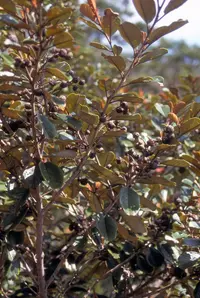
Mature leaves are dark green above but covered beneath with a dense silvery to rusty-brown felt of hairs, a trait that helps reduce water loss and reflects intense tropical light.

Role in native scrub

In New Caledonia this tree is a component of maquis shrubland and forest margins, contributing to structure and shelter for local invertebrates and birds in these open, nutrient-poor habitats.

FAQs about Alphitonia neocaledonica

This species is evergreen in mild, frost-free climates, keeping foliage year-round. In cooler or exposed sites, it may thin slightly in winter but does not usually drop all leaves like a deciduous tree.

Grow Healthy Plants with Botan Care

Keep your plants happy and healthy with plant identification, disease detection, and easy care guidance.

Botan plant care app — identify plants on mobile

Explore More Plants