Hamilton's spindletree Care (Euonymus hamiltonianus)

Also known as: Hamilton's spindle, Himalayan spindle
Hamilton's spindletree

About Hamilton's spindletree

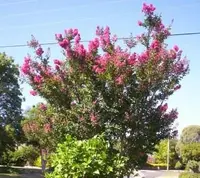
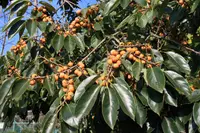
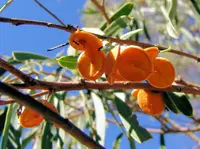
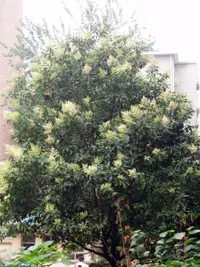
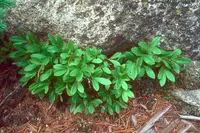
Hamilton's spindletree, Euonymus hamiltonianus, is a deciduous shrub or small tree valued for its colorful autumn fruit and foliage. It typically forms a rounded, branching shape with fine twigs and simple, oval leaves. In late summer to fall, pale flowers give way to pink to red capsules that open to reveal orange seeds, providing strong seasonal interest in temperate gardens. This species is native to parts of Asia, including the Himalayas and East Asia, where it grows in woodland edges and scrub. It is generally considered undemanding, adapting to a range of soils and coping with urban conditions, which makes it relatively easy to care for Hamilton's spindletree in suitable climates.

Main Plant Requirements

Care Difficulty

Easy Care

Light Preference

Full Sun

Water Requirements

Moderate Water

Temperature Preference

Cold Hardy

Hardiness Zone

4–8

Soil Texture

Sandy, Loamy, Clay

Soil pH

Acidic (5.5–6.5), Slightly acidic (6.5–7.0)

Soil Drainage

Moist but well-drained

Fertilization

Minimal (feed rarely)

Get Personalized Care Plan

Scan your plant to receive care tips personalized for your specific plant

Available on iOS and Android

How to Care for the Hamilton's spindletree

This deciduous shrub prefers bright, cool conditions with moderate direct sun for best growth and color.

  • Provide 4–6 hours of sun daily, ideally morning or late-afternoon sun with light midday shade, especially in hotter climates.
  • Tolerates partial shade, but dense shade reduces flowering and autumn color; aim for dappled light under open-canopy trees if full sun is not available for Hamilton's spindletree.
  • In regions with intense summer sun, protect from harsh afternoon exposure to prevent leaf scorch, while in cooler climates it can handle near-full sun.

This shrub prefers evenly moist but not saturated soil, with short dry periods between waterings.

  • Outdoors in the ground, water when the top 3–5 cm of soil feels dry, focusing on deep soaking rather than frequent light sprinkling to encourage deeper roots.
  • During hot, dry spells, increase watering frequency, while in cool or rainy seasons reduce irrigation and allow the soil surface to dry more thoroughly between waterings.
  • Watch for overwatering signs such as yellowing, soft leaves and persistently wet soil, and underwatering signs like curling or browning leaf edges on Euonymus hamiltonianus.

This hardy shrub tolerates a wide temperature range but grows best in moderate conditions.

  • Optimal growing temperatures are about 60–75°F (16–24°C) during the growing season, with stable conditions supporting steady shoot and root development.
  • Established plants typically tolerate winter lows down to about -10°F to -15°F (-23°C to -26°C), going dormant and resuming growth in spring as temperatures rise above freezing.
  • In summer, it manages short heat spells up to about 90–95°F (32–35°C) if soil moisture is maintained, but prolonged extreme heat combined with drought can cause leaf scorch and stress.

This shrub manages well in typical outdoor humidity but benefits from moderate levels when grown in sheltered spots.

  • Aim for 40–60% humidity when grown in a protected courtyard, balcony, or other semi-enclosed space.
  • Dry air can cause marginal leaf browning and increased spider mite activity, especially during hot spells.
  • Increase humidity locally by grouping plants, using a gravel tray with water below the pot base, or adding low ornamental groundcover nearby.

Euonymus hamiltonianus prefers moderately fertile, well-aerated soil that drains reliably after rain or watering.

  • Use a loamy structure with 40–60% mineral content (garden loam or sandy loam) blended with 20–30% compost for organic matter.
  • Ensure free drainage; on heavy clay, mix in coarse sand or fine grit plus compost to improve both aeration and percolation.
  • Target a slightly acidic to neutral pH, around 6.0–7.2, avoiding strongly alkaline or saline sites that can reduce nutrient uptake.
  • Avoid compacted or waterlogged ground; raised beds or mounded planting improve root oxygen and reduce risk of root rot.

This species is suitable for container growing when the pot is chosen to balance root room, moisture control, and stability.

  • Select a container at least 35–45 cm wide and deep so roots can anchor well and the shrub canopy does not outgrow its base support quickly.
  • Use a heavy, frost-proof material such as thick ceramic or concrete in windy sites to reduce tipping from the shrub’s branching structure.
  • Elevate the pot slightly on feet or blocks so drainage holes clear the ground and excess water escapes rapidly after heavy rain.

This shrub benefits from modest feeding but mature Hamilton's spindletree in fertile ground often manages with minimal fertilizer.

  • Use a balanced, slow-release granular fertilizer (for example 10-10-10) or a light layer of compost in early spring.
  • Apply once in spring and, if growth is weak, once again in midsummer during the active growing season.
  • Reduce or stop feeding in fall and winter, when the plant is dormant and nutrient demand is low.
  • If using liquid fertilizer, dilute to 1/2 strength and apply only to moist soil to avoid root burn.

Pruning Euonymus hamiltonianus helps maintain a stable framework, encourage branching, and keep the plant within its allotted space.

  • Carry out main pruning in late winter to early spring before new growth starts.
  • Remove dead, damaged, or crossing branches first, then thin congested interior shoots to improve light and airflow.
  • Shorten overly long shoots to shape the plant, cutting back to an outward-facing bud with clean, angled cuts.
  • Use sharp bypass pruners or loppers, disinfecting blades between plants to limit disease spread.

This species is more often grown in the ground than in pots, so focus on transplanting young plants at suitable times.

  • Transplant in early spring or early fall, when temperatures are mild and soil moisture is stable.
  • Look for signs such as slow growth, roots circling the container, or drying out very quickly as cues to move container plants up 1 pot size.
  • Dig a wide planting hole, keep the root flare at soil level, and backfill with existing soil to avoid sudden changes in texture.
  • Water thoroughly after planting, then keep the root zone evenly moist and shaded with mulch to limit transplant shock.

Gardeners commonly increase Euonymus hamiltonianus from cuttings and seeds for landscape use.

  • Take semi-hardwood cuttings in late summer, 8–10 cm long, and root them in a free-draining mix under high humidity and bright, indirect light.
  • Apply a rooting hormone to cuttings and maintain soil just moist, not saturated, to reduce rotting.
  • Sow cleaned seeds in fall outdoors or use cold stratification at 35–40°F for 2–3 months before spring sowing.
  • Label seedlings or young plants clearly, as growth is slow at first and individuals are easy to misplace.

This shrub is generally cold hardy in much of the temperate US and needs only modest winter attention once established.

  • In cold regions, apply a 5–8 cm mulch layer around the root zone in late fall, keeping it away from the stem base.
  • Water well before the ground freezes, especially for first- and second-year plants or those in very free-draining soil.
  • Move container-grown plants into a sheltered, unheated area where roots stay above about 20°F and soil does not freeze solid.

Care Tips

Formative winter pruning

Carry out main structural pruning in late winter by thinning crowded interior branches and removing crossing stems to keep the shrub open, which improves air flow and reduces fungal problems when growing Hamilton's spindletree.

Sucker and root-shoot control

Inspect the base and surrounding soil 2–3 times per year and cut off any suckers or unwanted root shoots at ground level to prevent the plant from spreading into nearby beds or lawn areas.

Fruit and seed management

If self-seeding is a concern, remove or deadhead the colorful fruit capsules before they fully split open to limit volunteer seedlings while still allowing some ornamental display.

Preventing winter sunscald

In colder regions, protect young or newly planted shrubs on south- or west-facing sites with a temporary shade screen or burlap wrap in late winter to reduce bark cracking from strong sun on frozen tissue.

Targeted pest scouting

From spring through late summer, inspect the undersides of leaves and young shoots every few weeks for scale insects or aphids and treat early with horticultural oil or insecticidal soap before populations build up.

Common Pests and Diseases

Euonymus scale

This pest forms dense, white to grayish scale coverings on stems and leaves, often causing yellowing and dieback. Heavy infestations can weaken or kill branches if not controlled.

Solution

Prune out and dispose of heavily infested twigs, then wash remaining stems and leaves with a strong spray of water to dislodge crawlers. For persistent problems, apply a horticultural oil during the crawler stage in late spring and again if needed, ensuring thorough coverage of stems and the undersides of leaves while protecting beneficial insects as much as possible.

Powdery mildew

This disease causes a white, powdery coating on leaves and young shoots, which may become distorted and lose vigor. Symptoms include reduced growth and premature leaf drop in humid, shaded sites.

Solution

Improve air circulation by thinning crowded branches and avoid overhead watering, especially late in the day. Remove and discard affected leaves when feasible, and in recurring cases use a labeled fungicide or sulfur spray at the first sign of infection, repeating according to label directions during high-risk periods.

Aphids

These insects cluster on young shoots and leaf undersides, sucking sap and excreting sticky honeydew that can lead to sooty mold growth. New growth may appear curled, stunted, or distorted.

Solution

Spray infested shoots with a firm jet of water to knock off aphids and reduce numbers, repeating every few days as needed. For ongoing infestations, use insecticidal soap or a light horticultural oil on leaf undersides and tender shoots, and encourage natural predators such as lady beetles by avoiding broad-spectrum insecticides.

Crown gall

This disease produces rough, woody galls at the base of stems or on roots, which can interfere with water and nutrient flow. Affected plants may show stunted growth, yellowing foliage, and gradual decline.

Solution

Carefully dig out and destroy severely affected plants, including as much of the root system as possible, and avoid replanting susceptible species in the exact spot for several years. Prevent wounding at the base of the plant, disinfect pruning tools between plants, and purchase nursery stock inspected for crown gall to support long-term Euonymus hamiltonianus care instructions.

Anthracnose

This disease causes irregular tan to dark brown leaf spots, often along veins, and can lead to blotches, shot holes, and premature leaf drop in wet seasons. Young shoots may also show small cankers or dieback in severe cases.

Solution

Rake and dispose of fallen leaves and prune out affected twigs to reduce sources of infection, then improve air movement by light thinning of dense canopies. In sites with a history of anthracnose, apply a suitable fungicide at bud break and repeat during prolonged wet weather, following label directions and avoiding overhead irrigation when possible.

Interesting Facts

Distinct spindle-shaped fruits

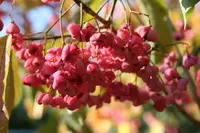
This species develops pale pink, 4-lobed spindle-shaped fruits that split open to reveal bright orange or red arils around the seeds, creating a strong color contrast that is especially noticeable in late summer and autumn.

Strong autumn coloration

Its leaves often turn vivid shades of pink, red, or purple in autumn, particularly in cooler climates, which makes it a valued ornamental shrub or small tree in temperate gardens.

Broad native range

The species is native to a wide region across the Himalayan foothills and parts of East Asia, where it grows in forest edges, thickets, and slopes, showing good adaptability to different soils and elevations.

FAQs about Hamilton's spindletree

Yes. The small pale flowers provide nectar for bees, hoverflies, and some butterflies, especially in late spring to early summer. Later, the colorful fruit and arils attract birds, which help distribute the seeds.

Grow Healthy Plants with Botan Care

Keep your plants happy and healthy with plant identification, disease detection, and easy care guidance.

Botan plant care app — identify plants on mobile

Explore More Plants