kauila Care (Alphitonia ponderosa)

Also known as: Hawai'i kauilatree
kauila

About kauila

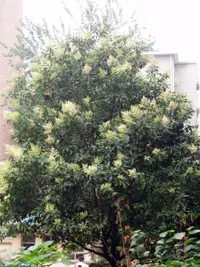
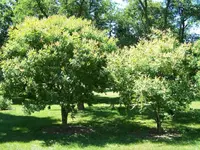
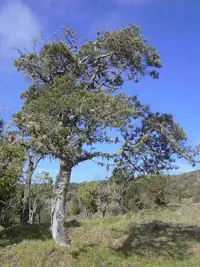
Kauila (Alphitonia ponderosa) is a slow-growing evergreen tree native to dry and mesic forests of Hawaii. It is valued for its very dense, hard wood and compact growth. Mature trees usually have a rounded crown, small gray-green leaves with pale undersides, and small clusters of flowers followed by dark fruits. In nature it often grows on rocky, well-drained volcanic soils and tolerates seasonal drought once established. For home or landscape use, it suits warm, frost-free climates and needs strong light, good drainage, and moderate watering. These traits make care for kauila manageable for patient growers who can provide stable outdoor conditions.

Main Plant Requirements

Care Difficulty

Moderate Care

Light Preference

Full Sun

Water Requirements

Moderate Water

Temperature Preference

Warm Climate

Hardiness Zone

10–11

Soil Texture

Sandy, Loamy, Rocky

Soil pH

Slightly acidic (6.5–7.0), Neutral (7.0)

Soil Drainage

Well-drained

Fertilization

Minimal (feed rarely)

Get Personalized Care Plan

Scan your plant to receive care tips personalized for your specific plant

Available on iOS and Android

How to Care for the kauila

Alphitonia ponderosa thrives in bright outdoor conditions with strong but not extreme sun exposure.

  • Provide 6–8 hours of sun daily, ideally with direct morning sun and light afternoon shade in hotter, lowland sites.
  • Young kauila plants handle partial shade; 40–60% filtered light reduces leaf scorch while roots establish.
  • Watch foliage for feedback: pale, elongated growth signals too little light, while crisped or bronzed leaf edges indicate excessive afternoon sun.

Alphitonia ponderosa prefers moderately dry conditions once established, with careful watering to avoid root stress.

  • In the ground, water deeply only when the top 5–8 cm of soil are dry, then soak the root zone and allow it to drain fully.
  • Reduce watering in cooler months, increasing only during hot, dry spells or if leaves begin to droop and curl inward.
  • Avoid waterlogged sites; yellowing leaves, soft stems, or sour-smelling soil indicate overwatering and poor drainage.

This species performs best in warm, frost-free climates with stable temperatures across the year.

  • Aim for 70–85°F (21–29°C) for active growth, with good air movement to reduce heat stress on exposed sites.
  • Mature trees may survive brief dips to about 45°F (7°C), but repeated exposure below 50°F (10°C) slows growth and can damage new shoots.
  • Kauila is not frost hardy; protect young plants from any frost and from extreme heat above 95°F (35°C) with afternoon shade and mulch.

This species tolerates relatively dry air but grows best in moderate humidity.

  • Aim for 40–60% humidity, similar to many warm indoor and coastal outdoor environments.
  • Signs of low humidity stress include leaf edge browning, finer twig dieback, and slower new growth.
  • Increase humidity by grouping kauila near other plants or placing containers over a wide pebble tray with water below the pot base.

Alphitonia ponderosa prefers freely draining, slightly dry-leaning soils that do not stay waterlogged.

  • Use a sandy or sandy-loam mix with 30–40% mineral grit or coarse sand plus some compost for moderate organic matter.
  • Ensure very sharp drainage; incorporate perlite or pumice to create air spaces and prevent root suffocation after heavy rain or irrigation.
  • Aim for slightly acidic to neutral pH, roughly 6.0–7.0, avoiding highly acidic mixes rich in undecomposed peat.
  • Avoid dense clay, compacted sites, or pots without drainage holes, which trap water and increase risk of root rot.

This tree can be grown in containers when young or kept smaller with pruning, though long-term culture is more demanding.

  • Select a deep, heavy pot to counterbalance the woody canopy and prevent tipping in strong wind.
  • Use a coarse, gritty mix and raise the pot on feet or bricks so drainage water escapes quickly from the base.
  • Position the container where reflected heat is limited so the root zone does not overheat and dry excessively in summer sun.

Alphitonia ponderosa benefits from light, targeted feeding in cultivation, especially in poor or disturbed soils.

  • Use a balanced slow-release fertilizer (for example 10-10-10) or well-rotted compost in spring at the start of active growth.
  • Apply fertilizer 1–2 times during the warm growing season, focusing on younger or container-grown kauila.
  • Use about half the label rate for slow-release products, and avoid direct contact with the trunk or stems.
  • Skip feeding in winter or cool dormant periods to prevent weak, overly soft growth.

Pruning Alphitonia ponderosa is mainly used to maintain structure, remove damage, and manage size in landscapes.

  • Carry out main pruning in late winter or early spring before strong new growth starts.
  • Remove dead, diseased, or crossing branches first, then thin crowded interior shoots to improve light and airflow.
  • Shorten overly long or leaning branches to shape a balanced canopy and encourage sturdy framework growth.
  • Use clean, sharp bypass pruners or loppers, making angled cuts just outside the branch collar without leaving stubs.

This species is usually grown in the ground, so focus on careful transplanting of young plants rather than long-term container culture.

  • Look for roots circling the pot, water running straight through, or stunted new growth as signals the plant has outgrown its container.
  • Transplant in late winter to early spring, or during mild, moist weather, roughly every 1–2 years while the tree is young.
  • Choose a site with well-drained soil, dig a hole slightly wider but no deeper than the root ball, and plant at the same depth.
  • Minimize root stress by handling the root ball gently, watering deeply after planting, and mulching 5–8 cm away from the trunk.

Alphitonia ponderosa is usually propagated by seed, with occasional use of semi-hardwood cuttings for selected forms.

  • Collect ripe seeds from mature fruits, clean them, and sow in late spring to early summer in a well-drained, sandy mix.
  • Provide warm conditions around 70–80°F, bright indirect light, and even moisture to support steady germination.
  • For cuttings, take semi-hardwood pieces 8–12 cm long in summer, remove lower leaves, and dip bases in rooting hormone.
  • Insert cuttings into a sterile, gritty medium and keep humidity high with good air movement to limit rot while roots form.

In its native range this tree is suited to mild, frost-free climates and needs only limited winter attention there.

  • Alphitonia ponderosa is sensitive to hard frost; young plants can be damaged below about 30°F.
  • Mulch the root zone 5–8 cm deep with organic material, keeping it slightly away from the trunk to buffer soil temperature.
  • For container plants in cooler areas, move pots indoors or into a sheltered greenhouse before the first expected frost.

Care Tips

Salt-wind acclimation

When planting near the coast, harden young plants by first growing them 6–12 months in a slightly sheltered spot, then gradually exposing them to full salt-laden wind to build tougher foliage and stems.

Deep root training

Encourage a storm-resistant root system by watering less often but very deeply during establishment, so moisture penetrates 30–45 cm and roots follow it downward rather than staying near the surface.

Wind-firm structure

In exposed sites, lightly tip-prune competing leaders in the first 2–3 years so one strong central leader dominates, which reduces wind-throw and branching breakage in mature trees.

Mulch ring management

Maintain a 5–10 cm deep, 60–90 cm wide mulch ring around the base, but keep mulch pulled back 5–8 cm from the trunk to reduce trunk rot and discourage rodents from girdling the bark.

Low-intervention pest checks

Inspect new flushes of leaves every 4–6 weeks for leaf-chewing insects or scale, and use a firm water spray or targeted horticultural oil only on affected branches, which keeps interventions light while still effectively caring for kauila.

Common Pests and Diseases

Black twig borer

This pest is a tiny ambrosia beetle that bores into small branches and twigs, causing wilting and dieback of affected shoots. Symptoms include small entry holes and dark, dying branch tips.

Solution

Prune and destroy infested twigs several inches below visible damage, sterilizing tools between cuts, and avoid leaving cut wood nearby where beetles can reproduce. Keep trees vigorous with appropriate watering and avoid mechanical injury, and in high-value specimens consider monitoring flights with traps and consulting local extension services for region-appropriate black twig borer management as part of broader Alphitonia ponderosa care.

Chinese rose beetle

This pest is a nocturnal leaf-feeding beetle that chews between veins, leaving a lacy or tattered appearance on kauila foliage. Damage is usually cosmetic but can stress young or newly planted trees.

Solution

Hand-pick beetles in the evening using a flashlight and drop them into soapy water, and use physical barriers like fine mesh or individual tree covers on small plants until established. Encourage habitat for beneficial predators and maintain good plant health so foliage can quickly replace damaged leaves.

Soft scales

These insects are sap-feeding pests that attach to stems and leaves, excreting sticky honeydew that supports sooty mold growth. Infested branches may look dull, sticky, and attract ants.

Solution

Gently wash affected foliage and stems with water and mild soap to remove scales and honeydew, and prune heavily infested small branches if practical. Improve airflow, reduce plant stress, and if needed apply a light horticultural oil during cooler parts of the day to smother remaining scales while monitoring for ant activity and controlling ants to reduce protection of the pests.

Sooty mold

This disease is a group of surface fungi that grow on honeydew from sap-sucking insects, coating leaves and stems with black, powdery growth. Symptoms include blackened leaf surfaces and reduced photosynthesis, but the fungus does not invade plant tissues.

Solution

Control underlying honeydew-producing pests such as scale or aphids, then gently wash affected leaves with water or a mild soapy solution to remove the fungal coating. Improve light and airflow around the plant to help new, clean foliage develop and to reduce future mold buildup.

Leaf spot

This disease causes small to moderate brown or dark lesions on leaves, sometimes with yellow halos, which can coalesce and lead to premature leaf drop in humid or wet conditions. Symptoms include scattered spots that start on older foliage or areas that stay wet the longest.

Solution

Remove and discard fallen and heavily spotted leaves to reduce inoculum, and water at the base rather than overhead to keep foliage dry. Increase spacing and airflow, and if leaf spot recurs in wet seasons on high-value trees, consult local extension guidance for a suitable copper or other labeled fungicide applied preventively during peak wet periods.

Interesting Facts

Endemic Hawaiian hardwood

This species is a kauila tree native only to the Hawaiian Islands, where it grows naturally in dry to mesic forests and shrublands on several islands, including Hawaiʻi and Oʻahu.

Exceptionally dense wood

The wood is extremely hard and heavy, historically valued by Native Hawaiians for tools such as adze handles, digging sticks, and weapons due to its strength and durability.

Role in dry forests

The tree contributes to the structure of native dry forests, providing canopy cover, leaf litter, and habitat that support other native plants and invertebrates in otherwise harsh, seasonally dry environments.

Botan icon

Did you know?

Native Hawaiians traditionally used the very hard kauila wood of this species for specific high-stress items such as spears and kapa beaters, reflecting both its exceptional density and its cultural importance as a specialist material rather than a general construction timber.

FAQs about kauila

Growth is moderate. In suitable coastal or dry forest conditions it may add 15–30 cm per year, eventually forming a small to medium tree. Mature specimens often reach 6–12 m tall with a broad, rounded crown.

Grow Healthy Plants with Botan Care

Keep your plants happy and healthy with plant identification, disease detection, and easy care guidance.

Botan plant care app — identify plants on mobile

Explore More Plants