Alseuosmia pusilla Care

About Alseuosmia pusilla

Alseuosmia pusilla is a small evergreen shrub native to New Zealand forests, where it typically grows under taller trees in cool, moist conditions. It stays compact, with fine branches and small, glossy leaves that give it a delicate look.

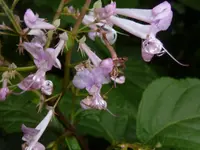
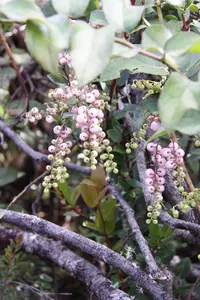
The plant is valued for its tubular, often fragrant flowers that appear along the stems and are followed by small berries. It prefers sheltered, lightly shaded positions with consistently moist, well-drained soil.

Because it dislikes drought, root disturbance, and harsh exposure, it is considered somewhat demanding outside its natural range. Gardeners who learn how to care for Alseuosmia pusilla usually succeed by mimicking its cool, woodland habitat.

Main Plant Requirements

Care Difficulty

Moderate Care

Light Preference

Partial Shade

Water Requirements

Moderate Water

Temperature Preference

Warm Climate

Hardiness Zone

9–11

Soil Texture

Loamy, Peaty, Organic-rich

Soil pH

Acidic (5.5–6.5)

Soil Drainage

Moist but well-drained

Fertilization

Minimal (feed rarely)

Get Personalized Care Plan

Scan your plant to receive care tips personalized for your specific plant

Available on iOS and Android

How to Care for the Alseuosmia pusilla

This shrub prefers bright, gentle light that mimics a lightly shaded forest edge.

  • Provide 3–5 hours of soft morning sun with dappled or bright filtered light for the rest of the day, avoiding harsh midday and late-afternoon sun.
  • Site Alseuosmia pusilla in partial shade; strong summer sun can scorch leaves, especially during hot, dry spells.
  • In warmer regions, shift exposure toward more shade in summer, while in cooler or overcast climates choose a slightly more open position to prevent leggy, weak growth.

This species prefers evenly moist, never waterlogged soil, with slight surface drying between waterings.

  • Water when the top 2–3 cm of soil feels dry, applying enough to moisten the root zone but allowing excess to drain freely.
  • Use a well-drained, humus-rich soil; persistent puddling, sour smell, or yellowing, mushy leaves indicate overwatering and poor drainage.
  • In hot, dry periods increase watering frequency, while in cool or rainy seasons reduce watering so the soil stays moist but not saturated and leaves do not wilt or curl.

This plant favors mild, frost-sheltered conditions similar to cool, temperate woodland.

  • Aim for 50–70°F (10–21°C) for steady growth, with best performance toward the middle of this range.
  • Protect from frost; brief drops near 28–30°F (-2 to -1°C) may damage young growth, so use mulch and siting in a sheltered spot.
  • In summer, it tolerates 75–82°F (24–28°C) if soil moisture is stable and roots are shaded, but prolonged heat above this can stress the plant and reduce flowering.

This shrub benefits from moderately moist air and reacts if kept too dry for long periods.

  • Aim for 50–70% humidity, as prolonged levels below 40% can cause leaf edge browning and tip dieback.
  • In centrally heated homes, monitor for curling, dull leaves as a sign of low-humidity stress in Alseuosmia pusilla.
  • Increase humidity by grouping plants, using a nearby humidifier, or placing the pot on a pebble tray that never lets roots sit in water.

Alseuosmia pusilla prefers light, humus-rich soil that drains freely but does not dry out too fast.

  • Use a mix of roughly 50% peat-free compost, 25% fine bark, and 25% perlite or coarse sand to create a loose, airy structure.
  • Keep drainage fast enough that water passes through within a few seconds rather than pooling on the surface.
  • Aim for slightly acidic to neutral pH, around 5.5–7.0, which supports nutrient uptake and root health.
  • Avoid heavy clay, compacted mixes, or pots without drainage holes, as these promote root suffocation and rot.

This species adapts well to container growing when moisture and drainage are balanced carefully.

  • Choose a pot slightly taller than it is wide to give the shrub’s fine roots depth without leaving a large, waterlogged soil volume.
  • Select a thicker-walled terracotta or ceramic container to steady the shrub and reduce rapid moisture fluctuations on hot days.
  • Raise the pot on feet or bricks outdoors so excess water clears the drainage holes quickly after rain or watering.

This small New Zealand shrub grows in naturally low-nutrient soils, so Alseuosmia pusilla needs only light, occasional feeding in cultivation.

  • Use a mild, balanced NPK fertilizer (around 10-10-10) or fine compost for container or nutrient-poor plantings.
  • Feed lightly in spring and midsummer only, avoiding more than 1–2 applications per growing season.
  • Dilute liquid fertilizer to 1/4–1/2 strength to prevent root burn and excessive soft growth.
  • Stop feeding in late summer so growth hardens before winter and the plant enters its rest period.

Pruning is mainly used to maintain shape and plant health, as this shrub stays naturally compact.

  • Carry out light pruning after main flowering finishes in late spring or early summer.
  • Remove dead, diseased, or storm-damaged stems first, cutting back to healthy wood with clean, sharp secateurs.
  • Thin congested or crossing branches to improve airflow and light penetration through the canopy.
  • Tip back overly long shoots to maintain a neat outline without cutting into very old, woody stems.

This species is usually grown in the ground, but young or container plants benefit from careful transplanting to avoid root disturbance.

  • Transplant or shift to a larger pot in early spring when growth is just starting and conditions are cool and moist.
  • Look for roots circling the container, water running straight through, or slowed growth as signs a move is needed every 2–3 years.
  • Slide the plant out gently, loosen only the outer root layer, and keep as much original root ball intact as possible.
  • Replant into slightly acidic, free-draining soil, water thoroughly, then shade and shelter the plant for 1–2 weeks to reduce transplant shock.

Alseuosmia pusilla is not commonly propagated at home and can be slow to establish from both cuttings and seed.

  • Take semi-ripe cuttings in late summer, 7–10 cm long, with 2–3 nodes and a few leaves retained.
  • Dip the cut end in a low- to medium-strength rooting hormone and insert into a fine, free-draining propagation mix.
  • Maintain high humidity, gentle bottom warmth around 68–72°F, and bright but indirect light to encourage rooting.
  • Sow fresh seed in a cool, shaded frame, using an acidic mix, and expect slow, uneven germination over several months.

This shrub is moderately frost tolerant but benefits from simple winter precautions in colder regions.

  • In climates colder than its usual range, grow in a container so it can be moved to a cool, frost-free, bright space for winter.
  • Mulch the root zone with 5–8 cm of leaf mold or bark in late autumn, keeping mulch away from the stems.
  • Provide shelter from drying winter winds, using a windbreak or placing the plant near a wall for extra protection.

Care Tips

Mulch the rootzone

Apply a 3–5 cm layer of fine bark or leaf mold around the base to keep roots cool, reduce weeding, and protect this shallow-rooted shrub from drought stress and soil disturbance.

Shelter from wind

Position the plant where taller shrubs, a hedge, or a shade cloth break cold or drying winds, which helps flowers last longer and prevents tender shoots from desiccating.

Gentle underplanting

Use low, shallow-rooted groundcovers like native ferns or mosses instead of frequent cultivation to stabilize moisture and avoid damaging the fine feeder roots close to the soil surface.

Targeted pest scouting

Inspect the leaf undersides and soft new growth every 1–2 weeks for scale, mealybugs, and chewing damage, and remove early infestations by hand or with a cotton swab dipped in insecticidal soap before they spread.

Low-stress transplanting

Transplant only in cool, mild weather, keep the original soil ball intact, and water thoroughly a day before and immediately after moving to reduce shock when growing Alseuosmia pusilla.

Common Pests and Diseases

Scale insects

This pest sometimes appears on stems and leaf undersides of Alseuosmia in shaded, sheltered sites, feeding on sap and causing yellowing or weakened growth. Symptoms include sticky honeydew and sooty black mold on leaves or nearby surfaces.

Solution

Gently scrape off visible scales with a cotton bud or soft brush and wash affected areas with lukewarm soapy water, then rinse. For heavier infestations on garden plants, use a targeted horticultural oil spray on all stem and leaf surfaces, repeating after 7–10 days, and encourage natural predators by avoiding broad-spectrum insecticides.

Leaf spot

This disease causes irregular tan to dark-brown spots on leaves, sometimes with yellow halos, particularly in damp, shaded conditions. Symptoms include premature leaf drop and a thin, sparse canopy on stressed plants.

Solution

Remove and dispose of affected leaves, including fallen ones, and avoid overhead watering to keep foliage dry. Improve air circulation around the shrub, water at soil level, and if spotting continues, apply a suitable fungicide labeled for ornamental shrubs according to label directions.

Sooty mold

This disease develops as a black, soot-like coating on leaves and stems that grow under trees or near hedges where sap-sucking insects such as scale or aphids are present. Symptoms include dull, blackened foliage and reduced photosynthesis, but the fungus stays on the surface of the plant.

Solution

First manage the underlying sap-sucking insects on nearby plants with horticultural oil or insecticidal soap. Wipe or gently wash affected Alseuosmia leaves with lukewarm water to remove the mold, and thin surrounding vegetation slightly to improve light and airflow.

Root-knot nematodes

These pests can affect Alseuosmia in light, sandy soils, causing stunted growth, yellowing, and poor flowering due to damaged roots. Symptoms include wilting in dry periods and, on inspection, swollen galls on fine roots.

Solution

Remove and discard severely affected plants and avoid replanting Alseuosmia in the same spot for several years. Improve soil organic matter, use resistant or non-host plants in rotation, and consider solarizing infested beds in warm climates to reduce nematode populations before replanting or attempting to grow Alseuosmia pusilla again.

Interesting Facts

Endemic New Zealand shrub

This species is naturally restricted to parts of New Zealand, where it grows as a low, often sprawling shrub in cool, moist forest habitats, especially in the central and southern North Island. Its limited range means it is closely tied to local forest microclimates and soil conditions.

Highly fragrant flowers

The small tubular flowers are often strongly scented, especially in the evening, and can be detected from several meters away under still conditions. The fragrance is thought to play a role in attracting nocturnal or crepuscular pollinators in its native forest understory.

Chemically variable scent

Research on floral volatiles in the genus Alseuosmia has shown that different species and sometimes populations emit distinct blends of aromatic compounds. A. pusilla contributes to this chemical diversity, which may help separate pollinator interactions among related species growing in the same region.

FAQs about Alseuosmia pusilla

The tubular, scented flowers are attractive to native bees and small moths, and in suitable regions also to nectar-feeding birds. Planting it near other shrub layer species can create a more effective habitat for pollinators.

Grow Healthy Plants with Botan Care

Keep your plants happy and healthy with plant identification, disease detection, and easy care guidance.

Botan plant care app — identify plants on mobile

Explore More Plants