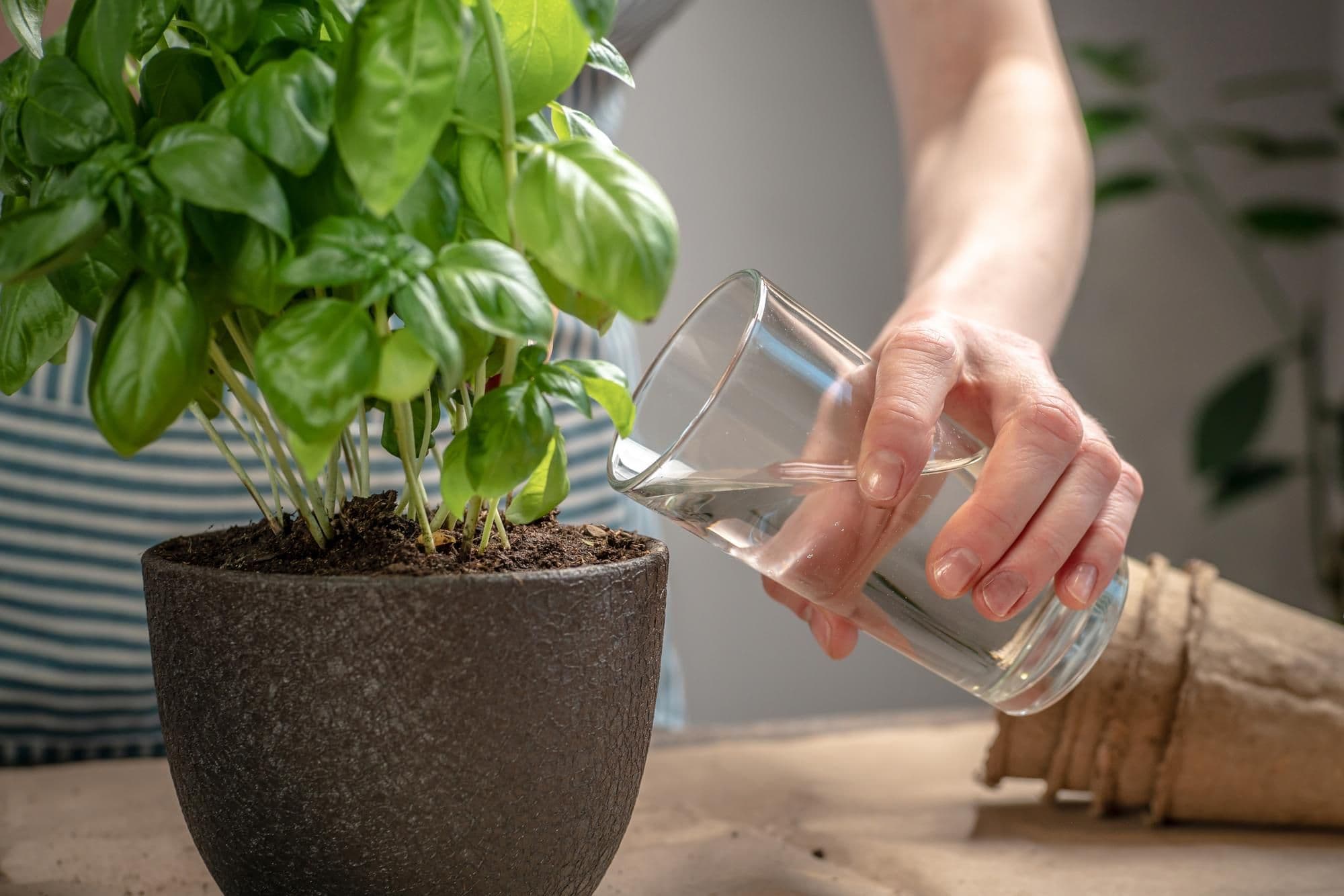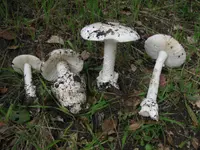

Western Destroying Angel Identification (Amanita ocreata)

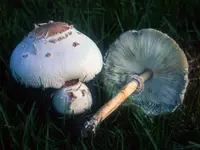
Recognize Amanita ocreata by its smooth white cap, white gills, and a bulbous base enclosed in a saclike volva. The stem is white and usually carries a thin skirtlike ring.

Caps are often 2-5 inches (5-13 cm) wide, with free gills and a tall, centered stem.

Amanita ocreata Identification

Is This Western Destroying Angel?

Check your plant ID by uploading a clear photo to Botan.

Clear images work best. Avoid photos taken too close or too far away

Check the mushroom’s overall shape and base before handling Amanita ocreata.

  • Cap is smooth, white to ivory, and often convex to nearly flat, about 2-5 inches (5-13 cm) across.
  • Gills are white, crowded, and free from the stem, ending just before it.
  • Stem is white, upright, and usually has a thin skirt-like ring high on the stalk.
  • Base sits in a white, sack-like volva that cups the stem underground or at soil level.

Expose the full base, since the volva is one of the most useful visible clues.

Amanita ocreata shows distinct visual changes from enclosed button to fully expanded mushroom.

  • Young plant: The earliest stage is an egg-like white button, enclosed by a universal veil. Only a smooth outer surface is visible before the cap and stem emerge.
  • Mature plant: As it expands, the cap opens from convex to flatter, often 2-5 inches (5-13 cm) across. White gills become exposed, and the stem elongates clearly.
  • Fruiting stage: In fully developed fruiting bodies, the skirt-like ring hangs on the upper stem, while a saclike volva remains at the bulbous base after expansion.

Amanita ocreata is most noticeable in late winter through spring, when the fruiting body emerges from the soil. Fresh specimens are enclosed in a white universal veil, then expand into a white cap with a ring and a saclike cup at the base. Outside that fruiting period, the mushroom is usually absent above ground. This strong appear-and-disappear pattern can be a useful seasonal clue in places where it recurs.

Several white Amanita species can be mistaken for Amanita ocreata.

destroying angel(Amanita bisporigera)

Confusion happens because both are white, ringed mushrooms with a cup-like volva at the base. Amanita bisporigera usually has a more eastern range and often a slimmer stature; the fastest field check is location, since Amanita ocreata is a western species.

death cap, white form(Amanita phalloides)

A pale death cap can look similar when the cap is nearly white and the stem has a ring and basal volva. Death cap usually shows olive to yellow tones with age, while Amanita ocreata stays cleaner white overall.

Amanita ocreata is native to western North America, especially California and parts of the Pacific Coast, where it fruits on the ground in oak woodlands and mixed forests. Habitat is a strong identification clue. It is mycorrhizal, meaning it grows in partnership with tree roots, and is most often found near coast live oak and other oaks, sometimes with other broadleaf trees. Finding it under oaks in coastal or foothill woodland helps narrow the ID.

  • Severe poisoning risk: All parts of Amanita ocreata are dangerously poisonous if eaten by humans or pets. The concern is ingestion of the mushroom body, including cap, gills, stem, and tissues at the base.
  • High misidentification risk: This white Amanita can be confused with edible white mushrooms. A key warning sign is the saclike volva, a cup at the stem base, together with white gills and a ring on the stem.

Not Sure About the ID?

Botan can review a photo to help identify the plant or confirm your findings before you label it.

FAQ

Look for an all-white mushroom with a smooth cap, white gills, a skirt-like ring on the stalk, and a saclike volva at the base. Those combined features are central to Amanita ocreata identification.

More Plant Identification Guides

Identify It. Learn More About It.

Use Botan to identify a plant from a photo, then see species-specific plant details, care information, and safety notes.

Botan app identifying a plant from a photo
Top 15 Plants That Don’t Need Sunlight

8 min read · 17 Sept 2026

Top 15 Plants That Don’t Need Sunlight

Some plants thrive in dim rooms, shaded corners, and places with indirect light. In this guide, you’ll explore the top 15 species best suited to low-light conditions and how to care for them.

Plant Recommendations
Top 15 Plants That Don’t Need Sunlight
How to Group Plants in Landscaping: A Practical Layout Guide

8 min read · 31 Aug 2026

How to Group Plants in Landscaping: A Practical Layout Guide

Good plant grouping can mean the difference between a well-planned garden and one that looks sloppy. This guide explores layers, spacing, cluster shapes, and the plants that thrive when you group them.

Plant Care
How to Group Plants in Landscaping: A Practical Layout Guide
Is Sugar Water Good for Plants?

4 min read · 14 Sept 2026

Is Sugar Water Good for Plants?

Sugar water may sound like an easy boost, but most rooted plants do not need extra sucrose. This guide explains how green tissues produce carbohydrates, when a sweetened solution can be useful, and why too much can cause problems.

Plant Care
Is Sugar Water Good for Plants?