Spore collection hygiene
Collect spore prints on disposable paper or foil in a clean, draft-free area, then discard all materials and disinfect surfaces to reduce cross-contamination with other cultures or wild fungi.

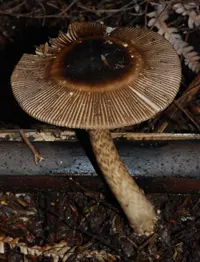
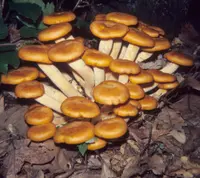
Amanita pekeoides is a wild mushroom-forming fungus, not a typical houseplant. It produces fleshy cap-and-stem fruiting bodies that emerge from the forest floor. The cap is usually pale to light-colored with subtle surface texture, and the gills underneath are closely spaced. It grows in association with tree roots, forming a mycorrhizal partnership that exchanges nutrients between fungus and host tree.
This species is reported mainly from specific forested regions and does not adapt well to containers or indoor conditions. It is not considered suitable for casual cultivation, since its growth depends on complex soil fungi networks and compatible trees. Most home growers will not find practical guidance on how to care for Amanita pekeoides beyond conserving its natural woodland habitat.

Care Difficulty
Hard Care

Light Preference
Partial Shade

Water Requirements
Keep Soil Moist

Temperature Preference
Cool Climate

Hardiness Zone
Unknown

Soil Texture
Loamy, Silty, Organic-rich

Soil pH
Acidic (5.5–6.5)

Soil Drainage
Moist but well-drained

Fertilization
Minimal (feed rarely)
Scan your plant to receive care tips personalized for your specific plant
Available on iOS and Android
This species requires bright, indirect woodland light rather than full, open sun exposure.
This fungus depends on consistently moist, but not waterlogged, soil around its tree partners.
Stable, cool to mild temperatures support healthy mycelial growth and fruiting.
This species is highly sensitive to moisture balance, so humidity management is important.
This ectomycorrhizal fungus depends on very specific soil conditions around its host tree roots.
This species is not suitable for container growing because its life cycle depends on forming ectomycorrhizae with host tree roots in open soil.
This wild mycorrhizal fungus relies on its tree partners for nutrition, so Amanita pekeoides should not be fertilized directly.
As a woodland mushroom, Amanita pekeoides is not pruned; its fruiting bodies are temporary and naturally decompose.
This species forms underground mycorrhizae with host trees, so it is not suited to repotting or normal garden transplanting.
Propagation of this ectomycorrhizal mushroom is specialized and rarely feasible for home growers.
This fungus survives winter as an underground mycelial network and normally needs no deliberate care.

Plant Health Check
Not sure what's wrong with your plant? Check your plant's health inside the app.
Amanita pekeoides is a native, ectomycorrhizal mushroom found in New Zealand forests, forming symbiotic root associations mainly with southern beeches (Nothofagaceae) and some podocarps. It is not naturally recorded from other continents.
This species typically develops a pale to whitish cap with scattered, sometimes granular remnants of the universal veil, which can help distinguish it from smooth-capped amanitas in the same region. The cap often contrasts with the more strongly colored or patterned species growing nearby.
The fruiting body shows a persistent ring (annulus) on the upper stem and a basal saclike volva partly buried in the soil. These combined features, together with its spore characters, support its placement within the genus Amanita as recognized by modern taxonomic studies.
This fungus is considered poisonous and should not be eaten or handled carelessly. Ingestion can cause serious gastrointestinal and, potentially, neurological symptoms. Keep children and pets from touching or consuming any part, including spores and dried fragments.
Keep your plants happy and healthy with plant identification, disease detection, and easy care guidance.