


Substrate Refresh Cycles
Replace 20–30% of the growing medium each season rather than disturbing the whole colony, which keeps the mycelium network stable while renewing nutrients and structure.

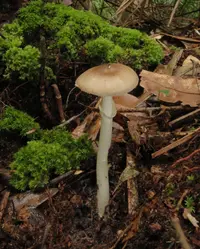
Old potato amanita, Amanita solaniolens, is a terrestrial mushroom rather than a typical houseplant. It forms stout, potato-like caps with a thick stem and often a surrounding volva at the base. The color and surface texture can vary with age and weather, which makes visual identification challenging for non-experts.
This fungus is associated with specific habitats and soil types, and it is not a species that adapts easily to garden or indoor conditions. Because its life cycle depends on complex relationships with soil and surrounding plants, attempts to care for Old Potato Amanita at home are rarely successful or recommended.

Care Difficulty
Moderate Care

Light Preference
Partial Shade

Water Requirements
Moderate Water

Temperature Preference
Warm Climate

Hardiness Zone
Unknown

Soil Texture
Loamy, Organic-rich

Soil pH
Slightly acidic (6.5–7.0)

Soil Drainage
Well-drained

Fertilization
Minimal (feed rarely)
Scan your plant to receive care tips personalized for your specific plant
Available on iOS and Android
This ectomycorrhizal fungus prefers stable woodland light rather than open, exposed sites.
This woodland fungus depends on consistently moist, not saturated, soil around its tree partners.
This species performs best in mild, temperate conditions without extreme heat or hard frost.
This ectomycorrhizal fungus is not suited to controlled indoor humidity and should only be grown in its natural outdoor forest conditions.
This ectomycorrhizal mushroom depends on natural forest soil conditions rather than a prepared potting substrate.
This species is not suitable for container growing, as it relies on complex mycorrhizal relationships with tree roots in open soil.
Amanita solaniolens grows in nutrient-poor, natural substrates and should not be given conventional plant fertilizers.
Pruning is not applicable for Amanita solaniolens, as it is a wild mushroom, not a woody or leafy ornamental plant.
This fungus grows in soil or decaying organic matter and is not suited to conventional repotting or transplanting like a houseplant.
Propagation of Amanita solaniolens is a specialized mycological task and not a standard home-care activity.
Amanita solaniolens is adapted to local outdoor climates in its native range and does not need typical winter care from gardeners.

Plant Health Check
Not sure what's wrong with your plant? Check your plant's health inside the app.
Mature fruiting bodies emit a distinct smell reminiscent of raw or spoiled potatoes, which is unusual even among odoriferous amanitas and helped inspire the common name Old Potato Amanita.
This species is known from limited coastal and subcoastal habitats around the western Mediterranean, where it appears to favor calcareous soils and mild, maritime climates.
It forms ectomycorrhizal associations, a nutrient-exchanging root partnership, with certain Mediterranean trees such as pines and oaks, contributing to forest nutrient cycling and soil health.
This fungus is considered highly toxic to both humans and animals if eaten. Ingestion may cause serious gastrointestinal and neurological symptoms and can be life-threatening. Treat it as inedible, and keep children and pets away.
Keep your plants happy and healthy with plant identification, disease detection, and easy care guidance.

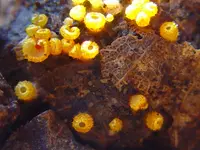
Arachnopeziza aurelia
Arachnopeziza aurelia
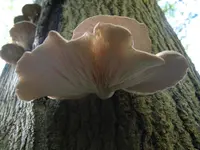
oyster mushroom
Pleurotus ostreatus
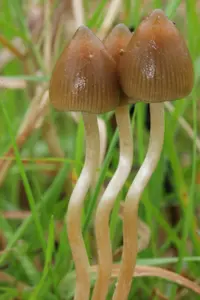
liberty cap
Psilocybe semilanceata
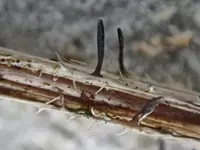
Acrospermum compressum
Acrospermum compressum
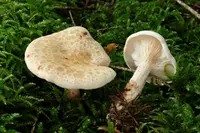
Paralepista gilva
Paralepista gilva
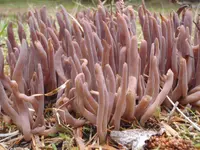
Purple Spindles
Alloclavaria purpurea
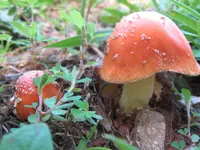
False Caesar's Mushroom
Amanita parcivolvata
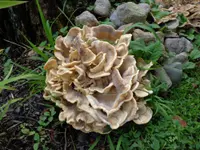
Black-staining Polypore
Meripilus sumstinei