Peeling Paint Ringless Amanita Care (Amanita submembranacea)

Peeling Paint Ringless Amanita

About Peeling Paint Ringless Amanita

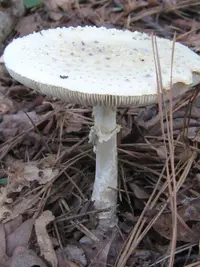
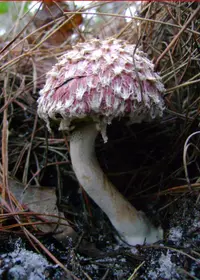
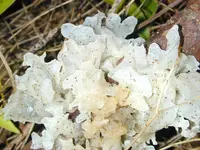
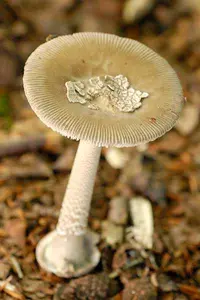
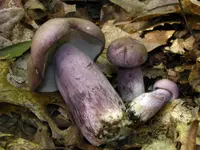
Peeling paint ringless amanita, Amanita submembranacea, is a wild mushroom-forming fungus, not a typical ornamental or houseplant. It produces pale to grayish caps with patchy, peeling surface remnants and a slender, ringless stem. The overall look is delicate but should not be confused with edible species.

This species is usually found in forests of cooler regions, where it forms mycorrhizal relationships with trees, meaning it grows in association with their roots. It prefers undisturbed woodland soil and natural leaf litter.

Because it depends on partner trees and specific soil fungi, it is not practical to cultivate at home, and attempts to care for Peeling Paint Ringless Amanita as a regular potted plant are unlikely to succeed.

Main Plant Requirements

Care Difficulty

Hard Care

Light Preference

Partial Shade

Water Requirements

Keep Soil Moist

Temperature Preference

Cool Climate

Hardiness Zone

Unknown

Soil Texture

Loamy, Organic-rich

Soil pH

Acidic (5.5–6.5)

Soil Drainage

Moist but well-drained

Fertilization

Minimal (feed rarely)

Get Personalized Care Plan

Scan your plant to receive care tips personalized for your specific plant

Available on iOS and Android

How to Care for the Peeling Paint Ringless Amanita

This fungus prefers cool, dappled forest light rather than direct open sun exposure.

  • Provide bright shade or filtered light under trees, with no more than 1–2 hours of weak morning sun and full protection from strong midday or afternoon sun.
  • Peeling Paint Ringless Amanita fruits best in north- or east-facing woodland edges where tree canopy breaks up direct light throughout the day.
  • Excessive sun dries the upper soil layer quickly and can stop fruiting, while deep shade with very dense canopy can reduce mushroom size and numbers.

This mycorrhizal fungus depends on consistently moist, well-drained forest soil rather than direct watering.

  • Aim for soil that stays evenly moist 5–10 cm deep, never waterlogged; the surface may dry slightly between rains but should feel damp underneath.
  • In dry periods, indirect irrigation of the surrounding trees is safer than soaking the fruiting area directly, which can compact soil and damage Amanita submembranacea mycelium.
  • Overwatering shows as persistent puddles, sour or rotten smell, and declining fruiting, while underwatering is marked by cracked soil surface and fewer or aborting caps.

This woodland species favors cool to mild conditions and is sensitive to both hard frost and intense heat.

  • Optimal fruiting usually occurs around 50–65°F (10–18°C), with steady, cool nights supporting stable mycelial activity in the soil.
  • The fungus tolerates short drops near 32°F (0°C) but hard, prolonged frost and frozen ground can halt or damage fruiting structures.
  • Sustained heat above 80°F (27°C) combined with dry soil sharply reduces fruiting; partial shade and mulch help buffer temperature swings through the season.

This ectomycorrhizal fungus depends on consistently moist, humid forest conditions rather than controlled indoor humidity.

  • Aim for ambient outdoor humidity around 60–90% in shaded, wooded sites with minimal direct wind exposure.
  • Dry air and prolonged surface drying suppress fruiting; caps may crack and abort under very low humidity.
  • Maintain moisture by preserving leaf litter, avoiding bare soil exposure, and lightly misting the fruiting area during unusually dry spells.

Amanita submembranacea relies on a specific forest soil environment rather than conventional potting mixes.

  • Favor a loose, well-aerated, sandy to loamy mineral soil overlain by leaf litter, which supports its symbiotic roots with host trees.
  • Ensure very sharp drainage; soil should feel moist yet never waterlogged, as standing water disrupts fungal growth and can kill mycorrhizal roots.
  • Maintain slightly acidic soil, roughly pH 4.5–6.0, often achieved naturally under conifers or birch through accumulated needle and leaf litter.
  • Improve structure by mixing existing forest soil with coarse sand and fine bark pieces, avoiding fertilizers or rich compost that alter native conditions.

This species is not suitable for container growing because it depends on complex mycorrhizal associations with host trees in undisturbed soil.

Amanita submembranacea is a wild mycorrhizal fungus that relies on its tree partners for nutrients and does not benefit from targeted fertilization.

Pruning is not applicable to Amanita submembranacea, as it is a seasonal fungal fruiting body rather than a plant with persistent stems or foliage.

This species forms delicate mycorrhizal associations with host tree roots and is not suited to standard repotting or transplanting practices used for container plants.

  • Avoid digging up or moving soil and roots where fruiting bodies appear, as this disrupts the underground mycelium network.
  • If soil disturbance is unavoidable, keep the root zone moist afterward to reduce additional stress on the fungal partner.
  • For study or observation, photograph fruiting bodies in place instead of lifting them, preserving both the fungus and host roots.
  • When managing woodland areas, maintain existing trees and leaf litter, since these support the stable habitat this fungus requires.

Propagation of Amanita submembranacea is highly specialized and not practical for home growers, since it depends on complex spore dispersal and tree-root symbiosis.

No specific winter care is required for this cold-hardy woodland fungus, which persists as mycelium in the soil and fruits seasonally.

Care Tips

Spore-print monitoring

Place a sheet of foil or glass under a mature cap for several hours to collect spores, which helps confirm identification and track whether the fungus is actively reproducing in your substrate.

Substrate hygiene

Remove and discard any obviously contaminated or foul‑smelling substrate patches promptly, then top up with fresh, well‑colonized material to keep competing fungi and bacteria from overwhelming the mycelium.

Gentle harvest technique

Twist and lift fruiting bodies at the base instead of cutting them, then lightly cover the disturbed spot with clean substrate to protect the remaining mycelium network.

Microclimate shielding

Use a low windbreak such as perforated plastic or a mesh screen around the bed to reduce drying winds and heavy splash from rain, keeping caps cleaner and less prone to physical damage.

Seasonal rest support

Allow the bed to dry slightly and remain undisturbed during its natural off‑season instead of constantly irrigating or disturbing the substrate, which supports the long‑term mycelial health when caring for Peeling Paint Ringless Amanita.

Common Pests and Diseases

Fungivorous nematodes

These pests feed on fungal mycelium in the soil or substrate and can thin or fragment the mycelial network that supports fruiting. Symptoms include declining or distorted mushroom flushes and poor cap formation despite otherwise suitable conditions.

Solution

Reduce nematode pressure by rotating collection or cultivation spots, avoiding reuse of heavily infested substrate, and maintaining good organic matter balance so fungi can regrow faster than they are grazed. In controlled settings, heat-treat or pasteurize non-forest substrates before trying to grow Amanita submembranacea, and avoid adding composts known to have high nematode activity.

Mycophagous springtails

These insects live in moist litter and can graze on developing mycelium and young primordia, which may result in malformed or aborted fruiting bodies. Symptoms include tiny surface pits on caps and stems and uneven emergence of basidiomes from the forest floor or culture substrate.

Solution

Manage springtail numbers by avoiding chronically waterlogged substrates and by improving drainage and aeration of leaf litter or cultivation medium. For small-scale controlled environments, allow the surface layer to dry slightly between mistings and physically remove heavily infested debris where the insects concentrate.

Sciarid fly larvae

These insects, also known as fungus gnat larvae, can tunnel through developing fruiting bodies and nearby mycelium, leading to soft, discolored tissues and premature decay. Symptoms include hollow stems, internal browning, and small larval galleries visible when the mushroom is cut open.

Solution

Limit adult fly access to cultivation or study areas by using fine mesh screening and minimizing exposed, nutrient-rich organic waste that attracts egg-laying. In semi-controlled settings, remove and discard infested mushrooms promptly and keep nearby substrate slightly less wet at the surface to reduce suitable egg-laying sites, while still maintaining the moisture required for mycorrhizal activity.

Basidiome parasitic molds

This disease is caused by opportunistic mold fungi that colonize damaged or aging caps and stems, producing patches of white, gray, or green growth on the basidiomes. Symptoms include rapid softening, off-odors, and visible mold colonies that overgrow the surface of the mushroom.

Solution

Reduce mold incidence by minimizing mechanical damage to developing fruiting bodies and by avoiding dense piles of decaying organic matter immediately around host tree roots. In any managed or research setting, remove and discard moldy fruiting bodies and improve air movement at the ground layer to allow surface moisture to dry more evenly after rainfall.

Interesting Facts

Mountain conifer specialist

This species occurs mainly in cool, montane conifer forests, especially with spruce and fir, and is rarely reported from lowland habitats.

Distinct ringless cap form

Although related to ringed amanitas, it characteristically lacks a ring on the stem and shows a pale, sometimes slightly peeling cap surface, which helps separate it from similar toxic species in the field.

Narrow host preference

Molecular and field studies indicate it forms ectomycorrhiza mainly with Picea (spruce) and Abies (fir), rather than a broad range of tree genera like many other amanitas.

FAQs about Peeling Paint Ringless Amanita

Yes. This mushroom is considered poisonous and should not be handled casually or eaten. It can cause serious gastrointestinal and neurological symptoms. Keep children and pets away, and avoid touching or disturbing wild specimens unnecessarily.

Grow Healthy Plants with Botan Care

Keep your plants happy and healthy with plant identification, disease detection, and easy care guidance.

Botan plant care app — identify plants on mobile

Explore More Plants