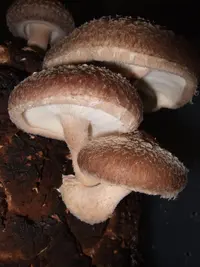
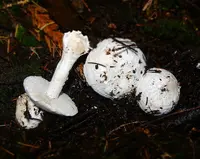
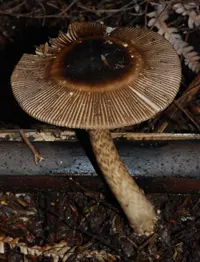
European destroying angel Care (Amanita virosa)

European destroying angel

About European destroying angel

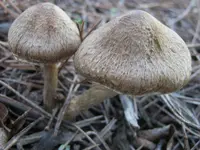
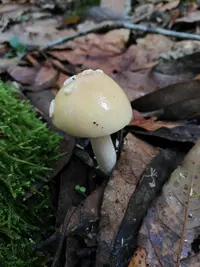
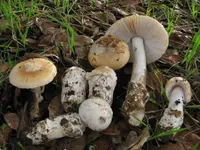
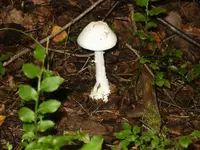
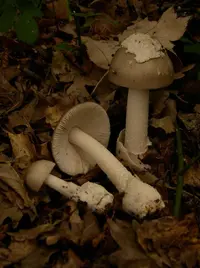
The European destroying angel, Amanita virosa, is a highly toxic mushroom rather than a typical garden plant. It forms white, smooth caps with crowded gills and a slender stem emerging from a cup-like base. In nature, it grows on the ground in woodlands, often in damp, mossy areas, mainly across Europe. This fungus forms mycorrhizal partnerships with trees, meaning it depends on specific roots and cannot be grown like a normal houseplant. Because of this strict ecological relationship and extreme toxicity, it is not suitable for ornamental cultivation, and guides on how to care for European destroying angel focus on avoidance and safe identification, not home culture.

Main Plant Requirements

Care Difficulty

Hard Care

Light Preference

Partial Shade

Water Requirements

Keep Soil Moist

Temperature Preference

Cool Climate

Hardiness Zone

Unknown

Soil Texture

Loamy, Silty, Organic-rich

Soil pH

Strongly acidic (4.5–5.5), Acidic (5.5–6.5)

Soil Drainage

Moist but well-drained

Fertilization

Minimal (feed rarely)

Get Personalized Care Plan

Scan your plant to receive care tips personalized for your specific plant

Available on iOS and Android

How to Care for the European destroying angel

This deadly fungus develops best in cool, shaded woodland conditions rather than direct sun.

  • European destroying angel typically fruits under closed-canopy forests receiving dappled light for only 2–4 hours per day.
  • Choose sites with morning or filtered light and strong afternoon shade; avoid exposed clearings or south-facing open slopes.
  • Excessive sun and heat dry the upper 2–5 cm of soil and leaf litter too quickly, reducing mycelium activity and fruiting bodies.

This ectomycorrhizal fungus depends on consistently moist, not saturated, forest soil.

  • In natural sites, rely on rainfall but favor locations where the upper 2–3 cm of soil and leaf litter stay slightly damp between rains.
  • Avoid waterlogged ground; prolonged puddling, sour smell, or algae sheen indicate anaerobic conditions that suppress Amanita virosa.
  • Dry, cracked soil, shrinking leaf litter, and brittle fine roots of associated trees suggest chronic moisture deficit that reduces fruiting.

This species prefers cool to mild conditions and is sensitive to both hard frost and extreme heat during fruiting.

  • Optimal fruiting typically occurs around 55–68°F (13–20°C) with moist soil and stable woodland humidity.
  • Mycelium in soil can persist below 32°F (0°C), but repeated hard surface frosts can damage emerging fruiting bodies.
  • Sustained heat above 80–82°F (27–28°C) with dry air and soil sharply reduces fruiting and may drive the fungus deeper or dormant.

Humidity is not a meaningful care factor for cultivating this deadly ectomycorrhizal fungus and should not be managed in a home setting.

This species is an ectomycorrhizal forest fungus and cannot be grown like a typical potted plant in standard substrates.

  • In nature, Amanita virosa fruits in moist, well-aerated, humus-rich forest soil closely associated with tree roots, not in isolated potting mixes.
  • Its mycelium depends on a living host tree in slightly acidic, organically enriched, loose mineral soil rather than compacted or waterlogged ground.
  • Attempts to grow it using compost, perlite, bark, or sand blends without a compatible tree partner and natural soil microflora are unlikely to succeed.
  • Avoid fertilized, heavily tilled, or sterilized soils, as these conditions disrupt the fungal–root partnership it requires to complete its life cycle.

This highly toxic woodland fungus is not suitable for container growing and should not be intentionally cultivated in pots.

This deadly mycorrhizal mushroom forms nutrient-sharing partnerships with trees and does not benefit from direct fertilization in cultivation attempts.

Pruning is not applicable to Amanita virosa, as it is a wild mycorrhizal fungus rather than a managed garden plant.

This fungus is not suited to normal repotting, since it relies on an intimate mycorrhizal association with host tree roots in soil.

  • Transplanting attempts typically fail because the fine root-fungus network is easily disrupted.
  • If study cultivation is attempted, move only intact soil-root blocks without breaking roots.
  • Perform any moves in cool, moist periods to limit desiccation stress.
  • Avoid frequent disturbance; the organism establishes best in stable, undisturbed woodland soil.

Intentional propagation of this highly toxic species is strongly discouraged and is rarely successful outside controlled research conditions.

In its natural range this species is fully cold hardy and needs no intentional winter care.

Care Tips

Host tree selection

Establish the fungus only near suitable ectomycorrhizal hosts such as beech, oak, birch, or spruce, and avoid lawns or isolated planters where it cannot form its natural root partnership.

Minimal soil disturbance

Mark the colonized area and avoid digging, tilling, or heavy raking there so the underground mycelium network remains intact and can fruit repeatedly over several years.

Leaf litter management

Maintain a thin, steady layer of untreated leaf litter or fine wood debris over the colonized zone to buffer moisture, shade the soil surface, and create a more natural forest-floor microhabitat.

Targeted moisture monitoring

Use a simple soil probe or even a clean wooden skewer to check that the upper 3–5 cm of soil stays slightly moist but not waterlogged, especially during dry spells or heatwaves when caring for European destroying angel outdoors.

Controlled observation access

If observation is the goal, install a low barrier or flagging around the fruiting area to prevent accidental trampling and unintentional handling, and always supervise children and pets near the site due to this species’ extreme toxicity.

Common Pests and Diseases

Mycophagous slugs

These pests feed on developing fruiting bodies, leaving ragged edges, holes, and slime trails on caps and stems.

Solution

Hand-pick slugs at dusk or early morning, use physical barriers such as copper tape or sharp grit around the cultivation bed, and keep dense groundcover trimmed to reduce hiding places; in wetter sites, shallow beer traps or iron phosphate slug baits can further reduce pressure while limiting harm to other wildlife.

Springtails

These insects live in very damp substrates and can rasp at young primordia, occasionally scarring or deforming small mushrooms.

Solution

Improve drainage and slightly reduce constant surface moisture to keep the substrate moist but not waterlogged, remove heavily infested debris, and, if needed, use sticky traps nearby to monitor populations rather than treating the mushrooms directly.

Fungus gnats

These insects lay eggs in rich, damp organic matter; the larvae may tunnel through young bases and stems, allowing secondary decay organisms to enter.

Solution

Let the top layer of the culture substrate dry slightly between heavy waterings, use fine-mesh covers over ventilation openings, and place yellow sticky traps near the growing area to intercept adults and reduce egg-laying around the colony.

Trichoderma green mold

This disease is caused by competitive Trichoderma fungi that colonize the substrate, forming dense white growth that soon turns bright green and can suppress or replace mushroom formation.

Solution

Discard heavily contaminated substrate, clean nearby tools and containers with soap and hot water or a dilute bleach solution, and in future culture batches pasteurize or sterilize substrate materials and avoid overwatering to limit conditions that favor Trichoderma.

Bacterial blotch

This disease develops in very wet, stagnant conditions and causes soft, water-soaked spots and discoloration on caps, often starting where standing water remains on the surface.

Solution

Reduce overhead watering, avoid leaving water droplets on caps, increase air movement around the fruiting area, and promptly remove and discard any severely affected mushrooms to limit spread on nearby surfaces.

Interesting Facts

Lethal amatoxin content

This species contains amatoxins, a group of cyclic peptides that block RNA polymerase II, causing progressive and often irreversible liver and kidney damage after ingestion.

Delayed symptom onset

Poisoning symptoms commonly appear 6–24 hours after eating the mushroom, creating a dangerous delay that often leads to misdiagnosis as simple food poisoning.

Northern European distribution

The species is native mainly to northern and montane parts of Europe, where it typically occurs in coniferous and mixed woodlands on acidic soils, often forming mycorrhizal associations with spruce and birch.

Botan icon

Did you know?

In several European countries, this species has been historically confused with edible white mushrooms, and documented poisonings have contributed significantly to public mushroom education campaigns and stricter guidelines on wild mushroom sales.

FAQs about European destroying angel

This species is deadly poisonous if eaten, even in small amounts. It contains amatoxins that severely damage the liver and kidneys. Never taste, handle for food, or rely on folklore tests to judge its safety.

Grow Healthy Plants with Botan Care

Keep your plants happy and healthy with plant identification, disease detection, and easy care guidance.

Botan plant care app — identify plants on mobile

Explore More Plants