
7 min read · 6 Aug 2026
Planting Grass Seed in Summer – What Works and What Fails
Summer seeding succeeds when the grass type suits the season, and the soil stays moist. Find out how to prepare the seedbed and choose a safe window for planting.
Recognize common ragweed by its deeply divided, fernlike leaves set opposite low on the stem and alternate higher up, plus many slender, upright flower spikes at the stem tips.
Plants usually grow 1-4 feet (0.3-1.2 m) tall and branch freely, forming a coarse, open outline.

Use a clear photo to confirm what plant you have.
Clear images work best. Avoid photos taken too close or too far away
Use these quick visual cues to check for common ragweed.
Check several stems, since leaf arrangement changes from lower to upper parts.
Common ragweed shows clear visual shifts from seedling leaves to flowering and fruiting structures.
In spring, common ragweed emerges with opposite, divided leaves. By early summer, leaves are usually alternate, which is a useful visual shift on established stems. Late summer into fall is the clearest season for recognition. Greenish male flower spikes become obvious at stem tips, while the lower female flowers develop into small burr-like fruits. After frost, plants dry to tan-brown and remain as stiff, branched stalks for a short time.
A few weeds are regularly mistaken for common ragweed.
mugwort(Artemisia vulgaris)
Both have deeply cut leaves. Mugwort usually has a whitish, fuzzy leaf underside and leaves stay alternate; ragweed often has opposite lower leaves and green undersides.
giant ragweed(Ambrosia trifida)
Same genus and similar pollen spikes, but giant ragweed has much larger leaves with 3 main lobes, not many fine divisions, and it often grows far taller.
feverfew(Tanacetum parthenium)
Its lacy leaves can mislead at first. Feverfew makes obvious daisy-like white flower heads, while ragweed has small greenish flower spikes without petals.
Native to North America, Ambrosia artemisiifolia is widespread across much of the United States and southern Canada. It is also widely introduced elsewhere, so habitat often helps more than geography alone. Look for it in disturbed ground such as roadsides, vacant lots, field edges, riverbanks, and crop fields. Finding it in open, recently disturbed sites is a useful clue when separating it from similar leafy weeds of more stable habitats.

What Plant Is This?
Find out what plant you have and get specific care tips
Upload a photo to check the identification and reduce confusion before you spend time on the wrong plant.
The quickest clue is the deeply divided, fernlike leaves on a rough, branching annual, plus slender green flower spikes at the stem tips later in the season. Those features usually confirm common ragweed identification in the field.
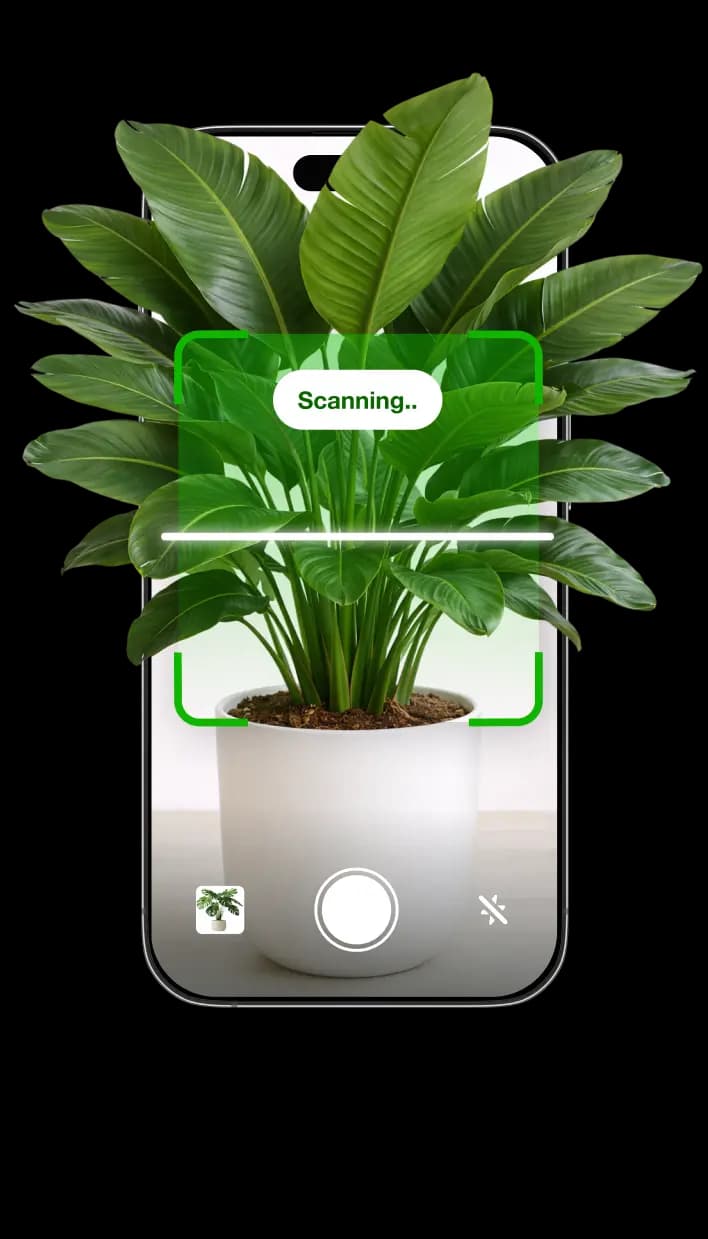
Identify it from a photo with Botan, then get plant details, care information, and common problems for that species.


7 min read · 6 Aug 2026
Summer seeding succeeds when the grass type suits the season, and the soil stays moist. Find out how to prepare the seedbed and choose a safe window for planting.

13 min read · 28 Jul 2026
Learn which of the 15 fastest-growing trees will suit your area. We’ll share detailed information on each: growth rate, mature spread, key tree demands, and main vulnerabilities. Read on and make the best choice possible.

5 min read · 4 Sept 2026
Watering by feel kills plenty of houseplants. A moisture meter checks the soil for you, and takes the guesswork out of it. This guide will show you how to use it correctly, from the first touch to the final reading.