Volunteer Seed Control
Collect and dispose of seed heads before they dry and drop if you want to limit spread, as this plant self-seeds aggressively in open, disturbed soil.

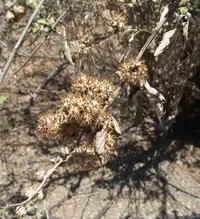
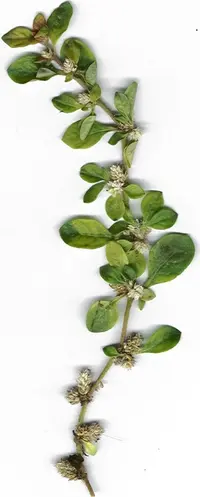
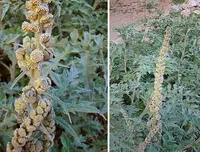
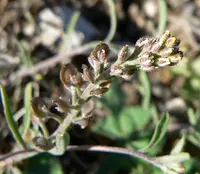
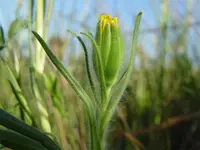
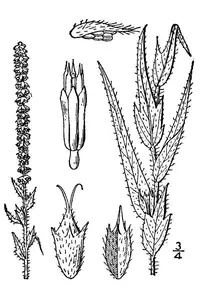
San Diego bur ragweed (Ambrosia chenopodiifolia) is a hardy, shrubby perennial in the sunflower family, native to dry coastal slopes and canyons of southern California and northern Baja California. It often forms dense thickets with many branched, gray-green stems and finely divided, somewhat woolly leaves. Small, inconspicuous greenish flower clusters appear at the stem tips and produce spiny burs that cling to fur and clothing, helping spread the seeds. This species is well adapted to heat, drought, and poor, rocky soils, which makes it tough but sometimes invasive in suitable conditions. Understanding how to care for San Diego bur ragweed mainly matters in restoration or native plant landscapes rather than typical home gardens.

Care Difficulty
Easy Care

Light Preference
Full Sun

Water Requirements
Low Water

Temperature Preference
Warm Climate

Hardiness Zone
8–11

Soil Texture
Sandy, Loamy, Rocky

Soil pH
Slightly acidic (6.5–7.0), Slightly alkaline (7.0–7.5)

Soil Drainage
Well-drained

Fertilization
Minimal (feed rarely)
Scan your plant to receive care tips personalized for your specific plant
Available on iOS and Android
This sun-loving North American shrub thrives in open, exposed sites with strong light.
This drought-adapted shrub prefers infrequent, deep watering once established.
This species is adapted to warm, dry climates and tolerates a fairly wide temperature range once established.
This drought-adapted shrub has no special humidity needs and relies mainly on soil moisture conditions.
This species prefers dry, fast-draining mineral soils that mimic its native coastal scrub habitats.
This species can be grown in containers, mainly for control or observation rather than ornamental display.
This drought-adapted native shrub needs minimal feeding, so caring for San Diego bur ragweed focuses more on soil and light than fertilizer.
Pruning Ambrosia chenopodiifolia is mainly done to maintain shape and remove problem growth rather than to increase flowering.
This shrub is usually grown in the ground, so transplanting is more relevant than true repotting.
Ambrosia chenopodiifolia is most often propagated from seed, with some potential for division of small, naturally spreading clumps.
This species is generally cold hardy in its native range and usually needs little dedicated winter care.

Plant Health Check
Not sure what's wrong with your plant? Check your plant's health inside the app.
This ragweed is native to coastal southern California and northern Baja California, where it is tightly associated with coastal sage scrub and dry chaparral rather than occurring across a wide continental range like many other ragweed species.
Unlike the more familiar weedy ragweeds that are small annuals, this species is a woody shrub that produces large quantities of airborne pollen, contributing to seasonal allergy issues in parts of its native range.
In its native habitats it tolerates long dry summers and periodic wildfires, often resprouting from woody bases and maintaining foliage during droughts when many neighboring species lose leaves or go dormant.

This species is considered locally dominant and sometimes problematic in disturbed coastal sage scrub, where dense stands can reduce plant diversity and make restoration of more sensitive native species more difficult.
This species spreads readily by seed and can form dense patches in open, disturbed sites. In gardens, remove seed heads before they mature and pull unwanted seedlings promptly to keep it from dominating other low, dry-climate plantings.
Keep your plants happy and healthy with plant identification, disease detection, and easy care guidance.