Anacampseros arachnoides Care

Anacampseros arachnoides

About Anacampseros arachnoides

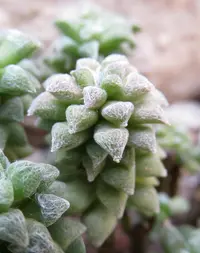
Anacampseros arachnoides is a compact, slow-growing succulent native to arid regions of South Africa. It forms small rosettes of thick, pointed leaves often covered in fine hairs. Over time, the plant creates dense, mat-like clumps that stay low to the ground, making it suitable for small pots or rock gardens. In good light it may produce delicate, star-shaped flowers on slender stems. This species prefers bright, indirect sun, very well-draining gritty soil, and careful watering with thorough drying between waterings. These traits make it moderately easy to grow for succulent enthusiasts who learn how to care for Anacampseros arachnoides.

Main Plant Requirements

Care Difficulty

Moderate Care

Light Preference

Full Sun

Water Requirements

Low Water

Temperature Preference

Tropical / Frost Sensitive

Hardiness Zone

10–11

Soil Texture

Sandy, Loamy, Rocky

Soil pH

Slightly acidic (6.5–7.0), Neutral (7.0)

Soil Drainage

Well-drained

Fertilization

Minimal (feed rarely)

Get Personalized Care Plan

Scan your plant to receive care tips personalized for your specific plant

Available on iOS and Android

How to Care for the Anacampseros arachnoides

This compact succulent thrives in bright, dry habitats with strong light and good airflow.

  • Provide 4–6 hours of direct morning sun plus bright indirect light for the rest of the day; in very hot climates, give light afternoon shade to prevent leaf scorch.
  • Outdoors, position Anacampseros arachnoides in an east- or southeast-facing spot; indoors, use a south-facing window with sheer curtain if midday sun is harsh.
  • Watch color and growth: leaves stretching or turning pale indicate too little light, while crispy brown patches on the sun-facing side indicate excessive sun.

This species stores water in its leaves and prefers infrequent, thorough watering in fast-draining soil.

  • Water only when the top 3–5 cm of soil are completely dry; in active growth, this may mean roughly every 7–14 days, less often in cool or low-light conditions.
  • Use a gritty, cactus-type mix and let excess water drain fully, avoiding saucers of standing water that promote root rot and a sour soil smell.
  • Reduce watering sharply in winter, watching for slight leaf wrinkling as a sign to water, and for soft, translucent, or yellowing leaves as signals of overwatering.

This plant is adapted to warm, dry conditions and dislikes prolonged cold or damp.

  • Aim for 65–80°F (18–27°C) during active growth, with good airflow and low humidity to reduce the risk of fungal problems.
  • Protect from cold below 40°F (4°C); brief light chills may be tolerated, but any frost can damage tissues and kill roots, especially in wet soil.
  • In hot summers above 90°F (32°C), give some afternoon shade and avoid dark containers or surfaces that overheat the roots, adjusting water slightly upward if growth remains active.

This compact succulent handles dry home air well and rarely needs special humidity control.

  • Target 30–50% relative humidity, which matches most heated or air-conditioned homes.
  • Dry air is usually tolerated, but combine low humidity with bright, hot sun cautiously to prevent leaf shriveling.
  • Wrinkled, dull, or papery leaves signal moisture stress; group pots or use a pebble tray only if air is extremely dry.

This species needs a very fast-draining, mineral-rich succulent mix to prevent root rot.

  • Use a gritty mix such as 40% cactus potting mix, 40% coarse sand, and 20% pumice or perlite for strong root aeration.
  • Aim for slightly acidic to neutral pH around 6.0–7.0, which suits most commercial cactus mixes without adjustment.
  • Ensure structure is loose and crumbly, never compact; add extra pumice or small gravel if water sits on the surface longer than a few seconds.
  • Avoid peat-heavy, moisture-retentive, or clay-based substrates, which hold water around the roots and quickly damage caring for Anacampseros arachnoides.

This succulent is well suited to growing in small containers and shallow dishes.

  • Choose a shallow, wide pot so the mat-forming rosettes can spread while the relatively fine roots stay close to the surface.
  • Select unglazed terracotta if extra evaporation is needed in humid or cool climates to keep the mix drying between waterings.
  • Place the container on pot feet or a stand so drainage holes remain clear and water does not pool under the base after watering.

This compact succulent needs minimal feeding, but light fertilization supports steady growth in containers.

  • Use a diluted balanced liquid fertilizer (around 10-10-10 or 20-20-20 at 1/4 strength) formulated for succulents.
  • Feed during the active growing season in spring and summer every 4–6 weeks if growth is moderate.
  • Avoid fertilizing in fall and winter when growth slows and the plant is semi-dormant.
  • Ensure soil is slightly moist before feeding Anacampseros arachnoides to reduce root burn risk.

Pruning needs for Anacampseros arachnoides are light and mainly focused on keeping the rosette tidy and healthy.

  • Best time for minor pruning is late spring or early summer when the plant is actively growing.
  • Remove dried leaves, damaged segments, or shriveled offsets using small, clean scissors or fine snips.
  • Thin out crowded offsets only if air circulation is poor or rosettes shade each other heavily.
  • Avoid cutting into healthy rosettes; shaping is mostly achieved by selective removal of older, outer leaves.

This slow-growing succulent prefers tight quarters and only occasional repotting in a well-drained mix.

  • Check for roots circling the drainage holes, soil drying extremely fast, or stalled growth as signs it may need repotting.
  • Plan to move Anacampseros arachnoides into a slightly larger pot every 2–3 years, ideally in spring.
  • Use a gritty cactus/succulent mix, gently loosen roots, and keep the old soil mostly intact to limit shock.
  • After repotting, keep the plant in bright, indirect light and withhold watering for 3–5 days to let roots heal.

Anacampseros arachnoides is commonly propagated from offsets and seeds under warm, bright conditions.

  • Separate small offsets in late spring or early summer, ensuring each has some roots attached.
  • Let cut or broken surfaces dry for 1–2 days, then place in a gritty, barely moist succulent mix.
  • Keep new divisions in bright, indirect light with good airflow until roots strengthen.
  • For seeds, sow on the surface of a well-drained mix, maintain gentle warmth (70–75°F), and keep slightly moist until germination.

This succulent is not very frost tolerant and benefits from careful winter management in cool climates.

  • In regions with frost, grow Anacampseros arachnoides in containers that can be moved indoors for winter.
  • Aim for a cool, bright indoor spot around 50–60°F with plenty of light and low to moderate humidity.
  • Water sparingly in winter, allowing the mix to dry almost completely to prevent rot in cold conditions.
  • In mild climates, provide excellent drainage and consider a light gravel mulch to keep the crown dry during cold, wet periods.

Care Tips

Rotate for symmetry

Turn the pot 90° every 1–2 weeks so the rosette cluster develops evenly and does not lean or flatten on the brightest side.

Use a top dressing

Apply a 0.5–1 cm layer of coarse horticultural grit around the base to keep leaves off damp soil, reduce stem rot risk, and discourage fungus gnats when caring for Anacampseros arachnoides.

Encourage clumping

When offsets appear crowded at the pot edge, gently tuck or replant them slightly inward on the surface so they root into gaps and form a dense, attractive mat.

Provide cold rest

In regions with mild winters, keep the plant in a bright, frost-free spot at 40–55°F with very sparse watering to support a natural rest period that improves compact growth next season.

Inspect leaf bases

Every few weeks, gently lift outer leaves and check the crown area for soft tissue, mealybugs, or trapped dead leaves, removing any debris with tweezers to maintain airflow around the rosettes.

Common Pests and Diseases

Mealybugs

This pest hides in leaf rosettes and between clustered stems, sucking sap and causing slow growth, yellowing, and sticky honeydew on the leaves and pot surface. Symptoms include cottony white tufts deep in the compact foliage mounds.

Solution

Isolate the plant, then use a cotton swab dipped in 70% isopropyl alcohol to dab visible insects, repeating weekly until no new clusters appear. Improve light and airflow around the rosettes and, if needed, use several applications of an insecticidal soap or neem oil spray, making sure to reach into the leaf bases without soaking the soil.

Root mealybugs

This pest lives on the roots and lower stem below the soil line, causing plant shrinkage, wrinkled leaves, and poor growth despite adequate light. Symptoms include white cottony masses on roots or around the drainage holes when the plant is unpotted.

Solution

Remove the plant from the pot, wash off all soil, and rinse roots under a gentle stream of water, then remove heavily infested roots. Soak the root system briefly in a diluted insecticidal soap or systemic insect solution labeled for root mealybugs, allow to dry slightly, and repot into fresh, dry, fast-draining succulent mix in a clean pot.

Spider mites

These insects thrive in hot, very dry indoor air and can cause tiny pale stippling, dull leaves, and fine webbing between the small leaves and stems. This pest is more common under strong light with low humidity, especially when the plant is stressed by underwatering.

Solution

Rinse the plant gently but thoroughly with lukewarm water, focusing on the undersides of leaves and tight rosette centers, then let it dry in bright light. Follow with repeated treatments of insecticidal soap or neem oil every 5–7 days, and slightly increase ambient humidity and air movement without misting the foliage heavily.

Fungal leaf spots

This disease appears as small, dark, sunken lesions on leaves, often starting where water sits between tightly packed leaves or where airflow is poor. Symptoms include localized spots that may expand and cause partial leaf collapse in overly shaded or crowded plants.

Solution

Remove affected leaves with a clean tool and discard them, then adjust watering to keep foliage dry and only water the soil surface in the morning. Improve light and spacing around the plant and, if spotting continues, apply a sulfur- or copper-based fungicide labeled for succulents according to the product directions.

Basal stem rot

This disease affects the stem base at the soil line, turning it brown, mushy, and prone to collapse, often after prolonged overwatering or poorly draining soil. Symptoms include sudden wilting, shriveled leaves, and a sour or musty smell near the base of the clusters.

Solution

Unpot the plant, cut away all soft, discolored tissue, and discard any completely rotted sections, keeping only firm, healthy stems for re-rooting. Allow salvaged pieces to callus for several days in a dry, shaded place, then replant into a gritty, fast-draining mix and water very lightly, which is essential for successful Anacampseros arachnoides care instructions in containers.

Interesting Facts

Spiderweb leaf covering

The small rosettes often develop a fine, tangled web of white hairs across the leaves, giving a spiderweb-like appearance that helps shade the plant’s growing point from intense sun in its native habitat.

Clump-forming miniature rosettes

This species slowly forms tight, cushion-like clumps of many miniature rosettes, an adaptation that reduces water loss and protects the roots in its rocky, arid South African environment.

Nocturnal flower opening

Its pale, delicate flowers typically open in the late afternoon or evening and close again by morning, a pattern that aligns with cooler temperatures and reduced evaporation in its native range.

FAQs about Anacampseros arachnoides

This species grows slowly, adding only a few millimeters of height and spread each year. Expect several years to develop a dense clump. Warm conditions, strong light, and lean, fast-draining soil support steady but compact growth when caring for Anacampseros arachnoides.

Grow Healthy Plants with Botan Care

Keep your plants happy and healthy with plant identification, disease detection, and easy care guidance.

Botan plant care app — identify plants on mobile

Explore More Plants