wild cashew Care (Anacardium excelsum)

wild cashew

About wild cashew

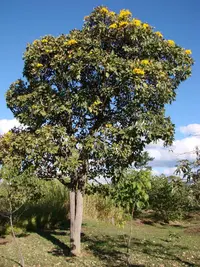
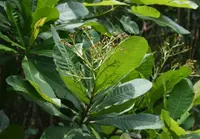
The wild cashew, Anacardium excelsum, is a large evergreen tree native to Central and South American tropical forests. It forms a tall, broad canopy with thick branches and glossy green leaves. Flowers are small and pale, followed by hard, pear-shaped fruits that are not the same as the commercial cashew nut. In nature it often grows along rivers and in moist lowland areas. This species can be challenging outside the tropics due to its size, need for warmth, and sensitivity to cold. Those who want to care for wild cashew should provide bright light, consistent moisture without waterlogging, and deep, well-drained soil.

Main Plant Requirements

Care Difficulty

Hard Care

Light Preference

Full Sun

Water Requirements

Moderate Water

Temperature Preference

Tropical / Frost Sensitive

Hardiness Zone

11–12

Soil Texture

Sandy, Loamy, Organic-rich

Soil pH

Acidic (5.5–6.5), Slightly acidic (6.5–7.0)

Soil Drainage

Well-drained

Fertilization

Minimal (feed rarely)

Get Personalized Care Plan

Scan your plant to receive care tips personalized for your specific plant

Available on iOS and Android

How to Care for the wild cashew

Anacardium excelsum, commonly called wild cashew, develops best in strong, consistent outdoor light in warm climates.

  • Provide 6–8 hours of direct sun daily, ideally strong morning sun with some light afternoon shade in very hot regions.
  • Young trees tolerate partial shade (around 3–4 hours direct sun) but grow slower and may form a more open, lanky canopy.
  • Avoid deep shade, which causes weak, sparse growth, and monitor for leaf scorch on exposed western sides during dry, high-UV seasons.

Watering for Anacardium excelsum focuses on deep, infrequent soakings that match seasonal rainfall patterns.

  • In the growing season, water when the top 5–8 cm of soil feels dry, applying a slow, deep soak so moisture reaches the full root zone.
  • Use free-draining soil or a sloped site; standing water or heavy clay that stays wet for days leads to root rot and leaf yellowing.
  • Reduce supplemental watering in the cool or dry season, watching for dull, curling leaves as an early sign of drought stress.

This species prefers consistently warm, frost-free conditions for reliable growth and long-term health.

  • Aim for 70–90°F (21–32°C) for active growth; trees remain comfortable up to about 95°F (35°C) if soil moisture is adequate.
  • Minimum safe temperature is around 40°F (4°C); brief drops near this level can slow growth, while freezing causes severe damage or death.
  • In subtropical areas, site trees in warm, sheltered microclimates and avoid low spots where cold air collects during winter nights.

This species prefers moderately humid air but adapts to typical household levels.

  • Target 40–60% humidity to reduce leaf edge browning and tip dieback in wild cashew.
  • It tolerates short periods of drier air but prolonged humidity below 30% can cause leaf curling and slower growth.
  • Increase humidity locally by grouping plants, using a pebble tray with water below the pot base, or running a nearby cool-mist humidifier.

Anacardium excelsum needs deep, well-drained, slightly acidic to neutral soil for stable growth.

  • Use a sandy or sandy-loam mix with 30–40% coarse material such as sharp sand or fine gravel to prevent waterlogging.
  • Incorporate 20–30% compost or well-rotted leaf mold to supply nutrients without making the mix heavy or compacted.
  • Aim for pH 6.0–7.0 and avoid strongly alkaline conditions, which can reduce nutrient availability and cause chlorosis.
  • Improve aeration by blending in chunky pine bark or perlite and avoid dense clay or peat-heavy mixes that hold water around the roots.

This tree is only marginally suitable for long-term container growing due to its eventual large size.

  • Choose a very deep, heavy container to anchor the tall, top-heavy canopy and prevent tipping in wind or when the soil is dry.
  • Use a pot material with some weight, such as thick terracotta or concrete, to increase stability on patios or exposed sites.
  • Raise the container on blocks or pot feet so drainage holes stay clear and excess water escapes quickly after heavy irrigation or rain.

Anacardium excelsum, or wild cashew, grows in lean soils but responds to light, balanced feeding in cultivation.

  • Use a balanced slow-release fertilizer (around 10-10-10 or similar) or well-aged compost at the start of the warm growing season.
  • Feed every 8–10 weeks during active growth, skipping applications if growth is already vigorous or soil is rich.
  • Apply at half the label rate for trees of similar size to avoid salt buildup and root burn.
  • Stop fertilizing in late summer so new growth hardens before cooler weather or lower light periods.

Pruning Anacardium excelsum is mainly structural and corrective rather than intensive.

  • Carry out main pruning in late dry season or late winter, before strong new growth begins.
  • Remove dead, diseased, crossing, or storm-damaged branches using clean, sharp loppers or a pruning saw.
  • Thin crowded interior branches to improve airflow and light penetration, encouraging a stable, open crown.
  • Limit heading cuts; instead favor selective thinning cuts to guide height, spread, and safe clearance over paths or structures.

This large tropical tree is rarely grown long term in containers, so focus on careful transplanting of young plants.

  • Transplant when roots lightly fill the pot or form circling roots at drainage holes, usually every 1–2 years in early growth stages.
  • Choose late spring or early summer, once soils are warm and stable, to support rapid root establishment outdoors.
  • Move into a planting hole 2–3 times the width of the root ball, loosening circling roots gently without tearing them.
  • Water deeply after planting, then keep soil evenly moist but not waterlogged for several weeks to reduce transplant shock.

This species is most often propagated from seeds rather than vegetative methods.

  • Collect fresh, fully mature seeds and sow them promptly, as viability decreases during storage.
  • Sow in late spring to early summer in a warm, bright location with 75–85°F soil temperature.
  • Use a deep, well-drained sandy or loamy mix and plant seeds about 2–3 cm deep.
  • Maintain even moisture without waterlogging; germination may be slow and irregular over several weeks.

This tropical tree has very low frost tolerance and needs protection in any climate with cool winters.

  • Avoid planting in areas that experience hard frost; young trees are especially sensitive below about 32°F.
  • In marginal climates, mulch the root zone 5–8 cm deep to buffer soil temperature fluctuations.
  • For container-grown juveniles, move plants indoors or into a heated greenhouse before the first cold nights.
  • Reduce watering in cool conditions, keeping the root zone just slightly moist to limit stress and root rot risk.

Care Tips

Deep root training

In the first 2–3 years, water less often but in larger volumes to encourage a deep taproot, which improves drought resilience and long‑term stability for this large tree.

Early structural pruning

During the juvenile stage, remove competing leaders and narrow crotch angles so the tree develops a single strong trunk and well‑spaced scaffold branches that can support its eventual height and spread.

Wind and space planning

Plant with at least 8–10 m clearance from buildings, power lines, and other trees, and orient the planting so prevailing winds hit the tree from the side with the strongest open space, reducing future storm damage and root conflicts.

Mulch root zone

Maintain a 5–10 cm layer of coarse organic mulch over the entire root zone, kept a few cm away from the trunk, to stabilize soil moisture, reduce weed competition, and protect surface feeder roots from heat.

Wildlife and fruit management

If fruit drop attracts wildlife or creates slip hazards, schedule regular ground cleanup during fruiting season and consider dedicating a managed collection area beneath the canopy to make growing wild cashew safer in public or high‑traffic spaces.

Common Pests and Diseases

Anthracnose

This disease causes dark, sunken lesions on young leaves, shoots, and developing nuts, often leading to leaf distortion and premature drop. Symptoms include necrotic spots that may expand and coalesce under warm, humid conditions.

Solution

Remove and destroy affected leaves and fallen plant debris to reduce fungal spores, and prune to open the canopy for better airflow. In humid tropical areas, apply a copper-based fungicide or other labeled anthracnose fungicide at the start of the rainy season, repeating according to label directions when new flushes of growth appear.

Cashew powdery mildew

This disease produces a white to gray, powdery coating on young leaves, panicles, and tender shoots, leading to distortion and reduced vigor. Symptoms include stunted new growth and reduced flowering under dry days with humid nights.

Solution

Improve air circulation by thinning dense branches and avoiding overcrowded plantings, and remove heavily infected shoots. In regions where Anacardium excelsum plant care takes place outdoors, apply a sulfur-based or other labeled powdery mildew fungicide early in the infection cycle, repeating as needed according to local guidelines.

Tea mosquito bug

This pest feeds on young shoots, inflorescences, and developing nuts, causing necrotic lesions, dieback of tender twigs, and fruit drop. These insects are most damaging during flushes of new growth and flowering, especially in warm, humid climates.

Solution

Prune and destroy heavily infested twigs and old inflorescences after flowering to reduce breeding sites, and avoid excessive nitrogen that stimulates very soft growth. Where infestations are significant, use yellow or light traps for monitoring and apply a targeted systemic or contact insecticide registered for tea mosquito bug, timing sprays to early flowering and young nut stages.

Leaf miners

This pest creates winding, pale tunnels inside leaves, which can cause premature leaf drop and reduced photosynthesis on young trees. These insects are usually larvae of small moths that feed between the leaf surfaces.

Solution

Prune and dispose of heavily mined leaves and nearby fallen foliage to break the life cycle, especially on young or nursery trees. Encourage natural predators, and where damage is high, use a selective systemic insecticide or neem-based product directed at young flushes, following label safety instructions.

Stem borers

This pest tunnels into trunks and larger branches, causing frass (sawdust-like material), branch dieback, and in severe cases structural weakness or plant death. Symptoms include oozing sap and small round exit holes along the bark.

Solution

Inspect trunks and main branches regularly; remove and destroy severely infested limbs to physically eliminate larvae. For early infestations, probe visible borer tunnels with a wire and then seal holes with a tree wound paste, and in high-risk areas consider prophylactic trunk sprays with a labeled systemic insecticide at the start of the active season.

Interesting Facts

Neotropical canopy emergent

This wild cashew is one of the tallest native trees in Central and parts of South America, often rising above the surrounding rainforest canopy and forming a distinct emergent layer that shapes local forest structure.

Specialist bat pollinators

Its night-scented flowers are primarily pollinated by nectar-feeding bats, an example of chiropterophily, where floral traits are adapted to attract and reward bats rather than daytime insects.

Protected riparian giant

The species commonly grows along riverbanks and floodplains, where its extensive root system stabilizes soil, reduces erosion, and provides important habitat structure for many animals.

Botan icon

Did you know?

Although related to the cultivated cashew tree, this species produces large, hard-shelled nuts that are not used as a commercial food crop, and its substantial height and spreading crown make it far more important ecologically as a keystone canopy tree than as a nut producer.

FAQs about wild cashew

Growth is relatively fast for a forest tree, often 60–90 cm per year in warm, frost-free climates with deep soil and adequate moisture. In cooler or drier sites, growth slows markedly and the trunk thickens more slowly.

Grow Healthy Plants with Botan Care

Keep your plants happy and healthy with plant identification, disease detection, and easy care guidance.

Botan plant care app — identify plants on mobile

Explore More Plants