Silver trumpet tree Care (Tabebuia aurea)

Also known as: Caribbean trumpet tree, Tree of gold, Yellow Trumpet-tree
Silver trumpet tree

About Silver trumpet tree

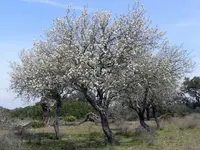
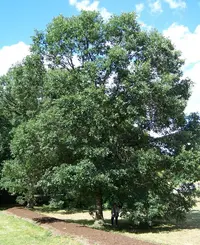
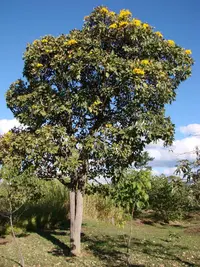
Silver trumpet tree, Tabebuia aurea, is a small to medium deciduous tree valued for its showy yellow trumpet-shaped flowers. It typically forms a rounded crown with a slightly twisted trunk and silvery-gray foliage that gives it a distinctive look in the landscape.

This species is native to seasonally dry regions of South America, where it tolerates heat, strong sun, and poor, sandy soils. Its natural drought tolerance and moderate growth rate generally make it easier to manage than many tropical flowering trees. Gardeners who learn how to care for Silver trumpet tree usually find it reliable in warm, frost-free climates.

It prefers full sun, well-drained soil, and occasional deep watering rather than frequent shallow irrigation.

Main Plant Requirements

Care Difficulty

Moderate Care

Light Preference

Full Sun

Water Requirements

Low Water

Temperature Preference

Tropical / Frost Sensitive

Hardiness Zone

9–11

Soil Texture

Sandy, Loamy, Rocky

Soil pH

Slightly acidic (6.5–7.0), Neutral (7.0)

Soil Drainage

Well-drained

Fertilization

Minimal (feed rarely)

Get Personalized Care Plan

Scan your plant to receive care tips personalized for your specific plant

Available on iOS and Android

How to Care for the Silver trumpet tree

Tabebuia aurea thrives in bright, open sites with strong sun exposure.

  • Provide 6–8 hours of full sun daily; morning and midday sun promote dense growth and heavy flowering.
  • Tolerates light partial shade, but flowering declines if it receives under 4–5 hours of direct sun, especially in summer.
  • In hot, dry climates, young trees benefit from some late-afternoon shade to reduce leaf scorch and moisture stress, especially during heatwaves.

This species prefers deep, infrequent watering once established, with time for the soil to dry between soakings.

  • Outdoors in the ground, water only when the top 5–8 cm of soil feels completely dry, giving a slow, deep soak to reach the root zone.
  • Use very well-drained, sandy or loamy soil; standing water or heavy clay strongly increases root rot risk.
  • Reduce watering in cool or dormant periods; wilting, dull leaves suggest underwatering, while yellowing leaves and soft stems point to overwatering.

This dry-tropical tree prefers warm conditions and is sensitive to frost.

  • Optimal growth occurs around 70–90°F (21–32°C), with best flowering in consistently warm, dry seasons.
  • Mature trees tolerate brief drops to about 28–30°F (-2 to -1°C), but young plants can be damaged below 32°F (0°C).
  • Handles dry heat up to 100–104°F (38–40°C) if soil moisture is adequate; avoid planting in low frost pockets where cold air settles.

This dry-tolerant tree handles 30–50% humidity and rarely needs special humidity management.

  • Tolerates dry outdoor air well, making it suitable for arid and semi-arid climates.
  • Silver trumpet tree shows humidity stress mainly under prolonged, hot winds combined with severe drought, when leaves may curl or brown at edges.
  • Improve comfort during extreme dry spells by deep, infrequent watering rather than misting, which does not meaningfully change humidity.

Tabebuia aurea prefers lean, fast-draining, slightly alkaline soil that never stays waterlogged.

  • Use a sandy or sandy-loam mix with 40–60% coarse mineral material such as sharp sand, fine gravel, or pumice to promote rapid drainage.
  • Aim for pH around 7.0–8.0; add a small amount of crushed limestone or dolomite if the native soil is acidic.
  • Blend in modest organic matter such as composted bark or well-aged compost (no more than 20–30%) to avoid overly rich, moisture-holding soil.
  • Avoid heavy clay, peat-heavy mixes, or compacted sites; if drainage is slow, raise the planting area on a low mound to keep roots aerated.

This species can be grown in large containers for several years, especially in warm climates.

  • Choose a deep, heavy container (thick terracotta or concrete) to resist tipping as the trunk and canopy gain height and weight.
  • Use a gritty, fast-draining mix in containers, combining roughly equal parts potting mix, coarse sand, and pumice or small gravel to prevent root rot.
  • Position the container where wind exposure is moderated by a wall or other barrier, since the tall, rigid canopy can act as a sail and stress the roots.

Tabebuia aurea benefits from light, targeted feeding but grows acceptably in lean, well-drained soils.

  • Use a balanced slow-release fertilizer (such as 10-10-10) or well-rotted compost at the start of spring growth.
  • Feed container or young trees every 6–8 weeks in spring–summer, skipping applications if growth is strong in the ground.
  • Apply at half the label rate for trees, keeping granules away from the trunk flare and watering in well.
  • Stop feeding in late summer so growth hardens before winter, and do not fertilize during winter dormancy.

Pruning Tabebuia aurea is mainly done to maintain structure and remove problem wood rather than to control size.

  • Time structural pruning for late winter to very early spring, just before new growth starts.
  • Remove dead, diseased, or storm-damaged branches first, cutting back to healthy wood with clean bypass pruners or a sharp saw.
  • Thin crossing, rubbing, or crowded interior branches to open the canopy and improve air and light penetration.
  • Limit heading cuts; keep the natural rounded form to support better flowering and stronger branch structure.

This species is usually planted in the ground, so focus on careful transplanting of young Silver trumpet tree specimens.

  • Plan transplanting for late winter or early spring, when soil is workable and heat stress is low.
  • Look for roots circling the nursery pot or pushing out of drainage holes as a sign the tree needs a larger planting space.
  • Dig a hole 2–3 times wider than the root ball but only as deep, loosening surrounding soil for easier root expansion.
  • Handle the root ball gently, keep original soil around roots, water deeply after planting, and maintain even moisture until established.

Tabebuia aurea is most often propagated from seeds, with cuttings used less commonly for uniform plants.

  • Collect ripe seed pods in late summer–fall, dry them, and remove clean seeds.
  • Sow seeds in spring in a warm (70–80°F), bright location using a very well-drained, sandy mix.
  • Barely cover the seeds, keep the substrate slightly moist but never waterlogged, and ensure good air movement.
  • For semi-hardwood cuttings, use a rooting hormone, high humidity, bottom warmth, and patience, as rooting can be slow.

This tree prefers warm climates and needs protection in regions with frost or extended cold periods.

  • In ground, it suits USDA zones roughly 9–11; prolonged temperatures below 28°F can damage wood and buds.
  • Apply a 5–8 cm mulch layer around the root zone in late fall, keeping mulch slightly away from the trunk.
  • Wrap young trunks with breathable tree wrap or frost cloth during expected freezes to reduce bark injury.
  • Move container-grown plants into a bright, cool, frost-free space and water sparingly while growth is slow.

Care Tips

Wind-hardy training

During the first 2–3 years, stake the young tree loosely and gradually reduce support so the trunk flexes slightly in the wind, which encourages a thicker, more wind-resistant structure in exposed sites.

Root flare exposure

When planting or top-dressing, keep the root flare visible above soil level and avoid piling mulch against the trunk to reduce trunk rot and improve gas exchange for the upper roots.

Drought conditioning

Once well established, extend the interval between deep irrigations rather than giving frequent light watering, which helps the tree develop deeper roots better adapted to long dry spells.

Salt and dust management

In coastal or roadside plantings, hose off foliage a few times per year to remove salt and dust film, which can otherwise reduce photosynthesis and increase leaf scorch under strong sun.

Bloom-cycle cleanup

After peak flowering, remove heavy carpets of spent blooms from lawns or paving under the canopy to reduce slip hazards, limit fungal growth, and keep the area easier to maintain while growing Silver trumpet tree.

Common Pests and Diseases

Leaf spot

This disease causes circular to irregular brown spots on leaves that may coalesce and lead to premature leaf drop, especially during warm, wet periods. Symptoms include more damage on lower, shaded foliage where moisture lingers longer.

Solution

Prune and dispose of heavily spotted leaves to reduce inoculum, and avoid overhead watering to keep foliage as dry as possible. Improve airflow through light thinning of inner branches, and if the problem persists in wet seasons, apply a copper-based fungicide according to label directions as part of Tabebuia aurea care.

Powdery mildew

This disease produces a white to gray powdery coating on young leaves, shoots, and flower buds, which can cause distortion and reduced vigor. Symptoms include more severe infection during periods of warm days and cool, humid nights.

Solution

Increase air circulation by selective pruning of dense interior growth and avoid excess nitrogen fertilization that encourages soft, susceptible tissue. Remove and discard heavily infected shoots and, during prolonged humid weather, apply a labeled horticultural oil or sulfur product, taking care to spray in cooler parts of the day to prevent leaf burn.

Scale insects

These insects attach to stems and leaf undersides as small bumps, sucking sap and causing yellowing, reduced growth, and honeydew that can lead to sooty mold. This pest often builds up on sheltered inner branches and older wood.

Solution

Physically remove light infestations by rubbing scales off with a gloved finger or soft brush, and prune heavily infested twigs. For ongoing issues, apply horticultural oil during mild weather, thoroughly coating branches and leaf undersides to smother the insects, and repeat as needed according to product directions.

Whiteflies

These insects are small, white, flying sap feeders that congregate on the undersides of leaves, leading to yellowing, leaf drop, and sticky honeydew. This pest is more common on young Tabebuia aurea plants grown in sheltered, warm positions or containers.

Solution

Regularly inspect the undersides of leaves and remove heavily infested foliage, then use a strong stream of water to dislodge remaining insects. For persistent populations, introduce yellow sticky traps to reduce adults and apply insecticidal soap or horticultural oil, ensuring thorough coverage of leaf undersides and repeating applications until populations decline.

Twig dieback

This disease causes progressive browning and death of small branches, often starting at the tips, sometimes following drought stress or mechanical injury. Symptoms include sparse foliage, dead twigs in the canopy, and sometimes small cankers or discoloration on affected wood.

Solution

Prune out dead or declining twigs back to healthy wood, disinfecting pruning tools between cuts with alcohol or a 10% bleach solution. Reduce stress by providing deep, infrequent watering during dry periods, avoiding trunk damage, and improving soil drainage, and in severe or spreading cases consult a local arborist for possible targeted fungicide treatment.

Interesting Facts

Dry-season flowering strategy

This species often drops many or all of its leaves before flowering, so the bright yellow trumpet-shaped blooms cover bare branches and increase visibility to pollinators in dry, open habitats.

Specialist savanna tree

Tabebuia aurea is naturally adapted to seasonally dry savannas and scrublands of central and eastern South America, tolerating poor, sandy, and even slightly saline soils that limit many other tree species.

Hard, durable wood

Its wood is dense and relatively hard for a small ornamental tree, which contributes to good wind resistance and has led to limited local use in construction and tools in parts of its native range.

Botan icon

Did you know?

In its native South American range, this species is an important structural component of the cerrado, a fire-influenced savanna biome, where its thick bark and ability to resprout after stress events help it persist in a landscape shaped by periodic burning and seasonal drought.

FAQs about Silver trumpet tree

Lack of flowers usually comes from insufficient light, young age, heavy pruning, or excess nitrogen fertilizer. This species often needs several years, full sun, and a short dry rest period before flowering reliably.

Grow Healthy Plants with Botan Care

Keep your plants happy and healthy with plant identification, disease detection, and easy care guidance.

Botan plant care app — identify plants on mobile

Explore More Plants