Deep root training
In the first 2–3 years, water less often but more deeply to encourage a strong taproot, which improves drought resilience and wind stability as the tree matures.

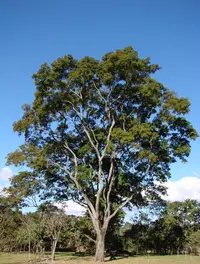
Red angico, Anadenanthera colubrina, is a fast-growing deciduous tree native to South America, especially Brazil, Argentina, and surrounding regions. It belongs to the pea family and can reach large sizes outdoors.
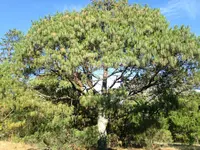
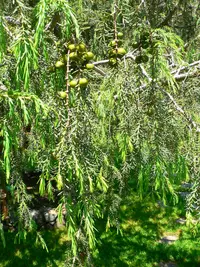
The tree forms a straight trunk with a broad, airy crown and fine, feathery foliage that gives a light, filtered shade. Small, cream-colored flowers are followed by narrow seed pods.
It is a sun-loving, drought-tolerant species once established, but young plants prefer regular moisture and well-drained soil. Due to its size and vigor, it suits spacious gardens or specialized collections rather than small indoor spaces.
Those looking to care for Red Angico should understand its need for strong light, room to develop deep roots, and protection from frost in cooler climates.

Care Difficulty
Moderate Care

Light Preference
Full Sun

Water Requirements
Moderate Water

Temperature Preference
Tropical / Frost Sensitive

Hardiness Zone
10–12

Soil Texture
Sandy, Loamy, Organic-rich

Soil pH
Acidic (5.5–6.5), Slightly acidic (6.5–7.0)

Soil Drainage
Well-drained

Fertilization
Minimal (feed rarely)
Scan your plant to receive care tips personalized for your specific plant
Available on iOS and Android
This sun-loving South American tree thrives with strong, direct light in open sites.
This species prefers deep, infrequent watering that allows the soil to dry slightly between soakings.
This tree prefers warm, frost-free conditions typical of subtropical and tropical climates.
This species tolerates a wide humidity range but grows best with moderate ambient moisture.
This tree prefers freely draining, slightly acidic to neutral soil with a loose, mineral-rich structure.
This species can be grown in containers for its early years, provided the pot is chosen and managed carefully.
This nitrogen-fixing tree needs modest feeding in cultivation, especially in containers, to support healthy growth of Red Angico.
Pruning Anadenanthera colubrina focuses on structural shaping and removal of weak growth rather than heavy cutting.
This species is usually grown as a landscape tree, so transplanting young plants at the right time is more important than frequent repotting.
Anadenanthera colubrina is most commonly propagated from seed, which allows production of many young trees for restoration or ornamental use.
This subtropical tree has low frost tolerance and needs protection in regions with cold winters, especially when young or container-grown.

Plant Health Check
Not sure what's wrong with your plant? Check your plant's health inside the app.
This legume forms root nodules with symbiotic bacteria that fix atmospheric nitrogen, allowing it to colonize nutrient-poor soils and improve fertility for later-succession plants.
The tree produces long, flat, woody pods that often remain on branches after ripening, each containing several hard, flattened seeds adapted for dispersal by gravity and animals.
Seedlings rapidly develop a strong taproot that helps them access deeper water reserves, contributing to their drought tolerance in seasonally dry habitats.

This species is a characteristic tree of South American seasonally dry tropical forests, where it often forms part of open woodlands known as caatinga and plays a structural role in stabilizing these ecosystems under long dry seasons.
This tree is generally fast-growing in warm climates, often adding 60–120 cm a year in the ground once established. In suitable conditions it can form a small shade tree within about 5–8 years.
Keep your plants happy and healthy with plant identification, disease detection, and easy care guidance.