Deep root training
During the first 3–4 years, water less frequently but in high volume to encourage a deep anchoring root system that helps the tree tolerate wind and drought in exposed sites.

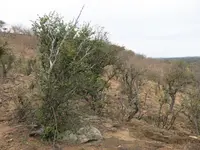
Lebombo ironwood, Androstachys johnsonii, is a slow-growing evergreen tree known for its very dense, heavy timber and long life span. It forms a rounded to irregular crown with small, leathery leaves and a naturally tidy, architectural look.
This species occurs mainly in dry woodlands and rocky slopes of Mozambique, South Africa, and neighboring regions. It is adapted to heat, strong sun, and relatively poor, well-drained soils, which can make it challenging in cool, wet climates.
Its slow growth, deep root system, and need for bright light mean it suits long-term, low-maintenance landscapes more than quick ornamental use. Anyone learning how to care for Lebombo ironwood should note its preference for full sun, dry to moderate moisture, and sharply drained soil.

Care Difficulty
Hard Care

Light Preference
Full Sun

Water Requirements
Low Water

Temperature Preference
Tropical / Frost Sensitive

Hardiness Zone
10–11

Soil Texture
Sandy, Loamy, Rocky

Soil pH
Slightly acidic (6.5–7.0), Neutral (7.0)

Soil Drainage
Well-drained

Fertilization
Minimal (feed rarely)
Scan your plant to receive care tips personalized for your specific plant
Available on iOS and Android
This slow-growing African tree prefers strong light with some protection in extreme conditions.
This drought-tolerant tree prefers deep, infrequent watering rather than constant surface moisture.
This species is adapted to warm, dry climates but has limited cold tolerance.
This species tolerates a wide humidity range and usually does not need special humidity management indoors or outdoors.
This drought-adapted tree prefers mineral, fast-draining soils that shed water quickly and avoid prolonged saturation.
This slow-growing tree can be kept in containers for many years, especially during its juvenile stages.
This slow-growing species needs only light feeding in cultivation, as Lebombo ironwood is adapted to nutrient-poor soils.
Androstachys johnsonii needs minimal pruning, mainly for safety and structure in cultivated settings.
In cultivation this tree is usually shifted from containers to the ground rather than repotted long term.
Androstachys johnsonii is usually propagated from seed and can be slow and specialized for non-commercial growers.
This species is adapted to warm climates and is not reliably hardy in regions with hard freezes, so some winter care is needed outside its native range.

Plant Health Check
Not sure what's wrong with your plant? Check your plant's health inside the app.
This species is naturally restricted to dry, rocky slopes and cliffs of the Lebombo and adjacent ranges in Mozambique, Eswatini, and South Africa, where it forms almost pure stands in woodland and scrub.
The wood is very heavy, hard, and fine‑grained, with high natural durability, which has led to long use in southern Africa for flooring, tool handles, and other applications that demand strong, wear‑resistant timber.
Despite growing in hot, seasonally dry regions with poor soils, this tree remains evergreen, using small, tough leaves and a deep root system to limit water loss and tolerate prolonged dry periods.

The species is regarded as one of the few nearly monospecific forest‑forming trees in southern Africa, creating characteristic Lebombo ironwood woodlands where it can dominate the canopy with very few other tree species present.
This species has a slow to very slow growth rate. Young trees add only a few centimeters per year, even in good conditions. Expect many years before it forms a noticeable canopy or trunk thickness outdoors.
Keep your plants happy and healthy with plant identification, disease detection, and easy care guidance.