Wind-aware placement
Plant at least 6–8 m away from buildings, power lines, and patios because mature trees develop brittle wood that can shed branches in strong winds.

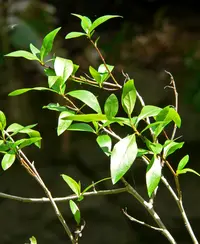
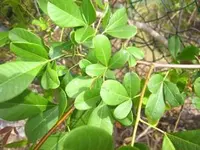
Narrowleaf cottonwood, Populus angustifolia, is a fast-growing deciduous tree native to stream banks and floodplains in the western United States and parts of Canada. It forms a tall, narrow crown with slender branches and long, lance-shaped leaves that flutter in the wind.
This species thrives in moist soils and naturally follows rivers, irrigation ditches, and other wet areas. It is valued for erosion control, shelterbelts, and as a quick shade tree in large landscapes.
The tree is relatively easy to establish where water is available but can be short-lived and prone to breakage in storms. Those who want to care for narrowleaf cottonwood should allow space for its size, spreading roots, and abundant suckers.

Care Difficulty
Moderate Care

Light Preference
Full Sun

Water Requirements
Regular Water

Temperature Preference
Cold Hardy

Hardiness Zone
3–7

Soil Texture
Sandy, Loamy, Silty

Soil pH
Slightly acidic (6.5–7.0), Neutral (7.0)

Soil Drainage
Moist but well-drained

Fertilization
Minimal (feed rarely)
Scan your plant to receive care tips personalized for your specific plant
Available on iOS and Android
This fast-growing riparian tree needs abundant direct sun for strong, upright growth.
This species is naturally adapted to moist, streamside soils and prefers steady soil moisture, especially while young.
This cold-hardy tree thrives in climates with cold winters and moderate to warm summers.
This species tolerates a wide humidity range and usually does not need special humidity management outdoors.
Populus angustifolia prefers deep, moist, well‑drained, sandy or loamy soil with ample organic matter.
This fast‑growing tree is generally unsuited to long‑term container culture and is best planted in the ground.
This fast-growing native tree usually needs minimal feeding in the landscape.
Pruning Populus angustifolia focuses on safety, structure, and removal of weak wood.
This species is usually field-grown or in large nursery containers, so care centers on permanent-site transplanting.
Populus angustifolia is commonly propagated vegetatively for consistent traits and rapid establishment.
This cold-hardy riparian tree generally needs little dedicated winter care in the ground.

Plant Health Check
Not sure what's wrong with your plant? Check your plant's health inside the app.
Narrowleaf cottonwood often hybridizes naturally with Fremont cottonwood (Populus fremontii) and plains cottonwood (Populus deltoides), creating mixed populations that can be difficult to identify in the field.
This species is native to cold, high-elevation river valleys in the interior West of North America and is well adapted to harsh winters and spring flooding along mountain streams.
Its seeds are produced in capsule-like fruits that split to release masses of white cottony hairs, which act as parachutes and allow the tiny seeds to travel long distances on wind currents.

Narrowleaf cottonwood is considered a keystone riparian tree in many Rocky Mountain watersheds because its roots stabilize streambanks, its leaf litter fuels aquatic food webs, and its trunks and branches create habitat structure for fish, birds, beavers, and many invertebrates.
This species is considered fast-growing, often adding 60–120 cm per year under good moisture and soil conditions. Growth slows with age. Deep soil, consistent water, and space for roots support growing narrowleaf cottonwood successfully.
Keep your plants happy and healthy with plant identification, disease detection, and easy care guidance.