Mark Dormant Clumps
Label planting spots with discreet markers in late spring once foliage dies back so you avoid disturbing the shallow rhizomes when digging or replanting nearby perennials later in the season.

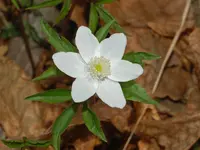
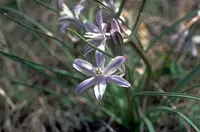
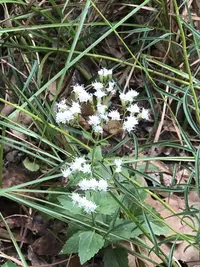
Anemonoides trifolia, also known as Anemonoides reflexa, is a small woodland perennial from the buttercup family. It forms low clumps from rhizomes and returns each spring. Plants carry slender stems with divided, often three-lobed leaves and delicate white to slightly tinged flowers that open in early spring before trees fully leaf out. It is native to European woodlands, where it grows in light shade and humus-rich soils. In gardens it suits naturalistic, woodland-style plantings and usually stays compact and non-invasive. Once established, it is relatively undemanding but resents very dry or waterlogged conditions. Understanding how to care for Anemonoides trifolia mainly involves providing cool, moist, shaded conditions similar to its forest habitat.

Care Difficulty
Moderate Care

Light Preference
Partial Shade

Water Requirements
Moderate Water

Temperature Preference
Cold Hardy

Hardiness Zone
5–8

Soil Texture
Loamy, Silty, Organic-rich

Soil pH
Acidic (5.5–6.5), Slightly acidic (6.5–7.0)

Soil Drainage
Moist but well-drained

Fertilization
Minimal (feed rarely)
Scan your plant to receive care tips personalized for your specific plant
Available on iOS and Android
This woodland perennial prefers bright, gentle light that mimics dappled forest conditions similar to caring for Anemonoides trifolia.
This species prefers consistently moist, cool soil but reacts poorly to waterlogged conditions.
This hardy perennial is adapted to cool, temperate climates with distinct seasons.
This woodland perennial prefers moderately moist air but usually manages well in typical home or garden conditions.
Anemonoides reflexa grows best in loose, humus-rich soil that mimics a moist woodland floor.
This species can be grown in containers if the pot replicates cool, evenly moist woodland conditions.
Anemonoides reflexa is a woodland perennial that needs only modest feeding in reasonably fertile soil.
Anemonoides reflexa needs minimal pruning, mainly to keep the clump tidy and healthy.
This species is usually grown in the ground, so focus on gentle transplanting rather than frequent repotting.
Anemonoides reflexa is commonly propagated by division and sometimes from seed in suitable woodland conditions.
Anemonoides reflexa is generally cold hardy in temperate climates and needs only light winter attention outdoors.

Plant Health Check
Not sure what's wrong with your plant? Check your plant's health inside the app.
This species is naturally distributed in the Balkans and parts of southeastern Europe, where it grows in light deciduous and mixed forests, often on calcareous, humus-rich soils.
It typically flowers in early spring before the forest canopy fully leafs out, taking advantage of high light levels on the woodland floor during a short seasonal window.
The plant spreads slowly via short rhizomes, forming small, loose clumps rather than aggressive carpets, which makes growing Anemonoides trifolia suitable for naturalistic woodland gardens.
This species spreads by short rhizomes, forming small clumps or loose patches over time. It is generally not aggressive in typical garden conditions and is unlikely to overwhelm neighboring plants if spacing is respected.
Keep your plants happy and healthy with plant identification, disease detection, and easy care guidance.