Stake Early
Install slender stakes or a low plant support ring around young plants before stems elongate, so tall hollow stalks develop upright and are less likely to snap in wind or heavy rain.

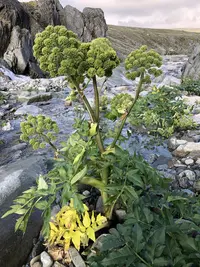
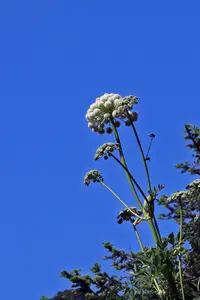
Angelica decurrens is a herbaceous perennial in the carrot family, known for its tall, hollow stems and divided, fern-like foliage. It typically produces umbrella-shaped clusters of small flowers. The species occurs naturally in parts of East Asia, often in moist, cool habitats such as mountain slopes and forest edges. It has an upright, clumping growth habit that makes it suitable for naturalistic or woodland-style plantings. In cultivation, it is moderately easy if its need for consistent moisture and well-drained, fertile soil is respected. Light winds and partial sun suit its delicate stems. Understanding how to care for Angelica decurrens starts with matching these conditions as closely as possible.

Care Difficulty
Moderate Care

Light Preference
Partial Shade

Water Requirements
Moderate Water

Temperature Preference
Warm Climate

Hardiness Zone
Unknown

Soil Texture
Loamy, Silty, Organic-rich

Soil pH
Acidic (5.5–6.5), Slightly acidic (6.5–7.0)

Soil Drainage
Moist but well-drained

Fertilization
Minimal (feed rarely)
Scan your plant to receive care tips personalized for your specific plant
Available on iOS and Android
This plant prefers bright, mild conditions that mimic open woodland or meadow edges.
This species prefers consistently moist but not waterlogged soil throughout the growing season.
This plant grows best in cool to mild conditions with some tolerance for seasonal temperature swings.
This species prefers moderately moist air but usually adapts to typical indoor humidity levels.
Angelica decurrens grows best in deep, loose, moist but free-draining soil.
This species can be grown in containers if provided with a deep, stable pot.
This species grows in relatively low-fertility soils, so fertilization for Angelica decurrens should stay light and targeted.
Pruning needs for Angelica decurrens are modest and mainly focus on hygiene and seed control.
Transplanting Angelica decurrens is done infrequently, as the deep root system dislikes disturbance once established.
Propagation of Angelica decurrens is typically done from seed rather than vegetative methods.
Angelica decurrens is generally cold hardy in temperate climates and needs only simple winter care outdoors.

Plant Health Check
Not sure what's wrong with your plant? Check your plant's health inside the app.
Angelica decurrens is native to cool, moist mountain and woodland regions of East Asia, especially Japan, where it grows naturally along forest margins and stream banks in humus‑rich soils.
This species is characterized by strongly decurrent leaf bases that run down the stem, forming noticeable narrow wings, which helps distinguish it from similar tall umbellifers in the same habitat.
In its native range, the plant’s compound umbels provide an important nectar and pollen source for a range of flies, beetles, and small wild bees that are adapted to forage on open, shallow flowers typical of the Apiaceae family.
Yes, this species is attractive to many pollinators. Its umbrella-shaped flower clusters provide accessible nectar and pollen for bees, hoverflies, and some butterflies, which helps improve overall pollination in nearby fruit, herb, and vegetable plantings.
Keep your plants happy and healthy with plant identification, disease detection, and easy care guidance.