Stake Young Stems
Install slender bamboo canes or metal hoops early in the season and loosely tie the hollow flower stems with soft ties to prevent wind damage and stem splitting once the umbels become heavy.

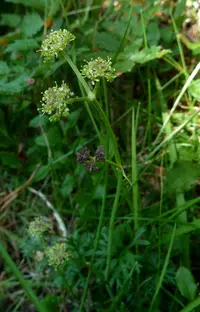
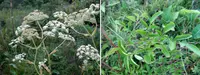
Angelica pyrenaea is a herbaceous perennial from mountain regions of southern Europe, especially the Pyrenees. It belongs to the carrot family and forms upright clumps of hollow, grooved stems. Plants carry divided, bright green leaves and rounded umbels of small, pale flowers that attract many pollinators in summer. This gives it a soft, architectural look in naturalistic and wild-style plantings. In gardens, it prefers cool conditions, moist but drained soil, and consistent moisture, similar to a damp meadow edge. It can be short-lived and may self-seed, so populations shift over time. Understanding how to care for Angelica pyrenaea starts with providing steady moisture, fertile soil, and protection from strong, drying heat.

Care Difficulty
Moderate Care

Light Preference
Partial Shade

Water Requirements
Regular Water

Temperature Preference
Cool Climate

Hardiness Zone
5–8

Soil Texture
Loamy, Silty, Organic-rich

Soil pH
Acidic (5.5–6.5), Slightly acidic (6.5–7.0)

Soil Drainage
Moist but well-drained

Fertilization
Minimal (feed rarely)
Scan your plant to receive care tips personalized for your specific plant
Available on iOS and Android
This species prefers cool, bright sites with gentle sun rather than intense, all-day exposure.
This plant favors consistently moist but not waterlogged soil, similar to a streamside or damp meadow habitat.
This species is adapted to cool to mild climates and handles winter cold better than intense heat.
This species prefers moderate, slightly moist air and usually copes with typical outdoor humidity.
Angelica pyrenaea thrives in deep, cool, humus-rich soil that stays evenly moist yet drains freely.
This species can be grown in containers if the pot is large and deep enough to support its strong root system.
This mountain perennial generally needs only light feeding in reasonably fertile soil.
This species benefits from light, well-timed pruning to maintain vigor and prevent unwanted self-seeding.
This plant is usually grown in the ground, so focus on careful transplanting rather than frequent repotting.
This species is mainly propagated by seed, as mature plants dislike disturbance and division.
This hardy perennial tolerates typical temperate winters with minimal intervention once established.

Plant Health Check
Not sure what's wrong with your plant? Check your plant's health inside the app.
This species is native to the Pyrenees, where it grows in cool, moist mountain habitats such as stream banks and damp meadows, often on calcareous or limestone-rich soils.
Angelica pyrenaea is typically a short-lived perennial that may behave almost like a monocarpic plant, investing heavily in its tall flowering stem and large umbels before declining after seed set.
Its broad, compound umbels of small flowers provide an accessible, nectar-rich platform for a wide range of insects, including flies, beetles, hoverflies, and bees, which contributes to local pollinator diversity in its native range.
This species usually blooms in mid to late summer, producing umbels of small white to greenish flowers. Individual blooms are short-lived, but the overall flowering display on each plant typically lasts several weeks.
Keep your plants happy and healthy with plant identification, disease detection, and easy care guidance.