Rough-barked Apple Care (Angophora floribunda)

Rough-barked Apple

About Rough-barked Apple

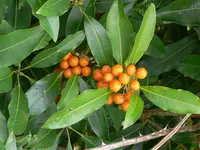
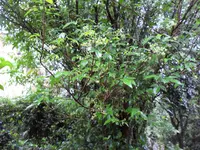
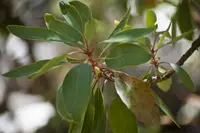
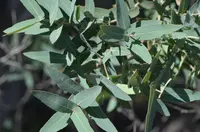
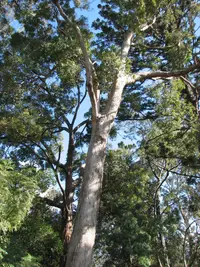
Rough-barked apple (Angophora floribunda) is a medium to tall Australian native tree from dry forests and woodland. It forms a rounded to irregular crown with dense foliage and a strongly furrowed, rough trunk. New stems and leaves often show a reddish flush, and in flowering season the canopy carries many creamy white clusters that attract insects and birds. This species is typically found in eastern Australia on well-drained, often sandy or gravelly soils. It is generally robust once established, tolerating sun, dry periods, and poorer soils, which makes basic how to care for Rough-barked Apple relatively straightforward in suitable climates. In smaller gardens its eventual size and spreading roots need careful planning.

Main Plant Requirements

Care Difficulty

Moderate Care

Light Preference

Full Sun

Water Requirements

Low Water

Temperature Preference

Warm Climate

Hardiness Zone

9–11

Soil Texture

Sandy, Loamy, Clay

Soil pH

Acidic (5.5–6.5), Slightly acidic (6.5–7.0)

Soil Drainage

Well-drained

Fertilization

Minimal (feed rarely)

Get Personalized Care Plan

Scan your plant to receive care tips personalized for your specific plant

Available on iOS and Android

How to Care for the Rough-barked Apple

This Australian woodland tree thrives in open, bright sites with long daily sun exposure.

  • Provide full sun for 6–8 hours daily; it tolerates light afternoon shade but grows densest with unobstructed overhead sun.
  • Young Rough-barked Apple plants handle brief partial shade, yet prolonged low light leads to sparse branching and reduced flowering.
  • In hot inland summers, slight protection from harsh late-afternoon sun reduces leaf scorch, while in winter an open, unshaded position maximizes lower-angle light.

This species prefers deep, infrequent watering once established, supported by freely draining soil.

  • Water newly planted trees when the top 5–8 cm of soil feels dry, aiming for a slow, deep soak rather than light surface sprinkling.
  • In most climates, reduce watering in cool or rainy seasons and only irrigate mature trees during extended dry spells when foliage begins to dull or slightly droop.
  • Ensure sandy or loamy soil with excellent drainage; persistent wetness, sour smell, or blackened roots indicates overwatering stress for Angophora floribunda.

This hardy Australian tree tolerates a broad outdoor temperature range once established.

  • Optimal growth occurs around 65–85°F (18–29°C), where steady warmth supports active shoot and root development.
  • Mature trees usually withstand brief drops to about 23–26°F (-5 to -3°C), but young plants are more frost-sensitive and benefit from shelter in the first 2–3 winters.
  • In hot regions, it tolerates 100°F (38°C) or slightly higher if soil moisture is adequate and hot, reflected surfaces near the trunk are minimized.

This species tolerates a wide humidity range and rarely needs special humidity management outdoors.

This species prefers well-drained, moderately fertile soil and copes well with poorer sites once established.

  • Use sandy or sandy-loam soil with some fine gravel to mimic the free-draining native habitat of Angophora floribunda.
  • Ensure fast drainage; water should infiltrate quickly and not leave the surface puddled for more than a few minutes.
  • Aim for slightly acidic to neutral pH, roughly 6.0–7.0, avoiding strongly alkaline or saline conditions.
  • Improve aeration and structure by blending native topsoil with coarse sand and a modest amount of low-phosphorus compost.

This tree is generally unsuited to long-term container growing due to its eventual size and vigorous root system.

This Australian native needs minimal feeding but benefits from light support in poor soils when caring for Rough-barked Apple.

  • Use a low-phosphorus, slow-release native-plant fertilizer or well-aged compost rather than high-phosphorus synthetic products.
  • Apply a light dose once at the start of the growing season, then again mid-season only if growth is weak or leaves pale.
  • Dilute liquid feeds to 1/2–1/4 strength and apply to moist soil to reduce root burn risk.
  • Avoid fertilizing in late fall and winter to prevent soft, frost-prone growth and nutrient waste.

Pruning Angophora floribunda focuses on safety, structure, and removal of poor-quality wood rather than heavy shaping.

  • Carry out main work in late winter to early spring, before active growth, in dry weather to limit disease spread.
  • Remove dead, damaged, crossing, or weakly attached branches first to reduce failure risk and improve canopy airflow.
  • Thin crowded interior shoots rather than topping; this maintains the natural form while allowing more light penetration.
  • Use sharp, clean loppers or a pruning saw, making cuts just outside the branch collar to support proper wound closure.

This species is usually grown in the ground, so guidance focuses on transplanting rather than long-term container culture.

  • Transplant young trees in late winter to early spring when soil is workable and temperatures are mild.
  • Check for signs such as circling roots in the container, difficulty watering, or stalled growth before moving a plant on.
  • Shift to a wider, not much deeper, hole or pot with free-draining, sandy or loamy soil to limit waterlogging stress.
  • Water deeply after planting, mulch 5–8 cm away from the trunk, then keep soil lightly moist until new growth shows establishment.

Propagation of Angophora floribunda is most reliable from seed, with cuttings used less often and needing controlled conditions.

  • Collect ripe seed capsules, then sow cleaned seed in late winter to early spring in a free-draining, low-phosphorus mix.
  • Provide bright light, 64–75°F temperatures, and consistent but not saturated moisture to encourage even germination.
  • When using semi-hardwood cuttings, apply rooting hormone, maintain high humidity, and use bottom heat if available.
  • Pot on seedlings or rooted cuttings gently once roots hold the mix, avoiding root disturbance and direct midday sun.

This tree is moderately frost tolerant in mild-winter regions and usually needs little winter care once established.

  • In climates with harder frosts, mulch 5–8 cm around the root zone to buffer temperature swings and conserve moisture.
  • Young or container plants benefit from a sheltered position away from cold winds and reflected frost pockets.
  • Move potted specimens under a porch, unheated greenhouse, or bright indoor space during severe cold spells.

Care Tips

Establish deep roots

In the first 2–3 years, water less often but for longer sessions to encourage a deep root system that will better anchor the tree and improve drought resilience as it matures.

Protect from trunk damage

Install a visible barrier or low fence around young trees to prevent lawn equipment, pets, or foot traffic from scraping the soft, rough-barked trunk, which reduces risk of canker and wood-boring insects.

Wind-hardening young trees

In moderately windy sites, stake only on the windward side and use flexible ties, then gradually loosen and remove stakes after 1–2 growing seasons so the trunk can strengthen naturally.

Mulch for root health

Apply a 5–8 cm layer of coarse organic mulch in a wide ring, keeping it 5–10 cm away from the trunk, to moderate soil temperature, retain moisture, and protect fine feeder roots.

Monitor limb structure

From an early age, inspect branch junctions once a year and selectively remove or shorten steep, narrow crotch angles to reduce the chance of heavy limbs splitting as the tree gets large when growing Rough-barked Apple.

Common Pests and Diseases

Myrtle rust

This disease causes bright yellow powdery spots on young leaves, shoots, and stems, often leading to deformation and dieback of new growth.

Solution

Remove and destroy heavily infected shoots, avoid overhead watering, and improve spacing and airflow around plants. In regions where myrtle rust is established, follow local biosecurity guidelines and use an appropriate registered fungicide on young flushes if infection pressure is high.

Lerp psyllids

These insects feed on sap from young leaves and shoots, producing sugary lerp coverings and causing leaf distortion, yellowing, and sometimes leaf drop.

Solution

Prune and dispose of heavily infested foliage, encourage natural predators such as lady beetles, and hose down foliage periodically to dislodge nymphs and lerps. For severe infestations, use a systemic insecticide labeled for psyllids on Myrtaceae, following all label directions carefully.

Longhorn borers

This pest tunnels into branches and trunks, leading to frass deposits, sap exudation, branch dieback, and structural weakness in stressed trees.

Solution

Maintain tree vigor through proper watering and avoidance of trunk damage, and promptly prune and destroy affected branches with borer galleries. In high-risk areas, monitor for fresh exit holes and consider targeted trunk or soil treatments recommended for eucalypt borers by a local arborist familiar with Angophora floribunda care instructions.

Leaf spot

This disease produces small dark or tan spots on leaves that may enlarge and merge, leading to premature leaf drop, particularly in humid or crowded conditions.

Solution

Rake up and dispose of fallen leaves, prune to improve canopy airflow, and avoid wetting foliage late in the day. If defoliation becomes significant, apply a broad-spectrum fungicide labeled for Myrtaceae leaf spots, timed to protect new foliage flushes.

Interesting Facts

Rough-barked eucalypt relative

This species belongs to the same broader group as eucalypts but is placed in the separate genus Angophora, distinguished by its opposite leaves, non-glandular oil ducts, and fibrous rough bark covering trunk and branches.

Showy multi-parted flowers

Its cream to white flower clusters bear numerous long stamens that give a fluffy appearance and provide abundant nectar and pollen for insects, birds, and small mammals over an extended flowering period from late spring to summer.

Distinctive three-ribbed fruit

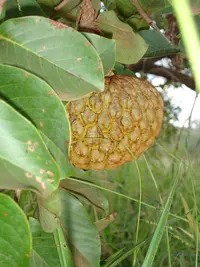
The woody seed capsules are often three-ribbed with a deeply enclosed disc, a feature used by botanists to distinguish it from related Angophora and Corymbia species in the field.

Botan icon

Did you know?

This tree often dominates dry sclerophyll woodlands on sandstone and shale landscapes in eastern New South Wales, forming large, long-lived stands that create critical habitat structure for arboreal mammals, insect communities, and cavity-nesting birds.

FAQs about Rough-barked Apple

This species is generally fast-growing once established, often adding 60–100 cm in height per year in favorable conditions. Growth is slower in poor, compacted, or very dry soils, and in its first 1–2 years.

Grow Healthy Plants with Botan Care

Keep your plants happy and healthy with plant identification, disease detection, and easy care guidance.

Botan plant care app — identify plants on mobile

Explore More Plants