Aniba megaphylla Care

About Aniba megaphylla

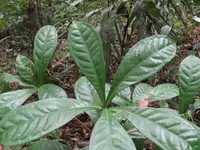
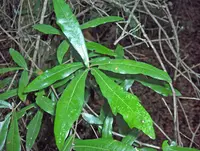
Aniba megaphylla is a tropical tree species in the laurel family, known mainly from humid lowland forests of South America. It is typically evergreen, with simple, glossy leaves and a straight, upright trunk. Flowers and fruits are usually small and not especially ornamental, but the tree contributes to the structure and diversity of the forest canopy.

In cultivation it is rare and mainly of interest to collectors, botanists, or restoration projects rather than general home growers. It prefers warm, consistently moist conditions and well-drained, organic-rich soil, which can make how to care for Aniba megaphylla more challenging outside its native climate.

Main Plant Requirements

Care Difficulty

Moderate Care

Light Preference

Partial Shade

Water Requirements

Moderate Water

Temperature Preference

Tropical / Frost Sensitive

Hardiness Zone

Unknown

Soil Texture

Loamy, Silty, Organic-rich

Soil pH

Acidic (5.5–6.5)

Soil Drainage

Moist but well-drained

Fertilization

Minimal (feed rarely)

Get Personalized Care Plan

Scan your plant to receive care tips personalized for your specific plant

Available on iOS and Android

How to Care for the Aniba megaphylla

This tropical tree prefers bright, filtered light that mimics a forest understory.

  • Provide 4–6 hours of bright, indirect light daily, with dappled or filtered sun rather than harsh, open exposure.
  • Tolerates partial shade, especially strong afternoon shade; brief morning sun is preferable to intense midday or late-afternoon sun, which can scorch leaves.
  • In higher latitudes, allow more exposure in spring and fall, but in summer increase shade; pale, elongated shoots indicate insufficient light for Aniba megaphylla.

This species prefers evenly moist, well-drained soil without long periods of saturation.

  • Water when the top 3–5 cm of soil feel slightly dry, allowing moisture to penetrate deeply rather than giving frequent shallow doses.
  • Reduce watering in cooler seasons when growth slows; in hot, dry periods increase frequency, but only after checking soil moisture by touch or with a probe.
  • Yellowing, soft leaves and sour-smelling soil indicate overwatering, while curling or crisp leaf edges and very light, shrinking soil point to underwatering in Aniba megaphylla.

This lowland tropical tree thrives in consistently warm, frost-free conditions.

  • Aim for 70–86°F (21–30°C) for active growth, avoiding sudden day–night swings greater than about 15°F (8°C).
  • Protect from temperatures below 50°F (10°C); brief drops to 45°F (7°C) may be survived but can slow growth and increase disease sensitivity.
  • Tolerates short heat spells up to about 95°F (35°C) if soil moisture is stable and humidity is moderate, but prolonged extreme heat or any frost can cause lasting damage.

This species prefers warm, moderately humid air but copes briefly with drier indoor conditions.

  • Aim for 50–70% humidity, as Aniba megaphylla originates from moist tropical forests.
  • Expect leaf-edge browning, curled tips, and slowed growth when air stays below ~40% humidity.
  • Increase humidity with a nearby humidifier, grouped plants, or a wide pebble tray that allows evaporation around, not under, the pot.

This tree prefers deep, moist, well-structured soil that drains freely but does not dry out fast.

  • Use a loamy, organic-rich mix with visible structure, combining roughly 50% composted bark or leaf mold, 30% coarse sand, and 20% perlite.
  • Aim for slightly acidic to neutral pH around 6.0–7.0, avoiding strongly alkaline ground that can limit nutrient uptake.
  • Ensure rapid drainage by avoiding heavy clay; if soil is dense, incorporate coarse sand and fine gravel through the top 20–30 cm.
  • Mulch with coarse organic material to maintain moisture while still allowing aeration around surface roots and soil organisms.

This species can be grown in containers when young, though long-term cultivation in pots is challenging for a tree of this size.

  • Select a deep, heavy container to stabilize the developing woody root system and reduce tipping in wind.
  • Choose thick-walled clay or concrete pots outdoors to moderate root-zone temperature and prevent rapid moisture swings.
  • Leave a 3–5 cm space below the drainage holes filled with coarse gravel so excess water escapes quickly and roots do not sit in runoff.

This species grows in naturally rich forest soils, so Aniba megaphylla usually needs only light supplemental feeding in cultivation.

  • Use a balanced, dilute liquid fertilizer (around 10-10-10) at 1/4–1/2 strength during the warm growing season if growth appears weak.
  • Apply no more than every 4–6 weeks, and skip feedings when the plant is not actively producing new shoots or leaves.
  • Reduce or stop fertilizing in winter or dormancy, as nutrient uptake slows and excess salts can harm roots.
  • Where possible, top-dress with a thin layer of well-rotted compost once a year instead of frequent synthetic feeding.

Pruning is mainly used to maintain structure and remove weak growth on Aniba megaphylla rather than to control size strongly.

  • Carry out light structural pruning at the end of the dry season or just before active spring growth to reduce stress.
  • Remove dead, diseased, crossing, or inward-growing branches first to improve airflow and reduce infection risk.
  • Use clean, sharp bypass pruners or a handsaw, making smooth cuts just outside the branch collar.
  • Limit heavy cuts; shaping should be gradual over several seasons to maintain a stable crown and healthy regrowth.

This tree is usually grown in the ground, so care focuses on transplanting young Aniba megaphylla specimens rather than long-term container culture.

  • Plan transplants for late winter or early spring, when temperatures are mild and new root growth is about to start.
  • Look for signs such as circling roots in nursery pots or clear root binding before shifting to a larger container or planting site.
  • Dig a wide planting hole, keep the root ball intact, and set it at the same depth to limit root disturbance and transplant shock.
  • Water thoroughly after planting, then keep soil evenly moist and shaded for several weeks to support root recovery and establishment.

Propagation of Aniba megaphylla is possible but typically undertaken by specialists due to slow growth and specific environmental needs.

  • Use fresh seeds collected from ripe fruits; sow them promptly as viability drops quickly in storage.
  • Sow seeds in a sterile, well-drained medium, keep at 70–80°F with high humidity, and provide bright, indirect light.
  • Semi-hardwood cuttings taken in warm months may root under mist or in a covered tray with bottom heat and rooting hormone.
  • Maintain consistent moisture without waterlogging, and avoid disturbance, as young seedlings and cuttings are sensitive to handling.

This tropical tree is not frost hardy, so Aniba megaphylla requires protection in climates with cool or freezing winters.

  • Grow Aniba megaphylla in the ground only in frost-free regions; elsewhere, use large containers that can be moved.
  • Before temperatures drop near 40°F, shift container plants indoors or into a greenhouse with stable warmth.
  • Apply 5–8 cm of organic mulch over the root zone in mild-winter areas to buffer soil temperature and conserve moisture.
  • Avoid cold drafts and sudden temperature swings indoors, and provide bright, filtered light while growth slows in winter.

Care Tips

Seasonal root check

Inspect roots gently every 12–18 months and repot only when you see circling, woody roots, using this moment to prune away dead or blackened sections to keep the tree responsive and healthy.

Structured crown training

While stems are still flexible, select 1–3 strong leaders and remove or shorten competing branches with clean cuts to build a stable framework that resists wind and supports even canopy development over time.

Mulch for root stability

Apply a 3–5 cm layer of fine, woody mulch over the root zone, keeping it 3–5 cm away from the trunk, to buffer soil temperature, reduce evaporation, and protect surface feeder roots.

Preventive bark protection

In exposed sites, use a breathable trunk wrap or shade cloth screen on the southwest side of young plants for the first 2–3 summers to reduce sunscald and bark cracking as the trunk thickens.

Targeted pest scouting

From spring through late summer, inspect the undersides of leaves and young shoots every 2–3 weeks for scale insects or sap-sucking pests, and treat localized outbreaks early with horticultural oil rather than broad-spectrum pesticides when caring for Aniba megaphylla.

Common Pests and Diseases

Shoot borers

This pest attacks young shoots and stems, tunneling inside the wood and causing wilting or dieback of new growth. Symptoms include small entry holes, frass (sawdust-like material), and hollow or easily broken twigs.

Solution

Prune and destroy infested shoots as soon as damage is seen, cutting back to healthy wood to break the borer life cycle. For trees grown in managed plantings, use pheromone or light traps to monitor adult moth activity and apply a targeted contact or systemic insecticide only during peak flight, focusing sprays on young shoots and trunk where eggs are laid.

Leaf miners

These insects feed inside the leaf tissue, creating pale, winding tunnels and blotches that reduce photosynthesis and can cause premature leaf drop on stressed trees. This pest is more problematic on nursery or young plants than on established forest specimens.

Solution

Remove and destroy heavily mined leaves to reduce the larval population, especially on small or potted plants. Encourage natural predators where possible and, if needed, apply a systemic insecticide or neem-based product timed to when new flushes of leaves are expanding, since larvae must ingest treated tissue for control.

Cylindrocladium leaf spot

This disease causes small, water-soaked spots on leaves that enlarge into brown lesions, sometimes with yellow halos, leading to partial defoliation in humid, shaded conditions. Symptoms include a higher incidence on lower, dense foliage where moisture lingers after rainfall or irrigation.

Solution

Improve air circulation by thinning crowded branches and avoid overhead watering that leaves foliage wet for long periods. Collect and discard fallen leaves, and in persistent cases use a copper- or azoxystrobin-based fungicide during extended wet periods, ensuring thorough coverage of both upper and lower leaf surfaces.

Anthracnose

This disease produces irregular dark lesions along leaf veins and sometimes on young twigs, leading to distorted foliage and tip dieback during warm, wet weather. Symptoms include patchy browning of leaves while veins remain darker and more clearly defined.

Solution

Prune and destroy affected twigs and leaves, especially in the lower and inner canopy, and sanitize tools between cuts. Reduce prolonged leaf wetness through spacing and airflow, and apply a protective fungicide at the start of the rainy season if anthracnose has been a recurring problem in the planting area.

Scale insects

These insects settle on stems and leaf undersides, appearing as small bumps that excrete honeydew, which can lead to sooty mold on bark and foliage. This pest weakens trees by steadily drawing sap, particularly in young or container-grown specimens used for research or cultivation trials when growing Aniba megaphylla outside its native habitat.

Solution

Wipe or gently scrub affected stems and leaves with a soft cloth or brush dipped in soapy water or a dilute alcohol solution to remove scales mechanically. For heavier infestations, introduce natural enemies where feasible or use a horticultural oil or insecticidal soap, ensuring coverage of hidden areas such as leaf bases and branch junctions.

Interesting Facts

Amazonian canopy tree

This species is a tall evergreen tree native to lowland Amazonian rainforests, where it typically occupies the upper canopy layer and contributes to the multi-story forest structure.

Lauraceae family traits

As a member of the laurel family Lauraceae, it shares features such as aromatic tissues and simple, evergreen leaves, which are common in many tropical forest trees that occupy similar ecological niches.

FAQs about Aniba megaphylla

This tree performs best outdoors in warm, humid, frost-free climates where it can reach full size. Indoor cultivation is difficult long-term due to its eventual height, light demands, and need for stable warmth and high humidity.

Grow Healthy Plants with Botan Care

Keep your plants happy and healthy with plant identification, disease detection, and easy care guidance.

Botan plant care app — identify plants on mobile

Explore More Plants