Early structural training
While stems are still flexible, tie the main shoots to a sturdy stake or frame using soft ties so the shrub forms a balanced, open structure that can carry its own weight as it matures.

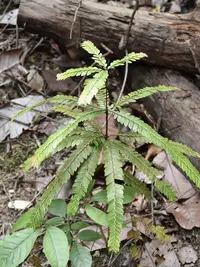
Anisophyllea disticha, commonly called mousedeer plant, is a tropical shrub or small tree valued mainly as a foliage and structural accent plant. It typically has a slim, upright habit with simple leaves and an overall tidy form, making it suitable for collectors and specialized gardens rather than casual beginners.
This species is native to lowland forests of Southeast Asia, where it grows in warm, humid, partially shaded conditions. In cultivation, it prefers consistently moist but well-drained soil and protection from strong, drying wind.
It is not widely grown, so information on how to care for Mousedeer Plant is limited, and it is best approached as a slightly challenging, experimental species for patient growers who can monitor and adjust conditions carefully.

Care Difficulty
Hard Care

Light Preference
Partial Shade

Water Requirements
Keep Soil Moist

Temperature Preference
Tropical / Frost Sensitive

Hardiness Zone
11–13

Soil Texture
Loamy, Silty, Organic-rich

Soil pH
Acidic (5.5–6.5), Slightly acidic (6.5–7.0)

Soil Drainage
Moist but well-drained

Fertilization
Minimal (feed rarely)
Scan your plant to receive care tips personalized for your specific plant
Available on iOS and Android
This tropical understory tree prefers bright but softened light that mimics dappled forest conditions for stable growth.
This species prefers consistently moist, well-drained soil without long dry spells or standing water.
This lowland tropical species requires warm, frost-free conditions to maintain steady growth.
This species benefits from moderately humid air but adapts if conditions are not too dry.
Anisophyllea disticha prefers moisture-retentive but well-drained soil with a loose, organic structure.
This tree is only moderately suitable for container growing and needs careful attention to stability and moisture balance.
Anisophyllea disticha is a slow-growing tree that benefits from light, balanced feeding in cultivation, especially in containers.
Anisophyllea disticha needs minimal structural pruning, mainly to maintain a healthy, open canopy.
This species is usually grown in the ground, so focus on careful transplanting rather than frequent container repotting.
Anisophyllea disticha is mainly propagated from seed, with vegetative methods used less often and requiring controlled conditions.
This tropical species is not frost hardy and needs protection in regions with cool or freezing winters.

Plant Health Check
Not sure what's wrong with your plant? Check your plant's health inside the app.
This species typically shows anisophylly, meaning each node carries a pair of leaves of noticeably unequal size, a trait reflected in the genus name Anisophyllea, which means unequal leaves.
It is a small to medium-sized tree native to lowland and hill forests of Southeast Asia, especially in Malaysia and surrounding regions, where it grows in moist, well-drained tropical soils.
The species belongs to the small family Anisophylleaceae, a relatively little-known group of tropical trees and shrubs that are of botanical interest because their floral structures differ from those of more common tropical tree families.
Growth is moderate. In suitable tropical or subtropical conditions, young plants can add roughly 20–40 cm of height per year. Root establishment often slows visible growth during the first 1–2 years after planting.
Keep your plants happy and healthy with plant identification, disease detection, and easy care guidance.