Succession Sowing
Stagger spore sowings every 2–3 weeks in small trays so that as older fronds die back after sporing you always have a younger batch coming on, which suits the naturally short life cycle of this species.

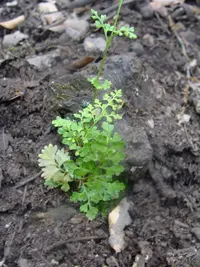
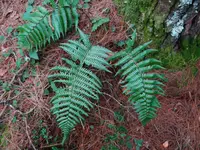
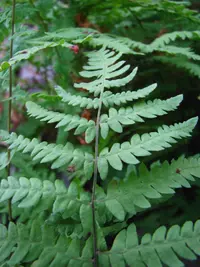
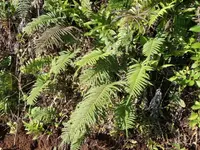
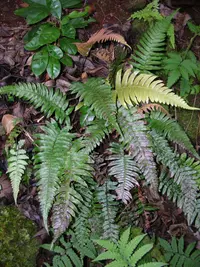
Jersey fern, Anogramma leptophylla, is a small, delicate fern with finely divided, lace-like fronds that give a soft, airy look. It is an annual fern, meaning the visible foliage dies back completely after releasing spores and then reappears from new sporelings rather than persistent roots or rhizomes. In nature it occurs in mild, often coastal regions of western Europe and parts of the Mediterranean, typically on rocky, shaded banks and old walls. This growth habit makes it sensitive to drying out and high heat, so it is considered moderately challenging for beginners. Light shade, steady moisture, and a free-draining, humus-rich mix provide a good starting point for those learning how to care for Jersey fern.

Care Difficulty
Hard Care

Light Preference
Partial Shade

Water Requirements
Regular Water

Temperature Preference
Cool Climate

Hardiness Zone
7–10

Soil Texture
Sandy, Loamy, Organic-rich

Soil pH
Acidic (5.5–6.5)

Soil Drainage
Moist but well-drained

Fertilization
Minimal (feed rarely)
Scan your plant to receive care tips personalized for your specific plant
Available on iOS and Android
This delicate annual fern prefers soft, filtered light similar to a lightly shaded woodland edge.
This fern needs steadily moist but not waterlogged soil throughout its active growing season.
This species prefers mild, temperate conditions and declines in strong frost or intense heat.
This delicate annual fern prefers moderately moist air to keep fronds from drying quickly.
This fern needs a light, humus-rich substrate that mimics moist, well-drained woodland soil.
This small fern is suitable for shallow containers and troughs.
Anogramma leptophylla is a small annual fern that needs only very light feeding in cultivation.
Pruning Anogramma leptophylla is minimal and focuses on cleanliness rather than shaping.
This delicate annual fern is more often transplanted as young plants than repeatedly repotted.
Anogramma leptophylla is typically propagated from spores rather than by division or cuttings.
This annual fern dies back after its growing season, so winter care focuses on the site rather than the spent foliage.

Plant Health Check
Not sure what's wrong with your plant? Check your plant's health inside the app.
This species is an annual fern, completing its entire life cycle in a single growing season, which is unusual among ferns that are typically perennial. The delicate fronds die back completely after spore release, leaving only the spore bank in the soil to carry the population to the next year.
Its spores germinate in autumn and winter in mild climates, taking advantage of cool, moist conditions when competition from other plants is low. The green, feathery fronds often appear in late winter or early spring and vanish as temperatures rise and soils dry.
In nature it often grows on thin soils over rock, old walls, and ledges where moisture lingers but larger plants struggle to root. These microhabitats reduce shading and competition, allowing this very small fern to complete its brief life cycle.

This species historically inspired discussion among botanists because its ephemeral habit and tiny size caused it to be easily overlooked, and it was sometimes presumed locally extinct in parts of its range until new, short-lived colonies were rediscovered after favorable wet winters.
This species behaves as a short-lived annual fern. It completes its life cycle within one growing season, then dies back entirely, relying on its spores to produce a fresh generation the following year in suitable conditions.
Keep your plants happy and healthy with plant identification, disease detection, and easy care guidance.