Drynaria rigidula Care

Drynaria rigidula

About Drynaria rigidula

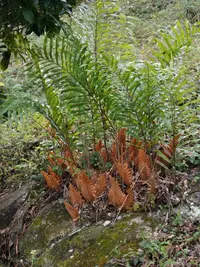
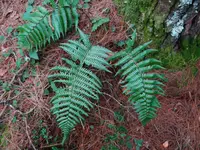
Drynaria rigidula, often called the basket fern, is an epiphytic fern that typically grows on tree trunks or rocks. It forms a striking nest of overlapping, brownish sterile fronds that hold debris, with longer green fertile fronds arching outward.

This species is native to tropical and subtropical regions of Australia and nearby areas, where it benefits from warm, humid forests and filtered light. Its ability to store moisture in the nest-like fronds makes it relatively forgiving of brief dryness, but it still prefers consistent, moderate moisture.

Understanding how to care for Drynaria rigidula mainly involves mimicking its natural, airy, bark-like growing surface and avoiding heavy, waterlogged potting mixes.


Main Plant Requirements

Care Difficulty

Moderate Care

Light Preference

Partial Shade

Water Requirements

Keep Soil Moist

Temperature Preference

Tropical / Frost Sensitive

Hardiness Zone

11–12

Soil Texture

Loamy, Peaty, Organic-rich

Soil pH

Acidic (5.5–6.5)

Soil Drainage

Moist but well-drained

Fertilization

Light (every 4–6 weeks)

Get Personalized Care Plan

Scan your plant to receive care tips personalized for your specific plant

Available on iOS and Android

How to Care for the Drynaria rigidula

This epiphytic fern prefers bright, indirect light similar to a lightly shaded tree trunk.

  • Provide 4–6 hours of filtered light daily, such as dappled shade under trees or bright shade near an east- or north-facing exposure for Drynaria rigidula.
  • Allow gentle morning sun but protect from strong midday and afternoon sun, which can scorch fronds and dry out the rhizomes.
  • In summer, increase shade if light is intense; in winter, move closer to brighter exposure to prevent slow, sparse growth.

This fern prefers evenly moist conditions around its roots and growing medium, but not saturation.

  • Water when the top 2–3 cm of moss or bark mix feels barely dry, then soak thoroughly so water runs through and excess drains away.
  • Reduce watering frequency in cooler months when growth slows, but never allow the rhizomes to stay bone dry for long periods.
  • Watch for limp, crispy fronds as a sign of underwatering, and yellowing, blackened bases or sour smell as early signs of overwatering.

This species thrives in warm, frost-free conditions similar to a tropical or subtropical understory.

  • Aim for 65–80°F (18–27°C) for steady growth, with short peaks up to 86°F (30°C) tolerated if humidity and moisture are stable.
  • Protect from cold; growth slows below 60°F (16°C) and damage often occurs under 45°F (7°C), especially in damp, windy spots.
  • Avoid frost and freezing conditions entirely, and in hot spells above 86°F (30°C), increase shade and humidity to reduce heat stress.

This fern prefers consistently moist air and reacts quickly to very dry conditions.

  • Aim for 60–80% humidity, especially in heated or air-conditioned rooms.
  • Tolerates short dry spells but fronds may crisp at the edges and brown if humidity stays low.
  • Increase humidity with a pebble tray, grouped plants, or a room humidifier rather than misting fronds directly.

This epiphytic fern needs a loose, airy, organic substrate rather than dense garden soil.

  • Use a mix such as 50% fine orchid bark, 25% peat or coco coir, and 25% perlite or pumice to keep texture open.
  • Ensure very sharp drainage so roots stay moist but never waterlogged, which quickly leads to rot.
  • Aim for slightly acidic to neutral conditions, around pH 5.5–7.0, which supports nutrient availability.
  • Avoid heavy, compacted, or clay-based mixes that reduce aeration and suffocate the shallow roots of Drynaria rigidula.

This species adapts well to container culture when mounted-style root needs are considered.

  • Choose a shallow, wide pot or basket that allows the creeping rhizomes to spread horizontally rather than forcing depth.
  • Line slatted or mesh baskets with sphagnum to hold the airy mix while still allowing side airflow and fast drainage.
  • Place the container where it cannot tip, as fronds and shield leaves can make the plant lopsided and unstable over time.

Light, balanced feeding supports steady growth of Drynaria rigidula in active seasons.

  • Use a balanced liquid fertilizer (around 10-10-10) at 1/4–1/2 strength for container-grown plants.
  • Feed every 4–6 weeks in spring and summer when new fronds are forming.
  • Skip or greatly reduce feeding in fall and winter, especially if growth slows or fronds rest.
  • Rinse the potting mix with plain water occasionally to prevent salt buildup from fertilizers.

Pruning focuses on hygiene and tidiness rather than reshaping Drynaria rigidula.

  • Best timing is late winter to early spring, before strong new growth starts.
  • Remove dead, dried, or diseased fronds at their base with clean, sharp scissors or pruners.
  • Leave healthy nest fronds in place since they help anchor the plant and store moisture.
  • Limit cutting to damaged or crowded fertile fronds to maintain a natural, arching habit.

Repotting Drynaria rigidula is infrequent and mainly needed when the rhizome outgrows its mount or pot.

  • Check for crowded rhizomes, roots circling the container, or slowed growth as signs to repot.
  • Plan repotting or remounting in spring, about every 3–4 years, when active growth resumes.
  • Use a shallow, wide container or mount with coarse, airy medium such as bark and sphagnum.
  • Handle rhizomes gently, keep them at the surface, and water thoroughly afterward to reduce stress.

Propagation of Drynaria rigidula is usually done by division rather than from spores at home.

  • Divide mature rhizomes in spring when new buds are visible and growth is starting.
  • Choose sections with several healthy fronds and at least 2–3 growing points per division.
  • Plant divisions on a fresh mount or in a coarse, well-drained medium kept evenly moist.
  • Maintain high humidity, bright filtered light, and stable warmth to encourage quick establishment.

This subtropical fern dislikes frost and benefits from thoughtful winter care in cooler climates.

  • Move container plants indoors when temperatures approach 45–50°F, providing bright, indirect light.
  • Keep indoor temperatures around 60–75°F and avoid cold drafts or heater blasts.
  • Water less often in winter, allowing the medium to dry slightly between waterings but never fully.
  • In mild climates, grow on a sheltered, frost-free patio and avoid exposure to freezing nights.

Care Tips

Secure mounting

Attach the rhizome firmly to a coarse mount (hardwood slab, tree fern board, or open basket) using biodegradable twine or strips of pantyhose so it cannot wobble, which helps new fronds root into the surface instead of drying out or breaking.

Build a leaf nest

Tuck dry, clean leaves or long-fiber sphagnum lightly around the sterile nest fronds to mimic forest litter, which helps retain moisture around the rhizome without keeping it waterlogged.

Use tepid water

Irrigate with room-temperature, chlorine-offgassed water and wet the entire mount, then let it drain fully, as sudden cold water or chemical shock can damage fine roots and slow new frond production.

Rotate for symmetry

Turn the mount 90° every 2–3 weeks so the fronds receive light from different angles, encouraging an even, radial growth pattern instead of all fronds leaning in one direction when growing Drynaria rigidula.

Check rhizome health

Inspect the creeping rhizome monthly for soft, dark, or foul-smelling sections, trimming out only clearly rotted parts with sterilized tools so healthy, firm segments can continue to spread and produce new fronds.

Common Pests and Diseases

Scale insects

These insects feed on fronds and rhizomes, appearing as small brown or tan bumps that cause yellowing and gradual decline. Symptoms include sticky honeydew on nearby surfaces and occasional sooty mold growth.

Solution

Gently wipe fronds and rhizomes with cotton pads dipped in diluted alcohol or insecticidal soap, repeating every 7–10 days until no new scale appears. Improve air circulation, avoid excess fertilizer, and isolate the plant from others during treatment as part of Drynaria rigidula care instructions.

Mealybugs

This pest hides in frond bases and along the rhizome, leaving white cottony clusters and causing stunted or distorted new fronds. Symptoms include sticky residue and slow overall growth.

Solution

Remove visible clusters with cotton swabs dipped in alcohol, then thoroughly spray the plant (including rhizome crevices) with insecticidal soap or a neem-based product every 7–10 days for several cycles. Quarantine the plant and reduce plant crowding to lower reinfestation risk.

Rhizome rot (fungal)

This disease affects the creeping rhizome when the mounting material or potting mix stays wet, leading to soft, dark, foul-smelling tissue. Symptoms include collapsing fronds that detach easily from the rhizome.

Solution

Cut away all mushy, discolored rhizome sections with a sterile blade, dust cuts lightly with a fungicidal powder, and remount or repot onto fresh, fast-draining medium kept just barely moist. Increase airflow, reduce watering frequency, and avoid water pooling around the rhizome.

Leaf spot fungus

This disease causes small brown, black, or translucent spots on fertile fronds, sometimes with yellow halos and slight tissue thinning. Symptoms include slow expansion of spots that can merge under persistently humid, stagnant air conditions.

Solution

Remove and discard heavily spotted fronds, then improve air movement and avoid wetting the fronds when watering. If new spots continue to form, apply a labeled ornamental fern fungicide according to directions, making sure fronds dry quickly after each treatment.

Interesting Facts

Nest-forming base fronds

This species produces two distinct frond types: sterile, brownish shield fronds that layer and overlap to form a basket-like nest, trapping leaf litter and water that slowly release nutrients to the plant and its roots.

Epiphytic rainforest specialist

Drynaria rigidula most often grows as an epiphyte on tree trunks and large branches in tropical and subtropical rainforests of Australia and nearby regions, anchoring to bark while relying on captured organic debris rather than true soil.

Fronds with distinct dimorphism

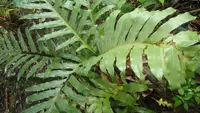
The fertile fronds are long, rigid, and deeply pinnate, with rows of round sori on the underside where spores are produced, while the sterile nest fronds remain shorter and more rounded, specialized for support and nutrient capture rather than reproduction.

Botan icon

Did you know?

In parts of northern Australia, extensive colonies of Drynaria rigidula can be seen perched high on rainforest trees, where overlapping generations of nest fronds create thick, sponge-like humus pads that effectively function as miniature hanging forest floors supporting mosses, small seedlings, and invertebrates.

FAQs about Drynaria rigidula

Growth is moderate rather than rapid. New fronds usually appear in flushes during warm months, with noticeable size increase over 1–2 growing seasons. Rate depends strongly on humidity, warmth, and how consistently moisture is supplied to the rhizome.

Grow Healthy Plants with Botan Care

Keep your plants happy and healthy with plant identification, disease detection, and easy care guidance.

Botan plant care app — identify plants on mobile

Explore More Plants