Use wide, shallow pots
Choose a broad, shallow container rather than a deep one so the creeping rhizomes can spread horizontally, and rotate the pot every 2–3 weeks for even frond development.


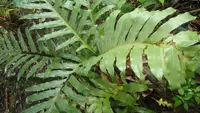
Diplazium proliferum, often called the proliferous fern, is a tropical evergreen fern valued for its graceful, arching fronds and dense, lush habit. It produces small plantlets along the fronds, which can root and form new clumps over time.
This species is native to humid forests in parts of Asia and the Pacific, where it grows on the forest floor in consistently moist, shaded conditions. Its preference for high humidity and evenly moist, rich soil makes it moderately demanding indoors.
For many growers, the main challenge in how to care for Diplazium proliferum is maintaining stable moisture and humidity without waterlogging the roots or exposing the plant to harsh, direct sun.

Care Difficulty
Moderate Care

Light Preference
Partial Shade

Water Requirements
Keep Soil Moist

Temperature Preference
Tropical / Frost Sensitive

Hardiness Zone
10–11

Soil Texture
Loamy, Peaty, Organic-rich

Soil pH
Acidic (5.5–6.5)

Soil Drainage
Moist but well-drained

Fertilization
Light (every 4–6 weeks)
Scan your plant to receive care tips personalized for your specific plant
Available on iOS and Android
This fern prefers soft, woodland-style light rather than direct sun exposure.
This species prefers consistently moist conditions but reacts poorly to waterlogged soil.
This fern thrives in mild, humid climates with little temperature extremity.
This fern needs consistently high humidity to maintain healthy fronds.
This species prefers a loose, moist, organic-rich substrate that never becomes waterlogged.
This fern grows well in containers when moisture and drainage are carefully balanced.
This fern benefits from light, consistent feeding during its active growing season.
Pruning is mainly hygienic and helps maintain tidy, vigorous fronds.
Repotting or transplanting supports steady growth and prevents root congestion in containers.
This fern is most often propagated by division or by its plantlets, rather than from spores at home.
This fern is frost sensitive and needs protection in regions with cold winters.

Plant Health Check
Not sure what's wrong with your plant? Check your plant's health inside the app.
This fern produces small plantlets directly on the upper side of its fronds, especially near the tips, allowing new individuals to root when fronds bend down to the soil. This type of vegetative reproduction is relatively uncommon among ferns and is the reason for the species name proliferum, meaning producing offspring.
In its native range in parts of tropical Asia and the Pacific, this species commonly grows along shaded stream banks and in moist lowland forests. It often anchors in humus-rich soil or among rocks where water and air humidity stay consistently high.
The fronds are typically bipinnate, meaning each frond is divided twice into many small leaflets, giving a finely textured appearance. Fertile fronds bear elongated sori (spore clusters) on the underside, aligned neatly along the veins.

Diplazium proliferum is sometimes used by botanists as a living example of both sexual and asexual reproduction in ferns, since it can form spores on its fronds while also producing clonal plantlets on the same plant, illustrating two contrasting life-strategy pathways side by side.
Growth is moderate. New fronds appear steadily during the warm season, often adding 10–30 cm per year in suitable conditions. Container-grown plants may grow slightly slower than those established in consistently moist, sheltered garden beds.
Keep your plants happy and healthy with plant identification, disease detection, and easy care guidance.