


Mulch For Coolness
Apply a 5–8 cm layer of shredded bark or leaf mold around the rhizomes to keep roots cool, conserve moisture, and suppress weeds without burying the emerging fiddleheads.

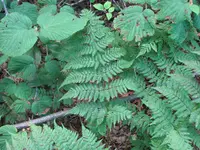
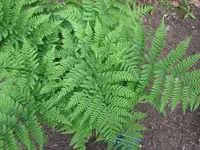
Mountain woodfern, Dryopteris campyloptera, is a hardy deciduous fern native to cool, moist forests of the northeastern United States and eastern Canada. It typically grows in graceful, upright clumps with arching fronds that create a soft, layered look.
This species prefers shaded, woodland conditions and thrives in consistently moist, humus-rich soil. Its tolerance of cold temperatures and generally low pest pressure make it relatively straightforward for those who want to care for mountain woodfern.
Due to its steady, clumping habit, it works well in naturalistic shade gardens, under trees, or along woodland paths, where it adds texture without becoming invasive.

Care Difficulty
Moderate Care

Light Preference
Partial Shade

Water Requirements
Keep Soil Moist

Temperature Preference
Cold Hardy

Hardiness Zone
3–7

Soil Texture
Loamy, Peaty, Organic-rich

Soil pH
Acidic (5.5–6.5), Slightly acidic (6.5–7.0)

Soil Drainage
Moist but well-drained

Fertilization
Minimal (feed rarely)
Scan your plant to receive care tips personalized for your specific plant
Available on iOS and Android
This woodland fern prefers cool, shaded conditions that mimic a moist forest floor.
This fern thrives in consistently moist, cool soil that never fully dries out.
This hardy fern is adapted to cool climates and tolerates significant winter cold once established.
This fern prefers consistently moist, cool air and benefits from elevated humidity.
Dryopteris campyloptera grows best in loose, humus-rich soil that stays evenly moist but never waterlogged.
This species adapts well to container growing outdoors where cool, moist conditions can be maintained.
This fern grows well in humus-rich soil and usually needs only light feeding for healthy fronds.
Pruning Dryopteris campyloptera focuses on hygiene and maintaining an attractive clump, not reshaping the plant.
This fern is usually grown in the ground, so care centers on occasional transplanting rather than frequent repotting.
Division is the most practical method for increasing Dryopteris campyloptera in gardens.
This woodland fern is cold hardy in much of its range and usually needs only modest winter attention outdoors.

Plant Health Check
Not sure what's wrong with your plant? Check your plant's health inside the app.
This fern is native mainly to cool, high-elevation spruce–fir forests of the northeastern US and eastern Canada, where it often grows along montane streams and rocky slopes rather than in lowland woods.
Genetic studies show that this species likely arose through ancient hybridization between a member of the Dryopteris expansa complex and a member of the D. intermedia complex, followed by chromosome doubling that stabilized it as a distinct fertile species.
Its specific epithet campyloptera, meaning curved-winged, refers to the characteristic forward-curving lower pinnules on each leaflet, which help distinguish it from similar shield ferns in the same habitats.

This fern often forms part of a stable hybrid complex with related Dryopteris species, and in areas where their ranges overlap it can be found growing alongside both putative parents and their modern hybrids, making it a key species for studying ongoing fern evolution and polyploidy in the wild.
This fern is semi-evergreen to deciduous, depending on climate. In cooler regions, fronds die back in winter and re-emerge in spring. In mild areas, many fronds persist, though older foliage gradually looks tattered and benefits from removal.
Keep your plants happy and healthy with plant identification, disease detection, and easy care guidance.

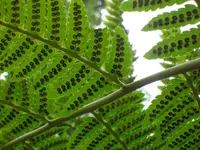
Goldie's fern
Dryopteris goldieana
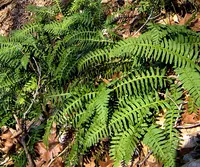
rock polypody
Polypodium virginianum
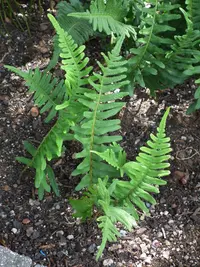
common polypody
Polypodium vulgare
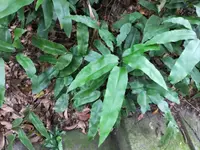
Diplazium lineolatum
Diplazium lineolatum
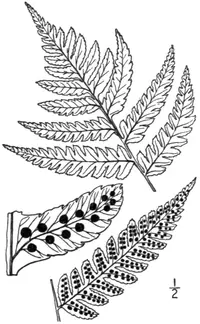
Clinton's woodfern
Dryopteris clintoniana
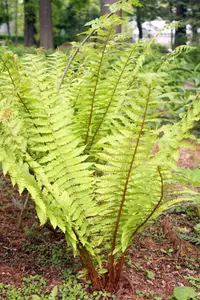
Thick-stemmed woodfern
Dryopteris crassirhizoma
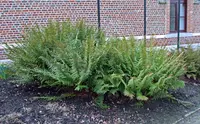
Dryopteris pseudomas
Dryopteris pseudomas
scaly buckler-fern
Dryopteris remota