

Summer rest handling
During the hottest part of summer, allow the plant to go semi-dormant by keeping it very dry and shaded from intense midday sun, then resume light watering only when nights begin to cool and new growth points swell.

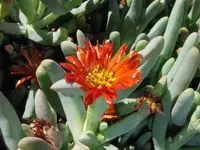
Antegibbaeum fissoides is a small, clustering succulent from arid regions of South Africa. It forms low, paired leaf bodies that resemble gray-green pebbles or split stones. Growth is slow and compact, making it suitable for windowsills and small indoor collections. Thick, water-storing leaves allow it to tolerate drought but make it sensitive to overwatering and poor drainage. Yellow, daisy-like flowers appear from the leaf center under good light and dry, cool rest conditions. Many growers find that learning how to care for Antegibbaeum is mainly about controlling water and providing bright light with a very free-draining mineral soil mix.

Care Difficulty
Moderate Care

Light Preference
Full Sun

Water Requirements
Low Water

Temperature Preference
Warm Climate

Hardiness Zone
10–11

Soil Texture
Sandy, Rocky, Loamy

Soil pH
Slightly acidic (6.5–7.0), Neutral (7.0)

Soil Drainage
Well-drained

Fertilization
Minimal (feed rarely)
Scan your plant to receive care tips personalized for your specific plant
Available on iOS and Android
This compact succulent from South Africa prefers bright, cool, sunny conditions with some protection from harsh extremes.
This species is a drought-tolerant succulent that needs infrequent but careful watering.
This plant prefers cool to warm, dry conditions and is not tolerant of hard frost.
Humidity is rarely limiting for this drought-adapted succulent species.
Antegibbaeum fissoides needs a very fast-draining, mineral-rich substrate to prevent root rot.
This species is well suited to small container culture due to its compact, clumping growth habit.
This slow-growing succulent from arid habitats needs only light feeding to stay healthy in pots.
This compact species needs minimal pruning, focused mainly on plant health and appearance.
Growth is slow, so Antegibbaeum fissoides rarely needs frequent repotting, but good root conditions are important.
Propagation of this small succulent is possible but slower than many common houseplants.
This plant prefers cool, dry winter conditions and is not tolerant of prolonged hard frost.

Plant Health Check
Not sure what's wrong with your plant? Check your plant's health inside the app.
This species is naturally restricted to limestone and shale cliffs in the Little Karoo region of South Africa, often growing in narrow rock crevices where few other succulents can survive.
Its paired, rounded leaf bodies split seasonally from the center to produce new growth, an adaptation that minimizes exposed surface area and reduces water loss in its arid habitat.
The grey‑green, slightly rough leaf surface closely matches surrounding rock, providing visual camouflage that likely helps reduce herbivory from browsing animals in the Karoo.

Antegibbaeum fissoides is a monotypic genus, meaning it is the only species in the genus Antegibbaeum, representing a single, isolated evolutionary lineage within the Aizoaceae.
This species performs best outdoors in a bright, dry, frost-free position that mimics its South African habitat. Indoors it often stretches, marks easily, and may rot if ventilation is poor, so Antegibbaeum indoor care requires extra attention.
Keep your plants happy and healthy with plant identification, disease detection, and easy care guidance.

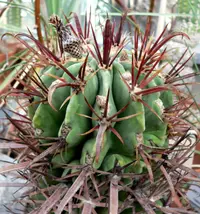
Devil's Tongue Barrel Cactus
Ferocactus latispinus
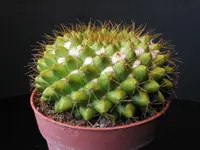
Mammillaria marksiana
Mammillaria marksiana
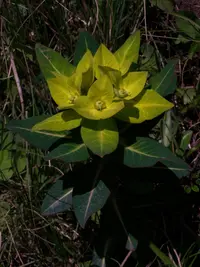
Euphorbia stracheyi
Euphorbia stracheyi
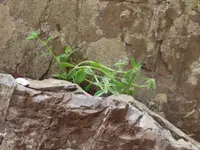
Portulaca cryptopetala
Portulaca cryptopetala
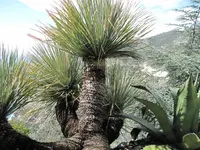
Great Desert Spoon
Dasylirion acrotrichum
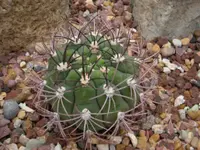
Giant Chin Cactus
Gymnocalycium saglionis
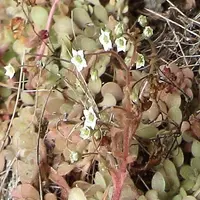
Sedum fragrans
Sedum fragrans
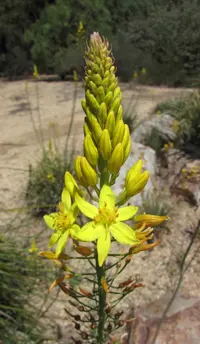
rock lily
Bulbine glauca