7 min read · 24 Aug 2026
How to Water Houseplants: Watering Guide
Learn how often to water indoor plants, key factors for proper watering, and how to adjust the care routine by plant type, season, pot size, light, and indoor conditions.
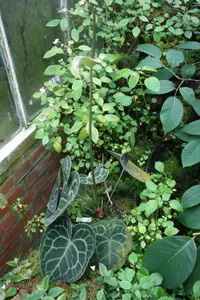
Anthurium clarinervium grows best indoors in bright indirect light, with only brief, gentle morning sun.

Light Preference
Bright Indirect Light

Anthurium clarinervium is native to shaded tropical forest habitats in southern Mexico, where it grows below taller vegetation rather than in open sun. Light is bright but softened by overhead cover, with brief seasonal or angled sun possible at the forest edge.
This background explains why cultivated plants tolerate shade better than harsh exposure, but grow strongest when the light is generous and filtered. Preferred light is bright indirect light.
Anthurium clarinervium needs about 6–8 hours of bright indirect or filtered light daily, including up to 1–2 hours of gentle direct morning sun.
Early morning sun is usually tolerated, but midday or afternoon rays can mark the velvety leaves.
It can survive in moderate shade, but growth often slows and new leaves may stay smaller.
Winter sun is weaker, so a brighter position can help if leaves begin leaning toward the window.
Indoors, aim for bright light that reaches the plant without letting strong rays sit on the leaves.
Use a north window only if it is very bright and unobstructed, or place the plant close to the glass.
An east window is often ideal because it gives soft morning sun and bright indirect light later.
A south window works when the plant sits 3–6 ft back or behind a sheer curtain.
A west window needs filtering or distance because late-day sun can be hot enough to scorch leaves.
If shadows look sharp on the leaves for several hours, soften the light or move the plant back.
Excess light usually shows first on the exposed leaf surface.
Velvety dark leaves may develop pale, washed areas where direct sun hits most strongly.
Dry tan or beige spots can appear after sudden exposure to direct midday or afternoon sun.
Edges facing the window may dry before shaded parts of the same leaf.
The surface can look flatter or less velvety when light is too intense for Anthurium clarinervium.
Move the plant out of direct hot sun and keep it in bright filtered light. A sheer curtain or a greater distance from the window is usually the safest correction.
Low light can keep the plant alive, but it often reduces leaf quality and growth.
Stems and leaves may angle toward the nearest window as they search for stronger light.
New leaves may open smaller than older ones when the plant lacks enough energy.
Petioles, the leaf stalks, can become longer and less compact in dim rooms.
During spring and summer, Anthurium clarinervium may produce few new leaves if light stays too low.
Move it to a brighter indirect position over several days. Avoid placing it straight into hot direct sun after a low-light period.
If ideal light is not available, choose the brightest spot that does not cast sharp afternoon shadows on the leaves.
Keep the plant closer to the room’s light source in winter, then pull it back if direct rays reach the foliage for long periods. Rotate the pot a quarter turn every 1–2 weeks so new growth does not lean toward one side.
A dim corner across the room from the window is usually unsuitable because growth becomes weak before symptoms look severe.

Plant Light Guide
Find the ideal light conditions for your plant and support healthy growth
Scan your plant to receive care tips personalized for your specific plant
The best light for Anthurium clarinervium is bright indirect or filtered light for most of the day, with only brief gentle morning sun if the plant is acclimated.
Discover how to care for your plants with Botan.


7 min read · 24 Aug 2026
Learn how often to water indoor plants, key factors for proper watering, and how to adjust the care routine by plant type, season, pot size, light, and indoor conditions.

11 min read · 29 Jul 2026
Learn which plants can be seriously damaged by Epsom salt and which will thrive on it. We’ll explain when and how to use it properly, provide tips for indoor & outdoor plants — read on and enjoy a healthy garden.

7 min read · 28 May 2026
In spring, many plants need repotting—an essential part of care. To avoid stress, consider the plant’s type and size. This article offers a step-by-step guide for repotting indoors or outdoors and shows how to check plant health and get care tips using the Botan app.