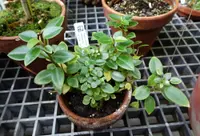
Rotate For Symmetry
Rotate the pot 90° every 2–3 weeks so new leaves orient evenly toward the light, preventing a lopsided crown and reducing the risk of the plant leaning or toppling over as it matures.

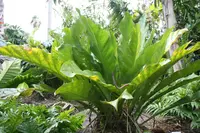
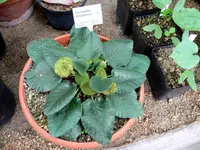
Scalloped laceleaf, Anthurium crenatum, is a tropical evergreen aroid grown mainly for its bold, architectural foliage. It forms a compact clump of thick, glossy leaves with deeply scalloped edges that create a ribbed, pleated look. New leaves emerge upright, then arch slightly as they mature.
This species is native to the Caribbean, where it grows in warm, humid, shaded forest habitats. Its sturdy leaves and relatively slow growth make it more forgiving than many delicate anthuriums, though it still prefers stable indoor conditions. To care for scalloped laceleaf successfully, provide bright, indirect light, evenly moist but not waterlogged soil, and good air humidity.

Care Difficulty
Moderate Care

Light Preference
Bright Indirect Light

Water Requirements
Keep Soil Moist

Temperature Preference
Tropical / Frost Sensitive

Hardiness Zone
11–12

Soil Texture
Loamy, Peaty, Organic-rich

Soil pH
Acidic (5.5–6.5), Slightly acidic (6.5–7.0)

Soil Drainage
Moist but well-drained

Fertilization
Light (every 4–6 weeks)
Scan your plant to receive care tips personalized for your specific plant
Available on iOS and Android
Anthurium crenatum prefers bright, indirect light that mimics filtered tropical sun.
This species prefers evenly moist, airy soil that never stays soggy.
This plant thrives in stable, warm conditions similar to a tropical understory.
This species prefers consistently warm, humid air to keep its large leaves healthy.
Anthurium crenatum grows best in a loose, airy, organic-rich mix that mimics forest floor leaf litter.
This species is very suitable for container growing due to its compact, clumping root system.
Anthurium crenatum benefits from light, consistent feeding during its active growing season.
Anthurium crenatum needs only light pruning to maintain health and a clean shape.
This species grows well in containers but appreciates periodic repotting to refresh its root environment.
Anthurium crenatum is most reliably propagated by division rather than by seed or stem cuttings.
This tropical species is frost sensitive and needs warm, stable indoor conditions in winter in most climates.

Plant Health Check
Not sure what's wrong with your plant? Check your plant's health inside the app.
This species develops broad, leathery leaves with strongly scalloped margins that can form a shallow bowl, a distinctive trait that helps capture water and organic debris in its native habitat.
Anthurium crenatum is naturally found in shaded, humid lowland forests of the Caribbean region, often in coastal areas where it experiences warm temperatures and filtered light year-round.
Like many anthuriums, it produces a spadix covered in many tiny flowers and a surrounding spathe, a structure adapted in the genus to attract specific pollinators such as birds and insects in its native range.
This species blooms less freely than many other anthuriums. Sparse flowering usually relates to low light, insufficient nutrition, or natural rest periods. Stable warmth, moderate feeding, and patience are usually more important than forcing frequent blooms.
Keep your plants happy and healthy with plant identification, disease detection, and easy care guidance.