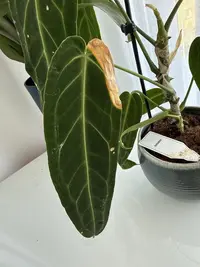







Best Soil for Queen Anthurium (Anthurium warocqueanum)

A loose, organic, slightly acidic mix helps Anthurium warocqueanum maintain healthy roots while staying evenly moist and well aerated.

Soil Texture

Loamy, Peaty, Organic-rich

Soil pH

Acidic (5.5–6.5)

Soil Drainage

Moist but well-drained

Anthurium warocqueanum Soil Guide

Native to Colombia, Anthurium warocqueanum grows in warm, humid forest conditions where roots stay lightly moist but still have access to air. That background explains its preference for a loose, organic-rich substrate that holds some moisture without becoming dense or stagnant.

The best soil for Queen Anthurium is airy, loamy, and slightly acidic, with enough fine material to stay evenly damp and enough structure to drain well. Its roots benefit from oxygen around them, so the substrate should feel open rather than compacted or heavy.

A custom mix gives better control over texture and moisture than standard houseplant soil alone for Anthurium warocqueanum.

100% total mix = 20 scoops
5%
horticultural charcoal1 scoops
15%
compost3 scoops
20%
perlite or pumice4 scoops
25%
fine orchid bark5 scoops
35%
coco coir or peat moss7 scoops

The finished blend should feel springy, fluffy, and slightly chunky, holding some moisture while excess water moves through easily.

A mildly acidic range of 5.5–6.5 pH suits Queen Anthurium best. In that range, key nutrients stay more available to the roots and are easier for the plant to absorb.

If the mix drifts too far above or below that range, nutrient uptake can become less efficient even when the soil otherwise looks suitable.

This species can be sensitive when root conditions stay stale for too long. Soil issues are often worth checking early because they can build gradually.

Compacted mix:

Compacted mix: if the surface hardens or water lingers unevenly, gently loosen the top layer and consider replacing part of the medium with a fresher, airier blend.

Soggy root zone:

Soggy root zone: a heavy, wet mix that stays saturated can limit oxygen around roots, so pause extra moisture and check whether the container drains freely.

Dry pockets:

Dry pockets: peat- or bark-based media can sometimes repel water when very dry, so re-moisten slowly and evenly until the mix absorbs moisture again.

Salt buildup:

Salt buildup: a crust on the surface or pot rim can point to mineral accumulation, so flush the soil thoroughly once and review water quality over time.

Scan. Match. Grow.

Botan helps identify the plant and match it with a more suitable soil profile, so choosing the right mix feels clearer.

FAQ

Yes. Drainage holes help excess water leave the container, which keeps the root zone from staying stagnant too long and makes moisture levels easier to manage in a chunky, moisture-retentive mix.

Everything About Queen Anthurium

More Plant Soil Guides

Wrong Soil? Check It.

If leaves or roots seem off, soil may be one factor to review. Botan’s photo-based assessment can help you check that possibility.

Botan app helping with soil and plant care
Plant Pot Sizes: How to Choose the Right Plant Container

7 min read · 20 Aug 2026

Plant Pot Sizes: How to Choose the Right Plant Container

Plant pot sizes can be confusing because the number on the label only tells you part of the required information. A container may look spacious but actually be too shallow. So, how to choose pot size for plant species?

Beginner Guides
Plant Pot Sizes: How to Choose the Right Plant Container
12 Best Plants That Repel Spiders For Your Home and Garden

8 min read · 24 Jul 2026

12 Best Plants That Repel Spiders For Your Home and Garden

Spiders constantly appear in places you don't want them. A few common plants can help repel them using scent alone. Here are 12 options suitable for both indoors and outdoors, plus care tips for each.

Plant Recommendations
12 Best Plants That Repel Spiders For Your Home and Garden
Top 15 Fast-Growing Trees For Your Garden

13 min read · 28 Jul 2026

Top 15 Fast-Growing Trees For Your Garden

Learn which of the 15 fastest-growing trees will suit your area. We’ll share detailed information on each: growth rate, mature spread, key tree demands, and main vulnerabilities. Read on and make the best choice possible.

Plant Recommendations
Top 15 Fast-Growing Trees For Your Garden