Bokbaard Matfig Care (Antimima aristulata)

Also known as: Peninsula Cussionfig
Bokbaard Matfig

About Bokbaard Matfig

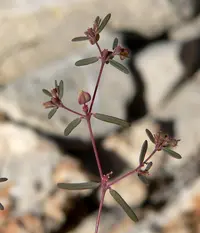
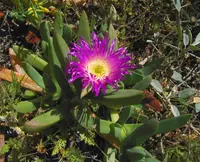
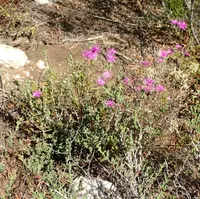
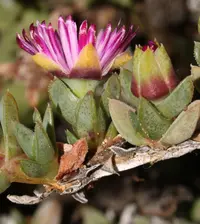
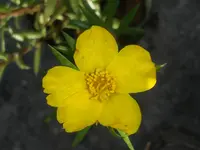
Antimima aristulata, often called Bokbaard Matfig, is a compact succulent from the dry, rocky regions of South Africa. It forms low mats of small, triangular, gray-green leaves that store water. In good light it produces daisy-like flowers, usually in shades of pink to purple, that open in bright conditions. Growth is slow and compact, which makes it well suited to containers and windowsills. It stays small, so it fits easily into mixed succulent displays. This species prefers strong light, very sharp-draining mineral soil, and careful watering with long dry intervals. These traits make it rewarding but slightly challenging for beginners learning how to care for Bokbaard Matfig.

Main Plant Requirements

Care Difficulty

Moderate Care

Light Preference

Full Sun

Water Requirements

Low Water

Temperature Preference

Tropical / Frost Sensitive

Hardiness Zone

10–11

Soil Texture

Sandy, Rocky, Loamy

Soil pH

Slightly acidic (6.5–7.0), Neutral (7.0)

Soil Drainage

Well-drained

Fertilization

Minimal (feed rarely)

Get Personalized Care Plan

Scan your plant to receive care tips personalized for your specific plant

Available on iOS and Android

How to Care for the Bokbaard Matfig

This compact South African succulent thrives in bright, open conditions with strong sun exposure.

  • Provide 6–8 hours of direct sun daily; full sun in the morning with light afternoon shade suits most outdoor sites.
  • Plants tolerate light partial shade, but dense shade causes stretched growth, pale foliage, and weak flowering, especially in Bokbaard Matfig forms.
  • In hot summers, protect from intense late-afternoon sun to prevent leaf scorch; in winter, ensure the site stays unobstructed so plants receive as much low-angle sun as possible.

This species is a drought-adapted succulent that needs infrequent but thorough watering in fast-draining, gritty soil.

  • Water only when soil is completely dry at least 5–8 cm deep; in most warm seasons this means waiting until leaves just begin to look slightly less plump.
  • Reduce watering sharply in cool or short-day months, sometimes to once every several weeks, to prevent root rot in Antimima aristulata.
  • Watch for soft, translucent leaves or blackened stem bases as signs of overwatering, and for wrinkled, very thin leaves as a sign the plant needs a deep soak.

This drought-hardy succulent prefers warm, dry conditions and does poorly in prolonged cold or humid heat.

  • Ideal growing temperatures are 65–80°F (18–27°C) during the day and 50–60°F (10–16°C) at night, with good air movement.
  • Short dips to 30–32°F (-1–0°C) may be survived if soil stays dry, but repeated freezes or wet cold quickly damage tissue.
  • In hot regions, plants tolerate 90–95°F (32–35°C) if the root zone stays cool and dry; extreme heat combined with high humidity increases rot risk, so avoid overhead watering then.

This compact succulent prefers dry air and rarely needs added humidity.

  • Aim for 30–50% relative humidity, similar to typical indoor air in heated or air-conditioned homes.
  • The plant tolerates much drier air than most houseplants; problems usually come from excess moisture rather than low humidity.
  • Humidity stress shows as soft, splitting leaves or rot at the base; improve air movement and keep foliage dry when caring for Bokbaard Matfig.

This species needs a very fast-draining, mineral-based substrate to prevent root and stem rot.

  • Use a gritty mix of 60–70% coarse sand, pumice, or perlite with 30–40% cactus mix or lean loam to support Antimima aristulata.
  • Ensure water runs through in seconds and the mix dries fully within 1–3 days after watering to protect shallow roots.
  • Keep pH slightly acidic to neutral, around 6.0–7.0, avoiding strongly alkaline or salty media that can burn roots.
  • Do not use peat-heavy, compact, or moisture-retentive potting soil; add extra pumice or fine gravel to open the structure and increase aeration.

This species is very suitable for container growing due to its compact, shallow root system.

  • Choose a wide, shallow pot so the roots can spread laterally while the gritty mix dries quickly between waterings.
  • Select unglazed terracotta if extra evaporation is needed, but use plastic in very hot, dry climates to slow moisture loss slightly.
  • Place the pot on feet or a stand so drainage holes stay clear and runoff leaves the container area within minutes after watering.

Antimima aristulata needs only light feeding in containers, while in-ground plants usually cope with poor soils without extra nutrients.

  • Use a low-dose balanced NPK succulent fertilizer or very dilute liquid feed at 1/4–1/2 strength during spring–summer growth.
  • Apply every 4–6 weeks for potted plants, skipping feedings if growth slows or leaves look swollen and firm.
  • Avoid compost-rich or slow-release products that hold excess moisture, since roots are sensitive to rot.
  • Stop feeding in fall–winter dormancy; this supports compact, stress-tolerant growth when caring for Bokbaard Matfig.

Antimima aristulata needs only minimal pruning to keep clumps compact and healthy.

  • Carry out light trimming after main flowering, when new growth begins to appear.
  • Remove dead, damaged, or shriveled stems and spent flower stalks to reduce disease risk and tidy the cushion.
  • Pinch back overly long shoots to maintain a low, dense mound without exposing bare patches.
  • Use clean, sharp scissors or small snips, cutting just above a node or branching point.

This compact succulent prefers infrequent repotting or transplanting and reacts poorly to major root disturbance.

  • Check for roots circling the pot, slow growth despite good light, or very fast drying soil as signs it needs a larger container.
  • Plan repotting for late spring, every 3–4 years, when active growth helps recovery.
  • Choose a shallow container with excellent drainage and a gritty cactus–succulent mix to limit excess moisture.
  • Gently loosen the root ball, trim only dead roots, and keep the plant slightly dry for 3–5 days after moving to reduce stress.

Antimima aristulata is most often propagated from stem cuttings or seed under warm, bright, and dry-leaning conditions.

  • Take short, firm stem cuttings in late spring–summer and let cut surfaces callus for 2–3 days.
  • Insert cuttings into a sharply draining, sandy or gritty mix, keeping humidity low and watering sparingly until rooted.
  • Sow fresh seed on the surface of barely moist, sterile mix with bright indirect light and good airflow.
  • Maintain temperatures around 68–77°F and avoid overwatering, which quickly damages young roots and seedlings.

This drought-adapted succulent needs thoughtful winter care in cold or wet climates, especially in containers.

  • Tolerates only light frost; prolonged drops below about 25°F or wet freezing conditions can damage tissues.
  • In-ground plants benefit from a very sharp, gravelly bed and a light gravel mulch around the crown to shed water.
  • Move containers under cover or indoors to a cool, very bright spot whenever hard freezes or persistent winter rain are forecast.

Care Tips

Top‑dressing grit

Apply a 0.5–1 cm layer of coarse mineral grit around the crown to keep stem bases dry, reduce algae and moss, and prevent rot at the soil surface.

Seasonal watering pause

In very hot, dry summers, reduce or pause watering for several weeks if the foliage shrivels slightly, then resume light watering when night temperatures cool, which helps sync the plant with its natural growth cycle.

Clay pot advantage

Grow this species in an unglazed clay pot with large drainage holes to speed evaporation and reduce the risk of root rot compared with plastic containers.

Targeted pest checks

Inspect leaf joints and the base of the clumps every few weeks with a hand lens so mealybugs or scale can be removed early with a cotton swab dipped in 70% isopropyl alcohol.

Cool‑season placement

During its main growth in fall and winter, keep the plant in the brightest, coolest indoor spot available (ideally 50–60°F) to promote compact growth and is an important part of Antimima aristulata care.

Common Pests and Diseases

Mealybugs

This pest hides in leaf crevices and along stems, appearing as small white cottony clusters that suck sap and weaken the plant over time. Symptoms include slow growth, slight leaf wrinkling, and sticky honeydew on the plant or nearby surfaces.

Solution

Isolate the plant, then dab visible insects with cotton swabs dipped in 70% isopropyl alcohol and repeat weekly until no new clusters appear. Increase light and airflow, avoid overfertilizing, and if the infestation is larger, use a ready-to-use insecticidal soap, thoroughly coating all stem joints and leaf bases.

Aphids

These insects gather on new shoots and flower buds, feeding on sap and causing distortion of young growth and reduced flowering. Symptoms include curled or misshapen leaves and shiny honeydew that can lead to sooty mold on the plant surface.

Solution

Rinse aphids off gently with a firm stream of lukewarm water, then treat remaining colonies with insecticidal soap or a neem oil spray, ensuring full coverage of undersides of leaves and young stems. Repeat treatments every 5–7 days for several cycles and avoid excessive nitrogen fertilizer that promotes very soft, aphid-prone growth.

Spider mites

This pest thrives in hot, very dry conditions and feeds on the tiny leaf surfaces, especially on compact cushions, causing fine stippling and dull, grayish patches. Symptoms include very fine webbing deep between stems and a general faded or dusty look to the foliage.

Solution

Increase humidity around the plant slightly without keeping the soil wet, then rinse the plant gently to remove webbing and mites. Follow with repeated applications of insecticidal soap or a horticultural oil, taking care to reach deep into the mat of stems, and improve air movement to reduce reinfestation, which is an important part of Antimima aristulata plant care.

Fungal stem canker

This disease develops in humid, stagnant conditions and often starts where old, shaded stems stay damp, leading to dark, sunken lesions and gradual dieback of individual shoots within the mat. Symptoms include localized browning, shriveling stems, and small patches of dead tissue that can expand if moisture stress continues.

Solution

Cut out affected stems well back into healthy tissue with a sterile tool and discard the debris, then keep the plant in a bright, airy position so foliage dries quickly after watering or rain. Avoid overhead watering, water early in the day at soil level, and keep the crown slightly raised and well-drained to reduce future infections.

Edema

Symptoms include scattered corky, blister-like spots on leaves or stems where tissue has ruptured from taking up water faster than it can transpire in cool, low-light conditions. This physiological disorder is common in compact, water-storing succulents kept in shallow pots that are watered heavily after a dry period.

Solution

Adjust watering so the soil dries fully between waterings and avoid soaking the plant when it is cool or in low light. Provide stronger light, good airflow, and a very free-draining mineral substrate, and reduce pot size or organic content of the mix if foliage remains swollen or prone to blistering.

Interesting Facts

Quartz-field specialist

This species is native to quartz-rich gravel plains in the Western Cape of South Africa, where its clumps blend with pale stones and gain camouflage from the surrounding mineral substrate.

Seasonal leaf pairs

Growth occurs through successive pairs of thick, triangular leaf bodies that partially envelop older leaves, a strategy that helps limit water loss in its arid winter-rainfall habitat.

Short-lived flowers

It produces small, daisy-like flowers mainly in late winter to early spring, which often open in bright light for only a few hours on suitable days.

FAQs about Bokbaard Matfig

Lack of flowers usually comes from too little light, oversized or very rich soil, or frequent watering. This species blooms best when slightly cramped in a gritty mix, given strong light, and kept relatively dry in winter rest.

Grow Healthy Plants with Botan Care

Keep your plants happy and healthy with plant identification, disease detection, and easy care guidance.

Botan plant care app — identify plants on mobile

Explore More Plants