

Enhance Drainage Layer
In containers, add a 1–2 in layer of coarse grit or pumice above the drainage holes to keep the fine roots from sitting in wet zones and to reduce the risk of basal rot in this mat-forming succulent.


Mound dewfig (Drosanthemum lique) is a small, mat-forming succulent grown mainly for its sparkling, bead-like foliage and bright daisy-style flowers. It forms low, spreading mounds that work well in rock gardens, containers, and dry borders.
This species is native to arid regions of South Africa, where it has adapted to intense sun and lean, fast-draining soils. Its drought tolerance and compact growth habit make it relatively simple to maintain once established.
Understanding how to care for Mound Dewfig starts with providing strong light, modest watering, and a gritty, well-aerated potting mix. Under the right conditions it offers reliable color with minimal effort.

Care Difficulty
Easy Care

Light Preference
Full Sun

Water Requirements
Low Water

Temperature Preference
Warm Climate

Hardiness Zone
9–11

Soil Texture
Sandy, Loamy, Rocky

Soil pH
Slightly acidic (6.5–7.0), Neutral (7.0)

Soil Drainage
Well-drained

Fertilization
Minimal (feed rarely)
Scan your plant to receive care tips personalized for your specific plant
Available on iOS and Android
This sun-loving succulent thrives in bright, open positions with plenty of direct light.
This drought-tolerant succulent prefers infrequent, deep watering and fast-drying soil.
This plant prefers mild, dry conditions and does best in climates without harsh frost.
This drought-tolerant succulent handles typical indoor humidity comfortably and rarely needs special adjustment.
This species needs a sharply draining, mineral-rich mix to keep roots dry between waterings.
This succulent is well suited to container growing, especially in sunny, dry locations.
This drought-tolerant succulent needs only light feeding to maintain compact, floriferous growth when caring for Mound Dewfig.
Pruning Drosanthemum lique helps maintain a low, tidy mound and encourages better flowering.
This succulent groundcover prefers minimal disturbance but sometimes benefits from careful transplanting or repotting.
Drosanthemum lique is commonly multiplied from cuttings and sometimes from seed for new plants.
This succulent tolerates only light frost and needs simple winter care in colder climates.

Plant Health Check
Not sure what's wrong with your plant? Check your plant's health inside the app.
The flowers open mainly in bright morning sun and the transparent, glistening cells on the leaves and stems can make the whole mound appear dewy, which is why the group is commonly called dewfig or dewflower.
This species is native to winter-rainfall regions of South Africa, where it experiences cool, moist winters and hot, very dry summers on rocky, well-drained slopes.
As a small succulent, it stores water in its fleshy leaves and can temporarily shrivel during extended drought, then rehydrate and resume growth quickly when moisture returns.
Lack of flowers usually comes from insufficient light, excess nitrogen fertilizer, or pruning at the wrong time. Ensure strong light, avoid high-nitrogen feeds, and prune lightly only after flowering wood has clearly finished producing buds.
Keep your plants happy and healthy with plant identification, disease detection, and easy care guidance.

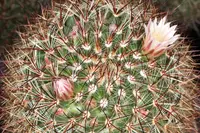
Mammillaria discolor
Mammillaria discolor
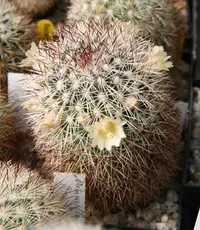
Mammillaria densispina
Mammillaria densispina
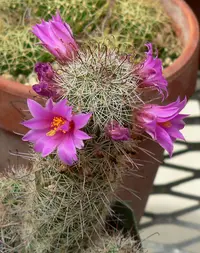
Mammillaria mazatlanensis
Mammillaria mazatlanensis

ice plant
Carpobrotus chilensis

Euphorbia regis-jubae
Euphorbia regis-jubae
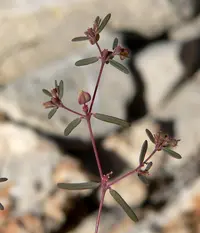
threadstem sandmat
Euphorbia revoluta
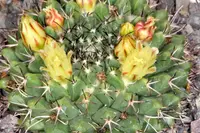
Mammillaria karwinskiana
Mammillaria karwinskiana
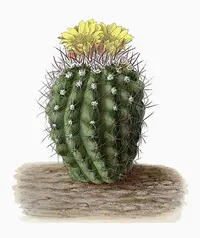
Copiapoa coquimbana
Copiapoa coquimbana