Early structural training
In the first 2–3 years, select 1 strong central leader and 3–5 well-spaced lateral branches, removing competing shoots gradually to establish a stable, wind-resistant framework.

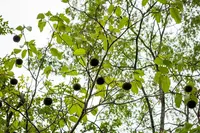
Monkey's comb (Apeiba tibourbou) is a fast-growing tropical tree known for its distinctive spiky, brush-like seed pods that resemble a comb. It typically forms a tall, upright crown with light green leaves and pale yellow flowers.
This species is native to tropical regions of Central and South America, where it often grows in secondary forests and disturbed areas. Its rapid growth and tolerance of poorer soils can make it relatively easy to establish in suitable warm climates.
Those who want to learn how to care for Monkey's Comb should note that it prefers full sun, warmth, and well-drained soil with regular moisture, and is not suited to cold or frost-prone regions.

Care Difficulty
Moderate Care

Light Preference
Full Sun

Water Requirements
Moderate Water

Temperature Preference
Tropical / Frost Sensitive

Hardiness Zone
10–12

Soil Texture
Sandy, Loamy, Organic-rich

Soil pH
Slightly acidic (6.5–7.0), Neutral (7.0)

Soil Drainage
Well-drained

Fertilization
Minimal (feed rarely)
Scan your plant to receive care tips personalized for your specific plant
Available on iOS and Android
This fast-growing tropical tree prefers strong sun but tolerates some light shade once established.
This species prefers evenly moist, well-drained soil during active growth but dislikes standing water.
This tropical tree thrives in consistently warm, frost-free conditions.
This species tolerates a wide humidity range but grows best with moderate air moisture.
This tree prefers aerated, fast-draining, slightly fertile soil to support rapid growth.
This fast-growing tree can be grown in containers for the early years if managed carefully.
Apeiba tibourbou grows fast on moderately fertile soil but responds well to light feeding in nutrient-poor sites.
Apeiba tibourbou benefits from light structural pruning to keep a strong framework and safe clearance.
This fast-growing tropical tree is usually field-grown, so guidance focuses on transplanting young specimens from containers to the ground.
Apeiba tibourbou is most often propagated from seed under warm, bright conditions.
This tropical tree has low frost tolerance and needs protection outside frost-free climates.

Plant Health Check
Not sure what's wrong with your plant? Check your plant's health inside the app.
The bark of this tree develops a thick, light, corky layer that makes the trunk and branches unusually buoyant and soft to the touch, which is why it is sometimes used locally as a substitute for commercial cork.
Its woody seed capsules are covered in soft spines and are light enough to float on water and be carried by wind, helping the species colonize riverbanks and disturbed sites in tropical America.
This fast-growing tree often appears early in secondary forests on degraded or nutrient-poor soils, where its rapid canopy development helps shade and protect slower, more shade-tolerant species.

The exceptionally light, corky wood of this species is so buoyant that in parts of its native range it has been used to make children’s toys, floats, and lightweight handicrafts that can remain on the water surface with very little volume of wood.
This tree is considered fast-growing, often adding 60–150 cm per year in warm climates. Growth slows in poor soil, drought, or cool temperatures. Pruning and balanced fertilization help manage size and structure when growing Monkey's Comb.
Keep your plants happy and healthy with plant identification, disease detection, and easy care guidance.