hybrid strawberry-tree Care (Arbutus × andrachnoides)

hybrid strawberry-tree

About hybrid strawberry-tree

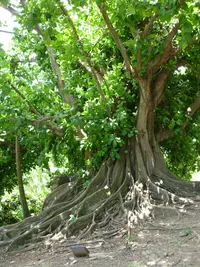
The hybrid strawberry-tree, Arbutus × andrachnoides, is an evergreen small tree or large shrub grown mainly for its striking bark and ornamental value. It combines traits of Arbutus unedo and Arbutus andrachne. Mature plants develop smooth bark that peels in patches, revealing warm shades of red, cinnamon, and green, which creates strong year-round interest. The plant carries small urn-shaped white or pinkish flowers, followed by colorful berries. It naturally occurs in Mediterranean-influenced regions and is suited to mild, sheltered gardens. This hybrid prefers well-drained, slightly acidic to neutral soil and does best in sunny, open positions. Because it dislikes disturbance and heavy, wet ground, gardeners should plan the site carefully and learn how to care for hybrid strawberry-tree before planting.

Main Plant Requirements

Care Difficulty

Moderate Care

Light Preference

Full Sun

Water Requirements

Low Water

Temperature Preference

Warm Climate

Hardiness Zone

7–9

Soil Texture

Sandy, Loamy, Rocky

Soil pH

Acidic (5.5–6.5), Slightly acidic (6.5–7.0)

Soil Drainage

Well-drained

Fertilization

Minimal (feed rarely)

Get Personalized Care Plan

Scan your plant to receive care tips personalized for your specific plant

Available on iOS and Android

How to Care for the hybrid strawberry-tree

Arbutus × andrachnoides thrives in bright outdoor conditions with a preference for full sun exposure.

  • Provide 6–8 hours of direct sun daily; in hotter regions, aim for full morning sun with light afternoon shade to protect foliage.
  • The hybrid strawberry-tree tolerates light or dappled shade but may produce fewer flowers and fruits with less than 4–5 hours of sun.
  • In summer heatwaves, protect young plants from intense midafternoon sun; in winter, avoid deep shade to reduce weak, leggy growth.

This species prefers evenly moist but never waterlogged soil once established outdoors.

  • Allow the top 3–5 cm of soil to dry before watering; soil should feel dry to the touch but not powdery or cracked.
  • Increase watering slightly in the first 2–3 growing seasons and during hot, dry spells; reduce frequency in cool or rainy periods for balanced Arbutus × andrachnoides care.
  • Choose sharply drained soil or sloped sites; yellowing, soft leaves suggest overwatering, while crisp, browning leaf tips signal underwatering or prolonged dryness.

This Mediterranean-type evergreen performs best in mild, relatively stable outdoor climates.

  • Ideal growing temperatures are 55–75°F (13–24°C), with steady growth and flowering in areas that avoid sharp daily extremes.
  • Mature plants tolerate brief drops to about 10–15°F (-12 to -9°C), but young specimens are more vulnerable and benefit from sheltered, wind-protected positions.
  • Heat tolerance is good up to about 90°F (32°C) if soil moisture is adequate; prolonged frost, freeze–thaw cycles, and drying winter winds can scar bark and damage foliage.

This species handles a wide humidity range and usually does not need special humidity management outdoors.

This tree prefers light, well-drained, slightly acidic to neutral soil that mimics dry, rocky woodland conditions.

  • Use a sandy or sandy-loam mix with plenty of coarse mineral material to prevent waterlogging around the roots.
  • Aim for pH 5.5–7.0; avoid strongly alkaline soils that can reduce nutrient availability and cause chlorosis.
  • Incorporate fine gravel, sharp sand, and a modest amount of composted bark to improve structure, drainage, and aeration.
  • Avoid heavy clay, compacted ground, or any site where water stands for more than a few hours after rain.

This species can be grown in large containers for many years if the pot provides stable support and fast drainage.

  • Choose a wide, heavy container to counterbalance the woody canopy and reduce the risk of the pot tipping in wind.
  • Use a deep pot to allow the developing root system to anchor the plant and buffer it against rapid moisture fluctuations.
  • Select thick-walled clay or concrete containers outdoors so the root zone stays cooler and the plant remains more stable in storms.

This hybrid strawberry-tree benefits from modest feeding on poorer soils but often manages on its own in reasonably fertile ground.

  • Use a balanced slow-release fertilizer (such as 8-8-8 or 10-10-10) or a light top-dressing of compost in early spring.
  • Apply once in spring and, if growth is weak, again in midsummer, avoiding overfeeding which can reduce stress tolerance.
  • Dilute liquid feeds to 1/2 strength and water onto moist soil to prevent root burn.
  • Stop feeding in late summer to allow new growth to harden before winter, and do not fertilize during winter dormancy.

Pruning Arbutus × andrachnoides is mainly corrective, aimed at maintaining structure and health rather than forcing heavy regrowth.

  • Carry out most pruning in late winter or very early spring, before active growth begins.
  • Remove dead, diseased, crossing, or storm-damaged branches using clean, sharp bypass pruners or a fine-tooth pruning saw.
  • Thin congested interior shoots sparingly to improve light penetration while preserving the plant’s natural outline.
  • Limit pruning cuts to smaller branches where possible, avoiding hard cuts into old wood that may be slow to reshoot.

This tree is usually grown in the ground, so focus on careful planting and minimal transplanting once established.

  • Transplant young Arbutus × andrachnoides in early spring or early autumn when soil is moist and temperatures are mild.
  • Look for signs such as circling roots in containers or severe root-binding before shifting to a larger pot or planting site.
  • Disturb the root ball as little as possible; tease out only tight outer roots and set at the same soil depth as before.
  • Water thoroughly after transplanting, then maintain even moisture and provide shading from intense sun for 1–2 weeks to limit stress.

Arbutus × andrachnoides is usually propagated by semi-ripe cuttings, which can be slow and requires controlled conditions.

  • Take semi-ripe cuttings in late summer, 7–10 cm long, from healthy non-flowering shoots.
  • Remove lower leaves, lightly wound the base, and dip in a rooting hormone to encourage root initiation.
  • Insert cuttings into a free-draining mix of sand and peat or fine bark, then maintain high humidity and bottom warmth around 68–72°F.
  • Allow several months for rooting; pot on gently once a firm root system forms, avoiding disturbance of young roots.

This species is moderately cold hardy but benefits from some winter care in colder regions or exposed sites.

  • Established plants usually tolerate brief dips to about 10–15°F, but young trees are more vulnerable to freeze damage.
  • Apply a 5–8 cm layer of organic mulch around the root zone in late autumn, keeping it clear of the trunk.
  • Shelter young plants from harsh wind using temporary screens, which reduce desiccation and bark damage.

Care Tips

Manage root competition

Site plants away from vigorous, shallow‑rooted trees and shrubs, or install a root barrier 40–60 cm deep, so the fine feeder roots can establish without being starved of moisture and nutrients.

Encourage multi‑stem form

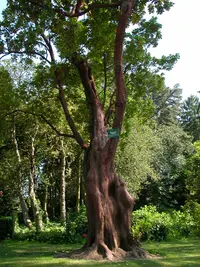
On young plants, selectively head back the central leader at 60–90 cm height in late winter to promote a multi‑stem framework that shows the bark better and improves wind stability.

Bark display maintenance

Remove dense inner twig growth and low, shaded branches over several years so light reaches the trunk, which enhances the peeling bark effect and reduces humidity pockets that favor canker diseases.

Wind buffering strategy

In exposed gardens, plant this tree on the leeward side of a hedge, wall, or openwork fence, or use temporary windbreak mesh for the first 3–4 years to reduce crown rock and root loosening.

Underplanting for health

Use low, drought‑tolerant groundcovers instead of bare mulch right up to the trunk to keep surface roots shaded, limit soil temperature swings, and simplify caring for hybrid strawberry-tree in dry, sunny sites.

Common Pests and Diseases

Leaf spot

This disease causes small brown to black spots on leaves, which may coalesce and lead to premature leaf drop, especially in damp, shaded conditions.

Solution

Prune out and dispose of heavily spotted leaves, thin crowded branches to improve airflow, and avoid overhead watering; in severe or recurrent cases, apply a copper-based fungicide during wet periods according to label directions.

Arbutus leaf blight

This disease produces dark, irregular lesions on leaves and young shoots, sometimes leading to dieback of tender growth after cool, wet weather.

Solution

Remove and destroy affected leaves and twigs, keep the canopy open with careful pruning for better drying, and use a protective fungicide spray in early spring if the plant has a history of blight in your area.

Phytophthora collar canker

This disease attacks the lower trunk and root collar, causing sunken, dark bark patches, oozing, and progressive canopy thinning or dieback, particularly in poorly drained sites.

Solution

Improve drainage, avoid trunk wounding and overwatering, and remove heavily affected plants; in high-value specimens, consult a local arborist about targeted phosphite (phosphonate) treatments as part of broader Arbutus × andrachnoides care.

Scale insects

These insects appear as small, dome-shaped or flat bumps on stems and leaves, often accompanied by sticky honeydew and sooty mold growth.

Solution

Gently scrub affected stems with a soft brush and mild soapy water, prune out heavily infested twigs, and use horticultural oil during the dormant or cool season to smother remaining scale, ensuring thorough coverage of branches and the trunk.

Leaf miners

These insects create pale, winding tunnels within the leaves, which can give foliage a blotchy, unsightly appearance but rarely kill established plants.

Solution

Pick off and discard leaves showing fresh mines to reduce larvae, encourage natural predators by avoiding broad-spectrum insecticides, and use a systemic insecticide only if damage is heavy and persistent, following label guidance carefully.

Interesting Facts

Distinctive bark mosaic

This hybrid naturally sheds bark in irregular flakes, revealing contrasting red, orange, and olive-green patches that create a striking mosaic pattern on older trunks and branches.

Hybrid of two arbutus

It is a stable natural and cultivated hybrid between the Greek strawberry tree Arbutus andrachne and the Irish strawberry tree Arbutus unedo, combining the smooth colorful bark of one parent with the hardiness and fruiting of the other.

Bee-friendly winter flowers

In mild climates, its small white to pinkish urn-shaped flowers appear from late autumn into winter, providing an important nectar and pollen source for bees when few other woody plants are in bloom.

Botan icon

Did you know?

This hybrid is valued in landscape design not only for its ornamental bark and winter flowers but also for its adaptability to poor, rocky, or limey soils, making Arbutus × andrachnoides care instructions especially relevant for challenging urban and coastal planting sites.

FAQs about hybrid strawberry-tree

Lack of flowers usually comes from too much shade, heavy pruning at the wrong time, or nutrient stress. Ensure strong light, avoid cutting new wood, and keep soil moderately fertile without excessive nitrogen, which favors leaves over blooms.

Grow Healthy Plants with Botan Care

Keep your plants happy and healthy with plant identification, disease detection, and easy care guidance.

Botan plant care app — identify plants on mobile

Explore More Plants