Texas madrone Care (Arbutus xalapensis)

Texas madrone

About Texas madrone

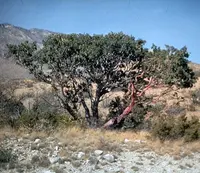
Texas madrone, Arbutus xalapensis, is an evergreen tree or large shrub known for its smooth, peeling bark that reveals patches of red, cream, and pink. It forms a rounded crown with thick, leathery leaves and clusters of white, urn-shaped flowers followed by orange-red berries.

This species is native to dry, rocky slopes and canyons of Texas, the Southwest US, and Mexico. It is slow growing and somewhat demanding, which can make it challenging to establish.

Texas madrone prefers full sun, excellent drainage, and low to moderate moisture. Gardeners who care for Texas madrone usually succeed when they match its natural, rocky habitat as closely as possible.

Main Plant Requirements

Care Difficulty

Hard Care

Light Preference

Full Sun

Water Requirements

Low Water

Temperature Preference

Warm Climate

Hardiness Zone

7–9

Soil Texture

Sandy, Loamy, Rocky

Soil pH

Slightly acidic (6.5–7.0), Neutral (7.0)

Soil Drainage

Well-drained

Fertilization

Minimal (feed rarely)

Get Personalized Care Plan

Scan your plant to receive care tips personalized for your specific plant

Available on iOS and Android

How to Care for the Texas madrone

This species thrives in bright, open conditions similar to its native rocky slopes.

  • Provide 6–8 hours of direct sun daily; morning sun with some light afternoon shade is ideal in hot regions.
  • Young Texas madrone trees tolerate light or dappled shade, but dense shade reduces flowering, slows growth, and leads to sparse foliage.
  • Avoid sudden exposure changes; gradually increase sun after planting to reduce leaf scorch, especially during late spring and early summer.

This drought-adapted tree prefers deep, infrequent watering once established.

  • Allow the top 5–8 cm of soil to dry before watering during the first 1–2 growing seasons, then reduce frequency as roots deepen.
  • Use sharply draining, rocky or sandy soil; persistent wetness, sour smells, or blackening roots indicate overwatering and poor Arbutus xalapensis plant care.
  • Watch foliage: dull, curling leaves signal drought stress, while yellowing leaves and dieback on young growth often point to excess moisture.

This species is adapted to warm, dry climates with mild to moderate winter cold.

  • Optimal growth occurs around 65–85°F (18–29°C), with best establishment when extreme heat or cold is avoided in the first years.
  • Mature trees typically tolerate brief drops to about 10–15°F (-12 to -9°C), but young plants are more vulnerable and benefit from protection during hard freezes.
  • Heat tolerance is good in low humidity; above 95°F (35°C), mulch and evening watering support recovery from stress without cooling the root zone excessively.

This species tolerates low humidity well and rarely needs special humidity management outdoors.

  • Aim for ambient humidity around 20–50% typical of arid and semi-arid regions where Texas madrone naturally occurs.
  • Dry indoor air rarely harms this plant, but combined with heat can increase leaf edge browning and premature leaf drop.
  • If leaves crisp at the margins, slightly increase local humidity with nearby plants or a gravel tray rather than misting.

Arbutus xalapensis prefers freely draining, lean, mineral soils that never stay waterlogged.

  • Use a gritty mix such as 40% coarse sand, 30% small gravel or pumice, and 30% low-organic native soil or sandy loam.
  • Ensure very fast drainage; water should pass through in seconds, not pool on the surface or in the saucer.
  • Keep pH slightly acidic to neutral (about 6.0–7.2), avoiding strongly alkaline or saline conditions that cause chlorosis.
  • Do not plant in heavy clay or deep, rich compost; excess fertility and poor aeration increase risk of root rot and poor establishment.

This species is only moderately suitable for long-term container growing, mainly when provided with a deep, very stable pot outdoors.

  • Choose a tall, heavy ceramic or concrete container to anchor the plant and prevent tipping as the canopy becomes woody and top-heavy.
  • Select a pot diameter that allows a deep, narrow root run rather than a wide, shallow spread to mimic its natural anchoring habit.
  • Raise the container on blocks or feet so gravity can clear drainage holes quickly, preventing perched water at the root zone.

This species is adapted to low-nutrient soils, so Texas madrone needs only light, careful feeding in cultivation.

  • Use a low-dose, balanced slow-release fertilizer (around 8-8-8 or 10-10-10) or a thin layer of well-aged compost in early spring.
  • Feed once per growing season for in-ground plants; container plants can receive 1–2 light applications.
  • Apply at half the label rate to avoid salt buildup and root burn, keeping pellets or compost away from the trunk flare.
  • Avoid fertilizing in late fall or winter so new growth can harden before cold weather.

Arbutus xalapensis benefits from minimal, selective pruning to preserve its natural form and bark display.

  • Prune in late winter or very early spring before active growth, avoiding heavy summer cuts that stress the tree.
  • Remove dead, diseased, crossing, or storm-damaged branches first to maintain plant health and safety.
  • Thin crowded interior shoots lightly to improve air circulation and highlight the smooth, peeling bark.
  • Use clean, sharp bypass pruners or a pruning saw, making small, angled cuts just outside the branch collar.

This species is best planted young and moved as little as possible, as mature trees resent disturbance.

  • For container seedlings, transplant when roots circle the pot or growth slows, usually every 1–2 years early on.
  • Schedule transplanting for late fall or very early spring, when temperatures are mild and moisture is more reliable.
  • Choose a permanent site with excellent drainage and minimal future disturbance, planting at the same soil depth as in the pot.
  • Reduce root stress by handling the root ball gently, watering deeply after planting, and providing light shade for 1–2 weeks.

This tree is slow and somewhat challenging to propagate, most often raised from seed under controlled conditions.

  • Collect ripe berries, clean off the pulp, and sow fresh seeds in a well-drained, sandy mix.
  • Provide several months of cool, moist stratification at 35–45°F to break seed dormancy and improve germination.
  • Keep seed trays bright but not in harsh direct sun, with evenly moist, never waterlogged, substrate.
  • Semi-hardwood cuttings can be attempted in late summer using rooting hormone and bottom heat, though success is variable.

Established plants are fairly cold hardy in suitable climates and usually need only simple winter care.

  • Mature trees tolerate light to moderate frosts, but young plants are more sensitive to sudden temperature drops.
  • Apply a 5–8 cm layer of coarse organic mulch around, but not touching, the trunk to buffer root-zone temperature.
  • In areas with severe freezes, wrap young trunks with breathable tree wrap to reduce bark splitting risk.
  • Move container-grown plants to a sheltered, unheated but frost-free spot with good light during the coldest periods.

Care Tips

Establish mycorrhizal partner

When planting, lightly dust the root zone and backfill soil with a commercial mycorrhizal inoculant to support fine root development and nutrient uptake, which is especially helpful on poor, rocky sites.

Protect trunk bark

Keep mulch and soil pulled 10–15 cm away from the base to prevent moisture against the smooth bark, which reduces risk of canker diseases and preserves the decorative peeling surface.

Manage summer stress

During extreme heat or drought in the first 2–3 years, use a temporary shade cloth on the west side and a wide mulch ring to limit leaf scorch and help the young tree adapt to dry-site conditions.

Limit root disturbance

Avoid digging, tilling, or frequent replanting of perennials within 60–90 cm of the trunk so the brittle, shallow roots remain intact and the tree maintains stable growth.

Use lean companion planting

Plant only drought-tolerant, low-fertilizer companions such as native grasses and small perennials around the drip line, which helps create a stable, low-compaction microhabitat for growing Texas madrone.

Common Pests and Diseases

Madrone leaf blight

This disease causes brown to black blotches on leaves, often starting at the tips or margins, followed by premature leaf drop. Symptoms include thinning foliage and a generally sparse canopy, especially after wet springs.

Solution

Prune and dispose of affected leaves and small twigs to reduce inoculum, and avoid overhead watering so foliage dries quickly. Improve air circulation around the tree, and in severe or recurring cases use a copper-based fungicide labeled for broadleaf evergreens, applied during wet periods according to label directions.

Fungal canker

This disease produces sunken, discolored patches on branches or stems where bark may crack and ooze dark sap, leading to dieback beyond the infected area. Symptoms include dead twigs, branch dieback, and roughened bark around canker margins.

Solution

Cut out infected branches at least 15–30 cm below visible symptoms, sterilizing pruning tools between cuts with alcohol or a 10% bleach solution. Reduce plant stress by avoiding overwatering and soil compaction, and maintain a mulch ring rather than turf up to the trunk to support overall Arbutus xalapensis care.

Bark beetles

These insects bore into stressed or drought-weakened trees, leaving tiny entry holes and fine sawdust at the base or in bark crevices. Symptoms include fading foliage color, branch dieback, and eventual decline if attacks are heavy.

Solution

Promote strong vigor through deep but infrequent watering in drought, avoiding overwatering and mechanical damage to the trunk. Remove and destroy severely infested branches or dead trees to reduce local beetle populations; consult a certified arborist about preventive trunk sprays only when beetle pressure is documented and the tree is high-value.

Leaf miners

These insects feed inside the leaves, creating pale, winding or blotchy trails that may cause affected foliage to yellow and drop early. Symptoms include cosmetic damage that can be extensive on young or stressed trees.

Solution

Prune and dispose of heavily infested foliage to interrupt the insect life cycle and encourage new growth. Support tree health with appropriate watering and avoid high-nitrogen fertilization; if needed, use a targeted systemic product labeled for leaf miners, applied according to label directions and local regulations.

Powdery mildew

This disease forms a white to gray powdery coating on young leaves and shoots, leading to distorted growth and reduced vigor. Symptoms include curled or stunted new foliage and a dull, dusty appearance on affected parts.

Solution

Increase sunlight and airflow around the tree by selective thinning of crowded branches and nearby vegetation, and avoid evening overhead irrigation. Remove and discard badly affected leaves, and in persistent, humid conditions apply a sulfur or potassium bicarbonate fungicide labeled for powdery mildew, following label directions carefully.

Interesting Facts

Shedding puzzle-piece bark

Texas madrone develops a smooth, patchwork trunk as thin plates of orange, red, and cream bark peel away, exposing fresh bark beneath. This continual exfoliation helps reduce epiphyte and parasite buildup on the stem surface.

Skyline specialist tree

This species is naturally restricted to rocky slopes, canyon rims, and limestone outcrops from Texas and New Mexico into Mexico. Its preference for well-drained, often alkaline substrates makes growing Texas madrone difficult in typical garden soils.

Bird-dispersed berry crop

The tree produces clusters of small red berries that are an important seasonal food source for birds such as cedar waxwings and mockingbirds. Birds swallow the fruits and disperse the hard seeds over long distances through their droppings.

Botan icon

Did you know?

Texas madrone is unusually sensitive to root disturbance and soil compaction, so established wild trees often decline or die when grading, trenching, or significant changes to drainage occur near their root zone, making successful transplantation from the wild notably rare.

FAQs about Texas madrone

This tree grows slowly, usually 15–30 cm per year once established. Growth is often even slower in dry or shallow soils. Patience is important when growing Texas madrone, as rapid height gains are not typical.

Grow Healthy Plants with Botan Care

Keep your plants happy and healthy with plant identification, disease detection, and easy care guidance.

Botan plant care app — identify plants on mobile

Explore More Plants