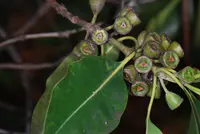
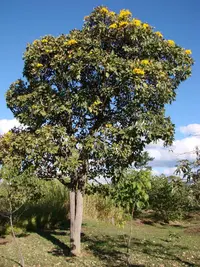
velvet tree Care (Miconia calvescens)

Also known as: miconia, bush currant
velvet tree

About velvet tree

The velvet tree (Miconia calvescens) is a fast-growing evergreen shrub or small tree known for its large, softly textured leaves with striking purple undersides. It forms a dense, bushy canopy and can create deep shade, which strongly affects surrounding vegetation in warm, humid climates.

This species is native to Central and South America but has become invasive in many tropical regions. For those who want to care for velvet tree in controlled conditions, it prefers bright light, consistently moist but well-drained soil, and a warm, frost-free environment.

Its rapid growth and strong shade tolerance make it easy to grow where conditions are suitable, but it can be difficult to manage and is often not recommended for outdoor planting in sensitive ecosystems.

Main Plant Requirements

Care Difficulty

Moderate Care

Light Preference

Partial Shade

Water Requirements

Keep Soil Moist

Temperature Preference

Tropical / Frost Sensitive

Hardiness Zone

11–13

Soil Texture

Loamy, Silty, Organic-rich

Soil pH

Acidic (5.5–6.5), Slightly acidic (6.5–7.0)

Soil Drainage

Moist but well-drained

Fertilization

Minimal (feed rarely)

Get Personalized Care Plan

Scan your plant to receive care tips personalized for your specific plant

Available on iOS and Android

How to Care for the velvet tree

Miconia calvescens prefers bright, filtered conditions similar to an understory tropical tree.

  • Provide 4–6 hours of bright, indirect light daily, with dappled or filtered sun under taller trees rather than open exposure.
  • Tolerates partial shade, especially strong afternoon shade; brief morning sun is acceptable if foliage does not scorch or curl.
  • Avoid harsh midday sun that causes leaf bleaching or crispy edges, and increase light slightly in winter if growth becomes leggy or leaves darken excessively.

This species prefers consistently moist but not waterlogged soil, reflecting its rainforest origin.

  • Irrigate when the top 2–4 cm of soil feel slightly dry, aiming for evenly damp soil rather than cycles of full drying.
  • Use deep watering so moisture penetrates the root zone, but ensure free drainage; standing water or a swampy smell signals overwatering and root stress.
  • In cooler or cloudy seasons, reduce frequency as evaporation slows; wilting, dull leaves, and dry, crumbly soil indicate that Miconia calvescens needs water sooner.

This tropical tree grows best in warm, frost‑free conditions with minimal temperature swings.

  • Optimal growth occurs around 70–85°F (21–29°C), similar to lowland tropical climates with consistently warm days and mild nights.
  • Avoid temperatures below 55°F (13°C); foliage damage and stress increase sharply under 50°F (10°C), and frost can kill young plants.
  • It tolerates brief heat up to about 90–95°F (32–35°C) if soil moisture is maintained, but prolonged extreme heat or hot, drying winds can scorch leaves.

This species prefers consistently humid air and reacts quickly to dry conditions.

  • Aim for 60–80% humidity, as typical indoor air below 40% often causes leaf-edge browning and curled tips.
  • In dry homes, group plants, use a pebble tray with water below the pot base, or run a small humidifier nearby.
  • Watch for dull, drooping leaves, crisp margins, and stalled new growth as signs that humidity for velvet tree is too low.

This species thrives in moist, airy, organic-rich soil that never becomes waterlogged.

  • Use a loose mix such as 50% peat or coco coir, 30% compost, and 20% perlite or fine bark to balance moisture and aeration.
  • Ensure rapid drainage by using a pot with large holes and avoiding heavy, compacted garden soil that holds standing water.
  • Keep pH slightly acidic to neutral, around 5.5–7.0, which supports nutrient availability and healthy root function.
  • If the mix feels dense, increase perlite or bark to improve pore space so fine feeder roots can access both air and water effectively.

This species can be grown in containers when managed for its fast, tall, and potentially invasive growth.

  • Choose a wide, heavy pot to prevent tipping, since tall stems and large leaves create a top-heavy canopy in wind or on balconies.
  • Select a container material that moderates moisture, such as thick plastic or glazed ceramic, to reduce rapid surface drying of the root zone.
  • Leave several centimeters between the root ball and pot walls so roots have lateral space without creating a deep water-holding column.

Miconia calvescens grows vigorously and benefits from light, controlled feeding in containers or managed plantings.

  • Use a balanced liquid fertilizer (such as 10-10-10) at 1/4–1/2 strength for velvet tree grown in pots or controlled landscapes.
  • Feed every 4–6 weeks during the warm growing season when active growth is visible.
  • Skip or greatly reduce feeding in winter or cool dormant periods to prevent weak, leggy growth.
  • Organic compost or a mild slow-release fertilizer can be mixed into the topsoil once per season for steady nutrition.

Miconia calvescens responds strongly to pruning, which is used mainly to control size and structure in managed settings.

  • Carry out main pruning at the end of winter or early spring, before vigorous new growth begins.
  • Remove dead, diseased, or storm-damaged wood first, cutting back to healthy tissue with clean, sharp bypass pruners or loppers.
  • Thin crowded branches to improve light penetration and airflow, which supports sturdier stems and reduces fungal issues.
  • Shorten overly long shoots to shape the canopy and limit height, making maintenance and access easier.

This species is usually grown in the ground, so focus on careful transplanting rather than frequent repotting.

  • Transplant young plants in late spring or early summer when soil is warm and night temperatures stay above 60°F.
  • Look for signs such as roots circling the container, water sitting on the surface, or noticeably slowed growth before moving a plant.
  • Shift container plants up only 1 pot size, using a well-drained, slightly acidic mix to reduce waterlogging stress.
  • Water thoroughly before and after transplanting, keep the root ball intact, and shade the plant for 3–5 days to limit transplant shock.

Propagation of Miconia calvescens is technically straightforward but should be restricted due to its highly invasive behavior in many tropical regions.

  • Use semi-hardwood cuttings taken in late spring or early summer, 10–15 cm long with 2–3 nodes.
  • Remove lower leaves, dip the cut end in rooting hormone, and place in a sterile, moist, well-drained medium under high humidity and bright, indirect light.
  • Seeds germinate in warm (75–80°F), evenly moist conditions but must be managed carefully to avoid unwanted spread.
  • Always follow local regulations and avoid outdoor planting or uncontrolled propagation in regions where the species is invasive.

This tropical species has very low frost tolerance and requires warm conditions year-round.

  • Keep plants above 55–60°F; exposure to frost can kill foliage and young stems.
  • In cool climates, grow in large containers that can be moved indoors or into a heated greenhouse before night temperatures drop.
  • Use a thick mulch layer 5–8 cm deep over the root zone in marginal climates to buffer brief cool spells and soil temperature swings.

Care Tips

Root containment strategy

In warm climates, always grow this species in large, sturdy containers with saucers and never in open ground to prevent invasive root spread and easier long‑term management when caring for velvet tree.

Regular canopy thinning

Every 2–3 months, selectively remove a few of the largest overlapping leaves from the interior of the canopy to improve light penetration, airflow, and reduce fungal leaf spot risk.

Sanitation after pruning

Disinfect pruning tools with 70% isopropyl alcohol before and after use and remove all fallen leaves from the soil surface to limit disease buildup and reinfection.

Strategic height control

Pinch or cut back the top growing tip when the plant approaches the maximum height you can manage, which encourages a shorter, bushier structure that is safer to handle indoors or in greenhouses.

Runoff monitoring

During each deep watering, check that at least 10–20% of applied water drains freely from the pot and stays clear (not dark or foul‑smelling), which indicates the substrate is flushing properly and not turning anaerobic.

Common Pests and Diseases

Melastome leaf beetle

This pest feeds on leaves, creating shot holes, skeletonized areas, and general defoliation, especially on young foliage. Heavy infestations can slow growth and reduce the plant’s vigor.

Solution

Hand-pick beetles and larvae from foliage where feasible and destroy them, and prune heavily damaged leaves to reduce feeding sites. In outdoor situations, encourage natural predators, and if needed use a targeted foliar spray based on neem or pyrethrin, applied in the early morning and repeated as the label allows.

Scale insects

These insects attach to stems and leaf veins, sucking sap and causing yellowing, leaf drop, and sticky honeydew that can lead to black sooty mold. Infestations often start in sheltered, shaded parts of the plant.

Solution

Wipe stems and leaf undersides with a cloth or cotton swab dipped in diluted alcohol or insecticidal soap, repeating weekly until no new scales appear. For larger outdoor plants, use a horticultural oil spray to smother remaining insects, applying during mild weather and ensuring thorough coverage of all plant surfaces.

Leaf spot

This disease causes small brown or dark purple spots on leaves that can enlarge, merge, and lead to partial defoliation under wet, shaded conditions. Symptoms include more severe spotting on lower, older leaves where moisture lingers longest.

Solution

Remove and dispose of spotted leaves, including any that have fallen to the ground, and avoid overhead watering so foliage dries quickly. Improve airflow by thinning crowded branches around the plant, and if needed apply a copper- or chlorothalonil-based fungicide, following label directions and timing applications during dry weather.

Sooty mold

This disease appears as a black, powdery or soot-like coating on leaves and stems, growing on honeydew secreted by sap-feeding insects such as scale or mealybugs. Symptoms include reduced photosynthesis, dull leaf color, and a dirty appearance rather than true leaf decay.

Solution

First manage the underlying insect problem with insecticidal soap or horticultural oil so no fresh honeydew is produced. Then gently wash affected leaves with lukewarm water and a mild soap solution, or allow new clean foliage to replace heavily coated leaves that can be pruned away.

Interesting Facts

Invasive rainforest canopy

This species can reach about 12–15 m tall and form a very dense canopy with its huge leaves, drastically reducing light levels and suppressing native understory plants in invaded tropical forests.

Extensive seed shadow

Each tree produces large numbers of tiny seeds that are dispersed by birds over long distances, creating a broad seed shadow that allows the species to colonize remote forest patches and disturbed habitats.

Distinctive purple undersides

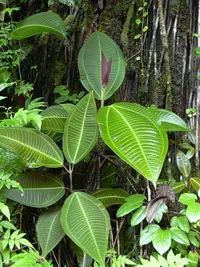
The large, velvety leaves have striking purple undersides with prominent pale veins, a key field character that makes the tree easy to recognize even from a distance.

Botan icon

Did you know?

This species became one of the most notorious invasive plants in Pacific islands such as Tahiti and Hawaii, where it has been called the “purple plague” because dense monospecific stands can rapidly replace diverse native rainforest communities.

FAQs about velvet tree

Brown, crisp edges usually come from low humidity, heat, salt buildup from fertilizer, or underwatering. Increase humidity, water thoroughly but less often, flush excess salts, and protect the plant from hot, drying winds or heaters.

Grow Healthy Plants with Botan Care

Keep your plants happy and healthy with plant identification, disease detection, and easy care guidance.

Botan plant care app — identify plants on mobile

Explore More Plants