Encourage Compact Form
Pinch back soft new tips in early spring to keep plants low, dense, and better able to cover ground evenly, rather than forming tall, open stems that expose bare soil.

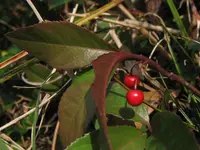
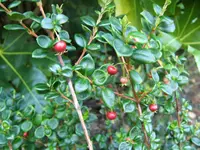
Marlberry, Ardisia japonica, is a low, spreading evergreen shrub often used as a shade-tolerant groundcover. It forms dense clumps of glossy, dark green leaves. Small white to pinkish flowers appear close to the foliage, followed by red berries that can persist into winter, adding subtle color and interest. In nature, it grows in woodland understories in East Asia, where light is filtered and soils stay evenly moist. This background explains why it prefers partial shade, consistent moisture, and well-drained, humus-rich soil in gardens. Once established in suitable conditions, it is generally reliable and not demanding, making it straightforward to care for marlberry.

Care Difficulty
Moderate Care

Light Preference
Partial Shade

Water Requirements
Keep Soil Moist

Temperature Preference
Warm Climate

Hardiness Zone
7–10

Soil Texture
Loamy, Peaty, Organic-rich

Soil pH
Acidic (5.5–6.5), Slightly acidic (6.5–7.0)

Soil Drainage
Moist but well-drained

Fertilization
Light (every 4–6 weeks)
Scan your plant to receive care tips personalized for your specific plant
Available on iOS and Android
Ardisia japonica prefers gentle, filtered light similar to a woodland edge.
This species prefers consistently moist but not waterlogged soil.
This shade-loving shrub thrives in mild, frost-free to lightly frosty climates.
Ardisia japonica prefers moderately humid air and reacts if conditions are very dry for long periods.
Ardisia japonica grows best in consistently moist, airy, and slightly acidic soil that never becomes waterlogged.
This species adapts well to container culture when the pot supports its shallow, spreading root system.
Ardisia japonica benefits from modest, consistent feeding in containers but often needs none in rich garden soil.
Pruning Ardisia japonica is mainly light maintenance to preserve a compact, tidy form.
Ardisia japonica grows slowly, so repotting or transplanting is infrequent but can refresh growth.
Ardisia japonica is commonly propagated by division, stem cuttings, or seeds under controlled conditions.
Ardisia japonica is fairly cold tolerant but benefits from simple winter care in colder regions.

Plant Health Check
Not sure what's wrong with your plant? Check your plant's health inside the app.
This species naturally grows as an understory groundcover in shaded woodlands of Japan, Korea, and parts of China, forming dense, slowly spreading mats under trees and shrubs.
It spreads mainly through rhizomes, producing new rosettes from underground stems so that what looks like many small plants is often one genetically identical colony.
Its red berries can persist on the plant through winter into early spring, providing color in low-light seasons and occasional food for birds and small mammals in its native range.

In traditional Japanese gardening, this plant has been used for centuries as a living groundcover in tsubo-niwa (small inner courtyard gardens), valued for its compact size, shade tolerance, and ability to create a calm, moss-like green carpet around stones and stepping paths.
This species performs best outdoors in mild, frost-free climates, where light, humidity, and root space are more stable. Marlberry indoor care is possible in bright, cool rooms, but growth is slower and flowering and fruiting are less reliable.
Keep your plants happy and healthy with plant identification, disease detection, and easy care guidance.