Arenaria grandiflora Care

Arenaria grandiflora

About Arenaria grandiflora

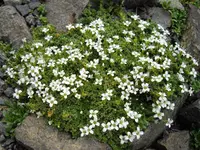
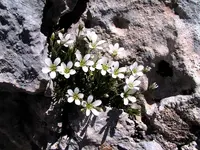
Arenaria grandiflora is a compact, low-growing perennial often used as a rock garden or edging plant. It forms dense, cushion-like mats covered with small, bright white flowers. Leaves are tiny, narrow, and evergreen to semi-evergreen, giving the plant a fine, neat texture year-round.

This species occurs naturally in rocky, mountainous regions of Europe, where it grows in well-drained, often calcareous soils. It is generally considered moderately easy to grow if provided with sharp drainage and protection from persistent winter wet.

Gardeners who want to care for Arenaria grandiflora should focus on providing full sun to light shade, cool conditions, and moisture that is regular but not excessive, especially around the roots.

Main Plant Requirements

Care Difficulty

Moderate Care

Light Preference

Full Sun

Water Requirements

Moderate Water

Temperature Preference

Cold Hardy

Hardiness Zone

4–7

Soil Texture

Sandy, Loamy, Rocky

Soil pH

Acidic (5.5–6.5), Slightly acidic (6.5–7.0)

Soil Drainage

Well-drained

Fertilization

Minimal (feed rarely)

Get Personalized Care Plan

Scan your plant to receive care tips personalized for your specific plant

Available on iOS and Android

How to Care for the Arenaria grandiflora

This alpine perennial prefers bright, cool conditions that mimic open mountain slopes.

  • Provide 4–6 hours of direct morning sun with light shade or filtered light in the hot afternoon, especially in warmer climates.
  • Allow light or partial shade (dappled light under shrubs) in regions with strong sun; foliage can scorch in intense, all-day summer exposure.
  • If flowering declines or plants stretch and open up, light is likely too low; move Arenaria grandiflora to a brighter, more open position.

This plant prefers consistently moist but sharply drained soil, especially during active growth.

  • Water only when the top 2–3 cm of soil feel dry, then soak thoroughly so water drains quickly away from the root zone.
  • In spring and early summer, check moisture more often during warm, dry spells; reduce watering in late fall and winter to prevent root rot.
  • Signs of overwatering include yellowing, mushy crowns, and a sour smell, while dry, crisp foliage and shrinking mats suggest underwatering in Arenaria grandiflora.

This species is adapted to cool, temperate conditions and tolerates moderate cold.

  • Optimal growth occurs around 55–70°F (13–21°C), especially in spring and early summer when soil stays cool and evenly moist.
  • Mature plants tolerate short dips to about 10–15°F (-12 to -9°C) with good drainage; extended freeze-thaw cycles in wet soil increase crown rot risk.
  • Heat above 80–85°F (27–29°C) can stress plants; provide afternoon shade and avoid warm, enclosed spots to keep crowns cool through summer.

This alpine cushion plant tolerates relatively dry air and rarely needs special humidity management outdoors.

This species prefers sharply drained, sandy to gritty soil that mimics rocky alpine conditions.

  • Use a mix of roughly 50–60% coarse sand or grit with 40–50% loam to create a lean, open structure.
  • Ensure very fast drainage; raised beds or rock garden pockets help excess water escape around the root zone.
  • Aim for slightly acidic to neutral pH, around 6.0–7.0, avoiding strongly alkaline or compacted clay soils.
  • Improve aeration by adding fine gravel or pumice and avoid heavy organic mulches that trap moisture around stems.

This plant can be grown in containers if drainage is very fast and soil stays lean.

  • Choose a wide, shallow pot so the spreading mat covers the surface without developing a deep, waterlogged root zone.
  • Use a mineral-based mix in clay or terracotta pots to speed moisture loss and prevent roots sitting in damp media.
  • Elevate the container slightly on feet or bricks so drainage holes never sit directly in pooled water on trays or paving.

This alpine perennial prefers lean soil, so Arenaria grandiflora needs only light fertilization in cultivation.

  • Apply a low-dose balanced NPK fertilizer at half strength once in early spring as growth starts.
  • Alternatively, top-dress with a thin layer of fine compost, keeping it off the foliage and crown.
  • Avoid frequent feeding during the growing season to prevent weak, lush growth and reduced flowering.
  • Withhold fertilizer in fall and winter when the plant is dormant or growth has stopped.

Pruning needs are minimal, but light grooming keeps Arenaria grandiflora compact and flowering well.

  • Shear or clip lightly after the main flowering flush in late spring to early summer to maintain a tight cushion shape.
  • Remove dead, damaged, or winter-burned shoots with clean, sharp scissors or snips.
  • Thin out any sparse, woody centers to encourage fresh growth from the crown.
  • Deadhead spent flower stems to prolong blooming and keep the mat tidy.

This rock garden plant is more often transplanted outdoors than kept long term in containers.

  • Plan transplanting for early spring or early fall, avoiding hot, dry periods.
  • Move plants when growth slows, clumps outgrow their space, or roots circle a small pot.
  • Lift with a generous soil ball, handling roots gently to limit disturbance and stress.
  • Replant into sharply drained, gritty soil at the same depth, then water once to settle and allow the surface to dry slightly.

Arenaria grandiflora is commonly propagated to expand groundcover patches or refresh older clumps.

  • Divide established clumps in early spring, separating small sections with healthy roots and shoots.
  • Replant divisions into sharp, well-drained soil and keep slightly moist until re-established.
  • Sow seeds in late winter to spring in trays with gritty mix, just covering them lightly.
  • Provide cool conditions, bright light, and good air flow to reduce damping-off during germination.

In suitable climates this species is generally cold hardy and needs little winter care.

  • Tolerates typical frost in many temperate regions, provided soil drainage stays sharp.
  • Apply a light gravel or grit mulch around the crown to keep the root zone free-draining.
  • Avoid heavy, waterlogged soils and thick organic mulches that can cause crown rot in winter.

Care Tips

Rock-crevice planting

Tuck plants into narrow crevices between rocks or paving stones with at least 5–8 cm depth of gritty substrate to keep roots cool and stable, which greatly improves longevity for those growing Arenaria grandiflora in rock gardens.

Winter wet protection

In climates with wet winters, place flat stones or a small, airy cloche over the crown from late fall to early spring to shed excess rain while still allowing good air flow around the foliage.

Shear after flowering

Once the main flush of flowers fades, lightly shear back spent stems by 2–3 cm to maintain a dense cushion and reduce the risk of fungal issues in the center of the mat.

Algae and moss control

If moss or algae begins to form on the planting surface, gently roughen the top 0.5–1 cm of soil with a hand fork and top-dress with fresh grit to keep the crown dry and well aerated.

Divide before decline

Every 3–4 years, lift and divide the healthiest outer portions of the clump in early spring, replanting only firm, green sections to prevent an aging, bare center and to renew the planting.

Common Pests and Diseases

Spider mites

This pest thrives on fine, mat-forming foliage in hot, dry conditions and can cause tiny yellow speckling, webbing, and overall dull, stressed cushions.

Solution

Increase humidity around the mat by gentle overhead misting in the morning, hose down foliage to physically remove mites, then apply a targeted miticide or insecticidal soap to both leaf surfaces while improving air movement to prevent reinfestation.

Aphids

These insects colonize young shoots and flowering stems, sucking sap and causing distortion, sticky honeydew, and sooty mold on dense cushions.

Solution

Wash colonies off with a firm stream of water, remove heavily infested stems, then use insecticidal soap or a pyrethrin-based spray directed at shoot tips while encouraging natural predators such as lady beetles by avoiding broad-spectrum chemicals.

Leaf spot

This disease produces small brown to black spots on the tiny leaves, which can merge and cause thinning patches within the mat in poorly ventilated, damp conditions.

Solution

Remove and discard affected shoots, reduce overhead watering, and thin or divide overly dense clumps to improve airflow, then apply a suitable fungicide labeled for foliar leaf spots if new lesions continue to appear despite cultural corrections as part of broader Arenaria grandiflora care instructions.

Crown rot

This disease affects the plant at the base, where symptoms include sudden collapse of sections of the cushion, browning at the crown, and poor recovery in heavy or waterlogged soils.

Solution

Improve drainage by raising the planting area or using gritty, sharply drained soil, remove and discard rotted clumps, and avoid frequent overhead watering, then replant only in well-drained, open sites and keep the crown slightly elevated above surrounding soil level.

Interesting Facts

Calcareous rock specialist

This species is naturally restricted to limestone and other calcareous rocks in parts of western and central Europe, where it roots into shallow fissures and thin, alkaline soils that many plants cannot tolerate.

Large blooms for the genus

Among sandworts, this species is notable for its relatively large, showy white flowers, which can cover the compact cushion so densely that the foliage is almost hidden during peak flowering.

Conservation concern in Europe

In several European countries its wild populations are considered rare or threatened, mainly due to habitat loss, quarrying of limestone, and changes in traditional land use on rocky slopes.

Botan icon

Did you know?

Arenaria grandiflora was described scientifically by Carl Linnaeus in 1753 in his work Species Plantarum, so it is one of the many European alpine and subalpine plants that formed part of the original foundation of modern botanical nomenclature.

FAQs about Arenaria grandiflora

This species is a low, mat-forming perennial. Clumps persist for several years but can thin in the center with age. Regular division every few years keeps the plant vigorous and maintains an attractive, dense cushion.

Grow Healthy Plants with Botan Care

Keep your plants happy and healthy with plant identification, disease detection, and easy care guidance.

Botan plant care app — identify plants on mobile

Explore More Plants