Use temporary staking
Install thin bamboo canes or lightweight stakes early in the season in windy sites so tall, soft stems can be loosely tied with garden twine before they bend or snap.

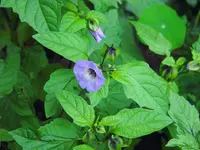
Apple-of-Peru (Nicandra physalodes) is a fast-growing annual plant in the nightshade family, often grown as an ornamental in gardens. It forms a bushy, upright habit with soft green leaves and pale bluish-purple, bell-shaped flowers.
After flowering, it produces inflated, papery husks that resemble small lanterns, giving the plant a distinctive look. The species is native to South America but has naturalized in many warm and temperate regions.
It self-seeds easily and can spread, which makes it simple to keep going but sometimes a nuisance. To care for Apple-of-Peru, provide full sun, moderately moist soil, and good drainage.

Care Difficulty
Easy Care

Light Preference
Full Sun

Water Requirements
Moderate Water

Temperature Preference
Tropical / Frost Sensitive

Hardiness Zone
9–11

Soil Texture
Sandy, Loamy, Organic-rich

Soil pH
Acidic (5.5–6.5), Slightly acidic (6.5–7.0)

Soil Drainage
Well-drained

Fertilization
Minimal (feed rarely)
Scan your plant to receive care tips personalized for your specific plant
Available on iOS and Android
Nicandra physalodes grows best in bright outdoor conditions with several hours of direct sun each day.
This species prefers evenly moist, well-drained soil rather than constant wetness.
This warm-season annual thrives in mild to hot conditions and is damaged by frost.
This species tolerates a wide humidity range, so humidity control is rarely critical for Apple-of-Peru.
This plant prefers loose, well-drained, moderately fertile soil for robust seasonal growth.
This species is suitable for seasonal container growing outdoors.
Nicandra physalodes is a fast-growing annual that benefits from modest feeding on reasonably fertile soil.
Nicandra physalodes responds well to light, targeted pruning to manage size and encourage flowering.
This annual is more often transplanted outdoors than long-term potted, so focus on gentle handling of young plants.
New Nicandra physalodes plants are most commonly produced from seed, which germinates readily in warm conditions.
Nicandra physalodes is a tender annual in most climates and typically dies after hard frost, so extensive winter care is not needed.

Plant Health Check
Not sure what's wrong with your plant? Check your plant's health inside the app.
The plant produces papery, lantern-like husks that surround the small berry, similar in appearance to those of Physalis but with a characteristic bluish to purplish tinge on the calyx.
Its tissues contain tropane alkaloids and other bitter compounds that make the plant unpalatable to many herbivores, which is one reason it can spread aggressively as a weed in disturbed soils.
Although native to South America, this annual has naturalized in many warm and temperate regions worldwide, especially around gardens, field edges, and waste ground, where it often appears spontaneously from soil seed banks.

In some regions, especially in parts of Europe and Asia, the plant has been grown historically as an ornamental for its blue, bell-shaped flowers and pale, bladdery seed pods, leading to a variety of folk names such as apple-of-Peru and shoo-fly plant, the latter reflecting a traditional belief that it helps repel houseflies when grown near doorways or windows.
This species grows quickly from seed, often reaching near-mature size within a single warm season. Growth rate increases with full sun, regular moisture, and fertile soil, and slows noticeably in cool weather or nutrient-poor conditions.
Keep your plants happy and healthy with plant identification, disease detection, and easy care guidance.